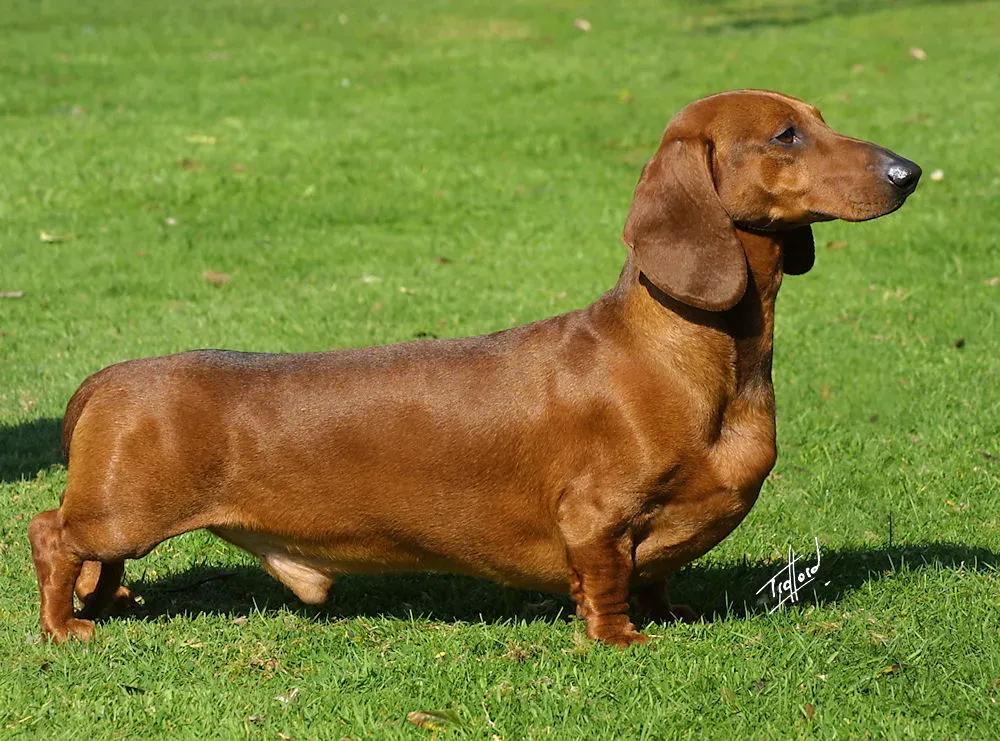
The name means "badger dog" in German, and at home the breed is usually called Teckel or Dackel. It comes in three coats (smooth, long and wire) and three sizes (standard, miniature and rabbit, called Kaninchen in German). It is bold, loud and stubborn for its size, and its long back is its main health weak point: the same gene change that gives the breed its short legs is tied to disc disease of the spine.
Dachshund quick facts
 Related breedAkita1600 to 1931 · Japan
- Country of origin
- Germany
- Period of development
- About 1600 to 1888 (project data, medium confidence); standard fixed in the 1800s
- Type
- Scent hound (FCI Group 4, Dachshunds; FCI standard no. 148; AKC Hound Group; UK Kennel Club recognised)
- Other names
- Teckel, Dackel, Sausage Dog, Wiener Dog
- Varieties
- Three coats: smooth, long, wire. Three sizes under the FCI: standard, miniature, rabbit (Kaninchen)
- Height
- Roughly 20 to 27 cm at the withers in most standards; standards mostly measure chest girth and weight, not height
- Weight
- Standard up to about 9 kg; miniature up to about 4 kg; rabbit about 3.5 kg or less (FCI standard, adults)
- Coat
- Smooth and short, long and silky, or harsh wire with beard and eyebrows
- Life span
- Project data: 12 to 16 years
- DNA family
- Scent Hound family (Parker et al. 2017, strong support)
- Descendant breed in project data
- Alpine Dachsbracke
Where does the name "Dachshund" come from?
 Related breedBorder Terrier1700 to 1920 · United Kingdom
German Dachs means "badger" and Hund means "dog", so Dachshund is literally "badger dog". English borrowed the word in the late 1800s. In Germany the breed is called Dackel or Teckel, and the German breed clubs use Teckel. Nicknames in English are "sausage dog" and "wiener dog", both about the shape.
"Kaninchen" is the German word for rabbit. The smallest FCI size is named after the quarry it was meant to follow.
What is the history of the Dachshund?
 Same eraCatahoula Leopard Dog1700 to 1979 · United States
Before the breed: badger dogs in Germany
People used dogs to hunt badgers in Europe long before the Dachshund existed as a recognised breed. Short-legged dogs suit the work because a badger lives in an underground sett, and a dog must go in after it, hold it in place and bark so the hunter can dig down. Project data dates the breed's development from about 1600, and histories agree the type took form in German-speaking lands between the late 1600s and the 1700s, when foresters and hunters began to breed it consistently.
A common view, repeated in breed histories, is that the Dachshund came from German foot hounds such as the Dachsbracke (a short-legged scent hound), crossed with terrier and pinscher types. Treat the exact crosses as likely but not proven. No genetic study has traced them step by step.
Three coats
Smooth coats came first. Breed histories say the smooth Dachshund then gave rise to the other two coats:
- Smooth. The original coat. Short, glossy and close.
- Long-haired. Said to come from crossing smooth Dachshunds with spaniel types and the German Stoeberhund, a type of bird dog.
- Wire-haired. Wire-coated Dachshunds are mentioned as early as 1797. Most modern wires were developed near the end of the 1800s using smooth Dachshunds with the German Wire-haired Pinscher and the Dandie Dinmont Terrier, according to reference histories.
By the early 1800s all three coats were recorded. Wire is reported as the most common coat in Germany but the least common in the United States.
From forest to show ring
A German breed club, the Deutscher Teckelklub, was founded in 1888 (project data gives 1888 as the end of the main development period). The breed reached English-speaking show rings in the late 1800s, and the AKC registered its first Dachshunds in the 1880s.
The Dachshund later became a national symbol of Germany. Waldi, a rainbow-coloured Dachshund, was the mascot of the 1972 Munich Olympic Games.
Kennel club recognition
| Body | Status |
|---|---|
| FCI | Definitive, standard no. 148, Group 4 (Dachshunds), country of origin Germany |
| AKC | Recognised, Hound Group |
| UK Kennel Club | Recognised (the UK lists several coat and size varieties) |
Group 4 is a Dachshund-only group in the FCI system, which shows how distinct the breed is from the other hounds.
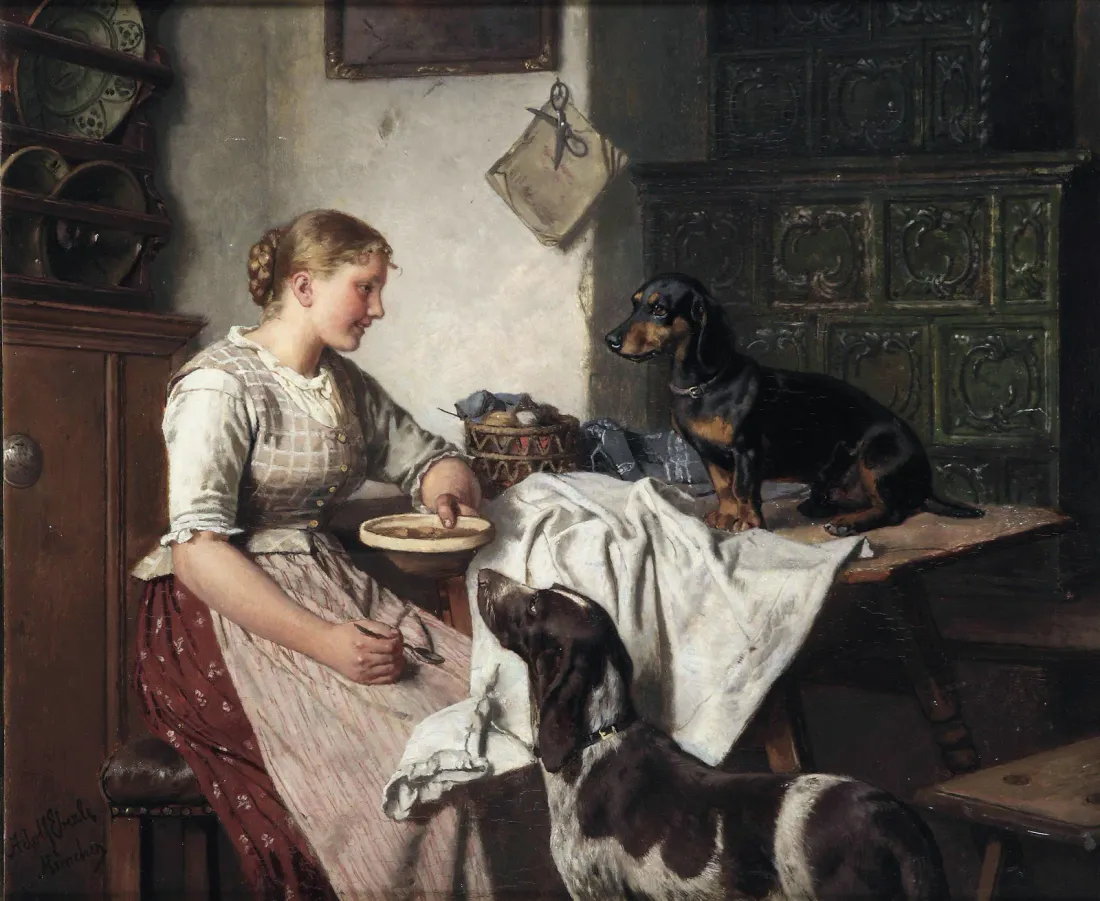
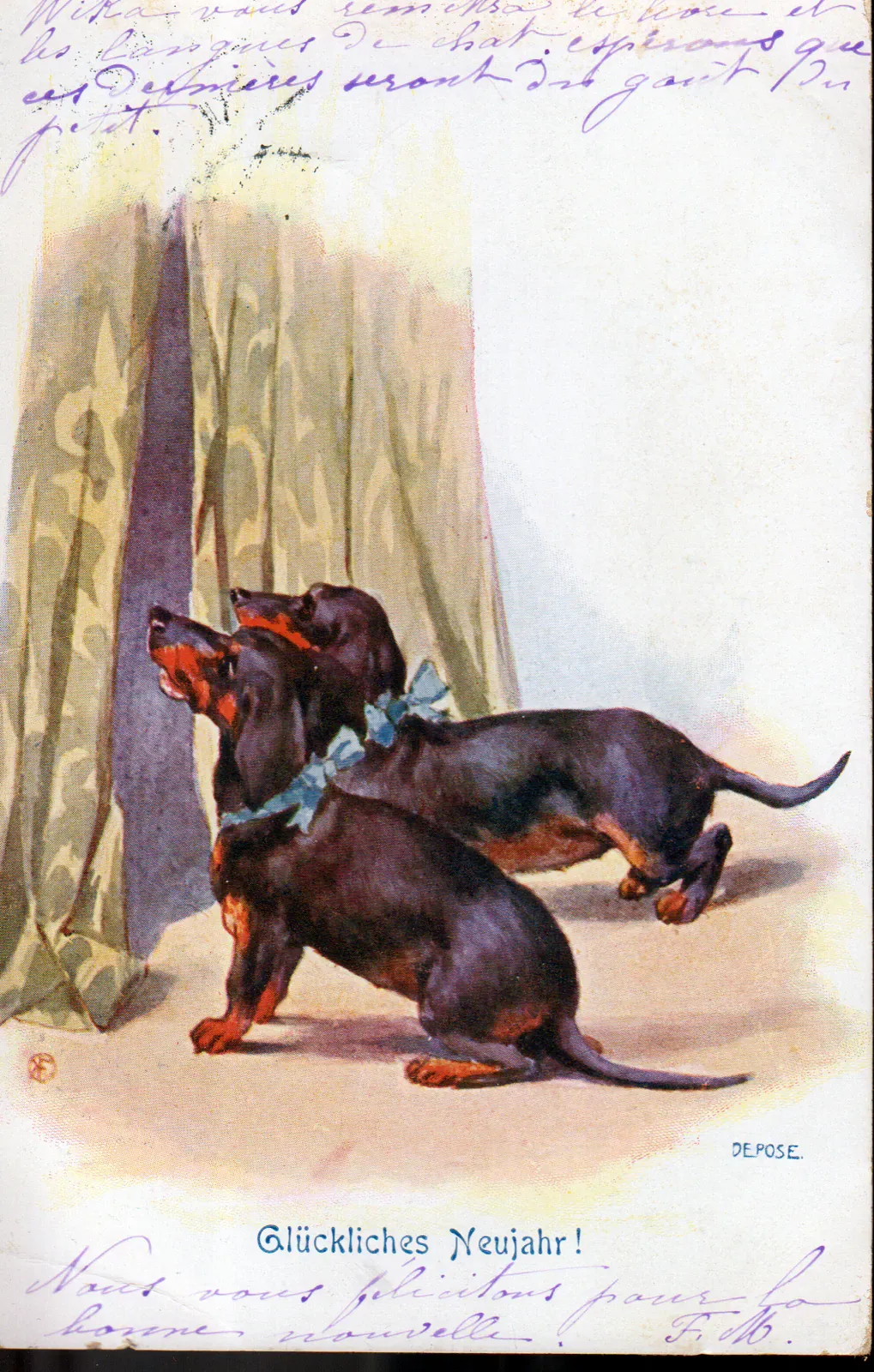
Dachshund sizes and coat types
 Related breedDalmatian1700 to 1890 · Croatia
How big is a Dachshund?
The FCI measures Dachshunds by chest circumference at 15 months, with weight as a guide, not by height. That matters because a long-bodied dog with short legs can look the same height at any size. The sizes in the FCI standard are roughly:
| Size | Chest girth | Weight (about) |
|---|---|---|
| Standard | More than 35 cm | Up to 9 kg |
| Miniature | 30 to 35 cm | Up to 4 kg |
| Rabbit (Kaninchen) | Up to 30 cm | About 3.5 kg or less |
Kennel clubs outside the FCI use their own limits. The AKC, for example, treats miniature as a weight class (not over about 5 kg), while the UK Kennel Club lists standard and miniature varieties by weight. If you buy a puppy, ask which standard the breeder follows. The same words (miniature, rabbit) can mean different things in different countries.
Miniature and rabbit sizes were bred to follow smaller quarry such as rabbits. In practice, size is set by parents, and a puppy's adult size is only a guess until growth finishes.
What do the three coats look like?
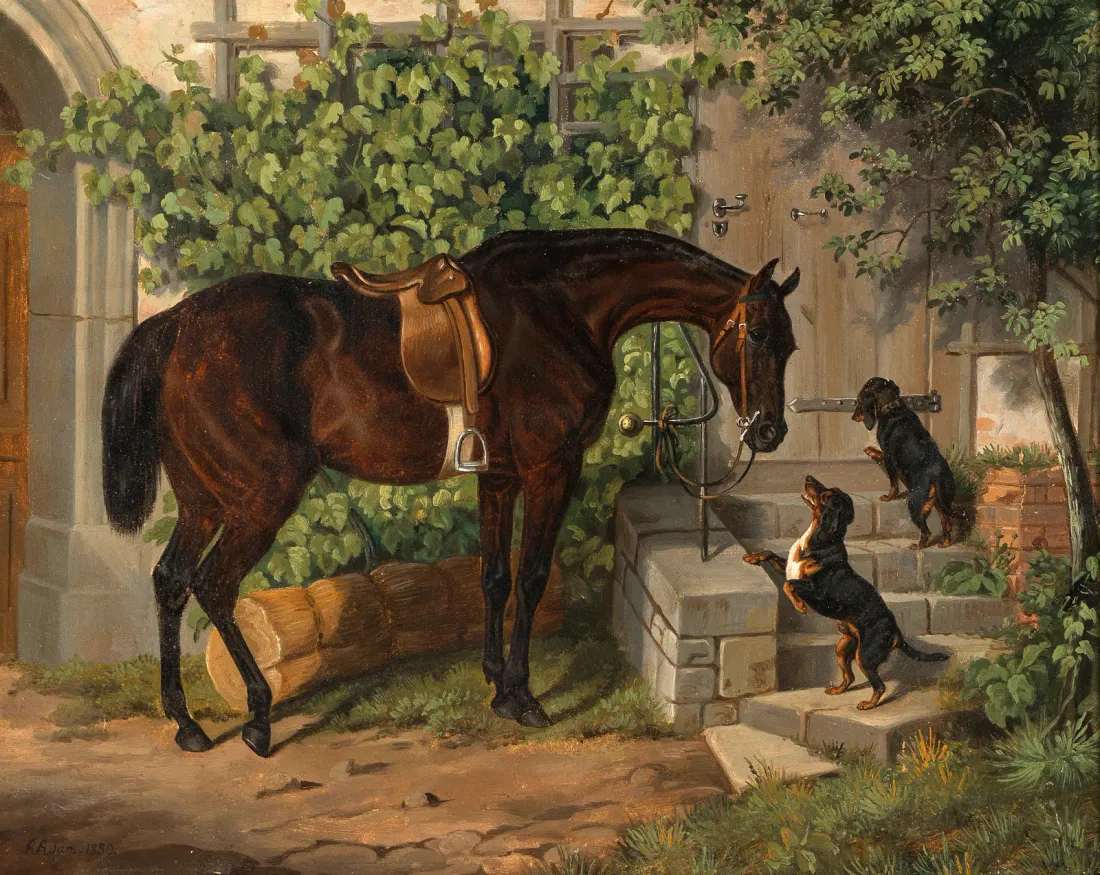
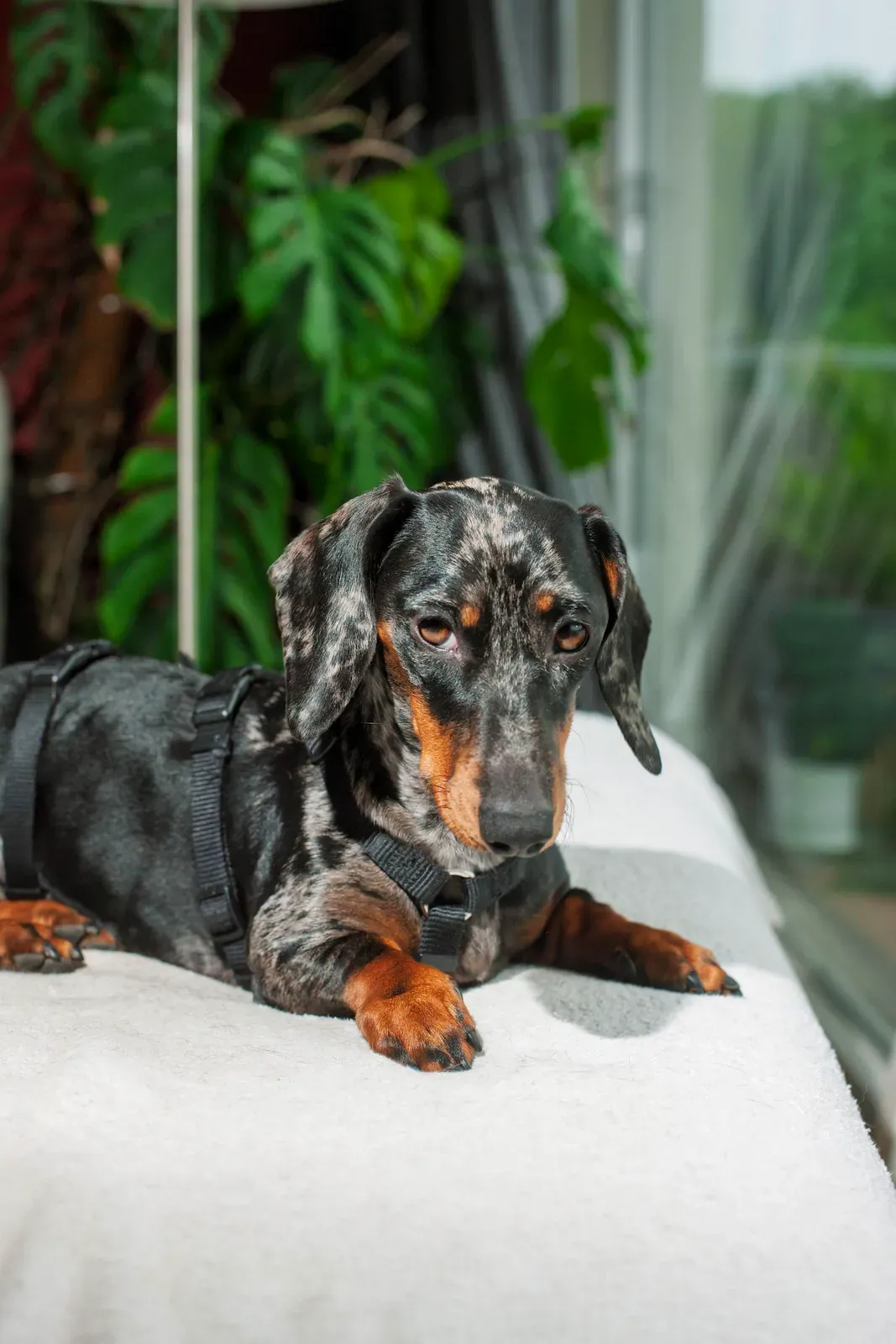
- Smooth-haired Dachshund. Short, dense, shiny coat. Easy to care for. Colours include red, black and tan, chocolate and tan, cream, and dapple () and brindle patterns, depending on the club.
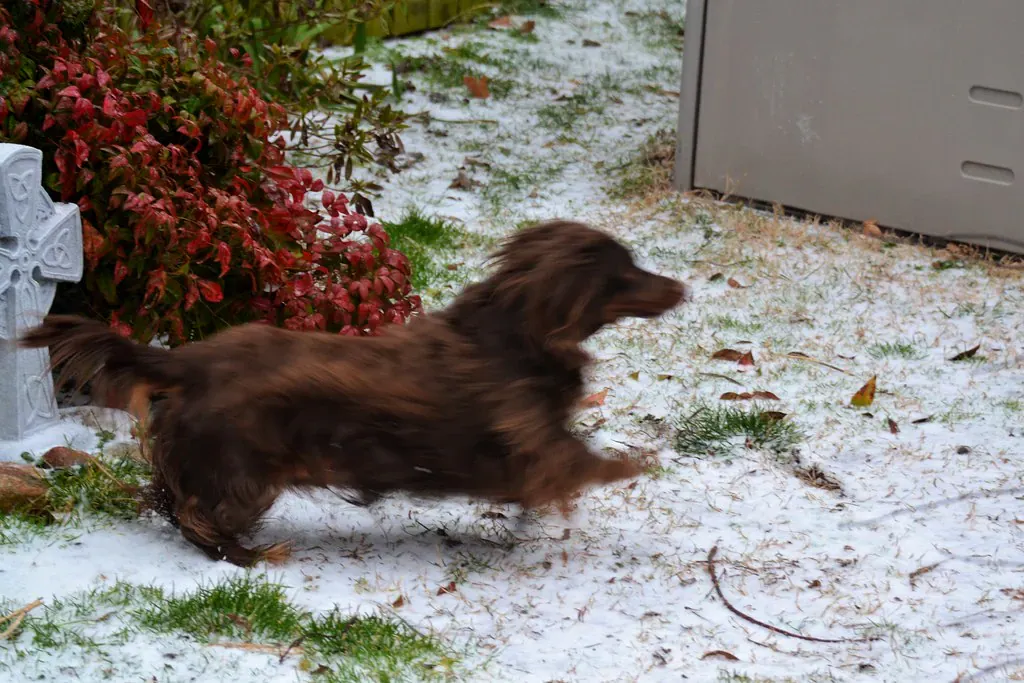
- Long-haired Dachshund. Soft, straight or slightly wavy hair, with feathering on ears, chest, belly and legs. Needs regular brushing, especially behind the ears.
- Wire-haired Dachshund. Harsh, tight outer coat with a soft undercoat, plus a beard, bushy eyebrows and neat ears. Wire coats are usually stripped by hand a few times a year, and shed little.
What does a Dachshund look like?
A Dachshund has a long, muscular body on short, strong legs, with a deep chest, a long head with a tapered muzzle, dark oval eyes and long, rounded ears that hang close to the head. The tail is carried in line with the back. The body shape was chosen for the job: a deep chest holds big lungs for work underground, and the strong forelegs dig.
Coat colour and pattern. Dapple (merle) patterning comes from a SINE insertion in the SILV gene (Clark et al. 2006). Two copies (double dapple) are linked to eye problems and deafness, and responsible clubs advise against dapple to dapple matings.
Which breeds are ancestors, descendants and relatives of the Dachshund?
 Same familyGerman Pinscher1700 to 1884 · Germany
The project knowledge base lists no recorded parent breeds, no DNA-linked breeds and no sister breeds for the Dachshund. One descendant is recorded:
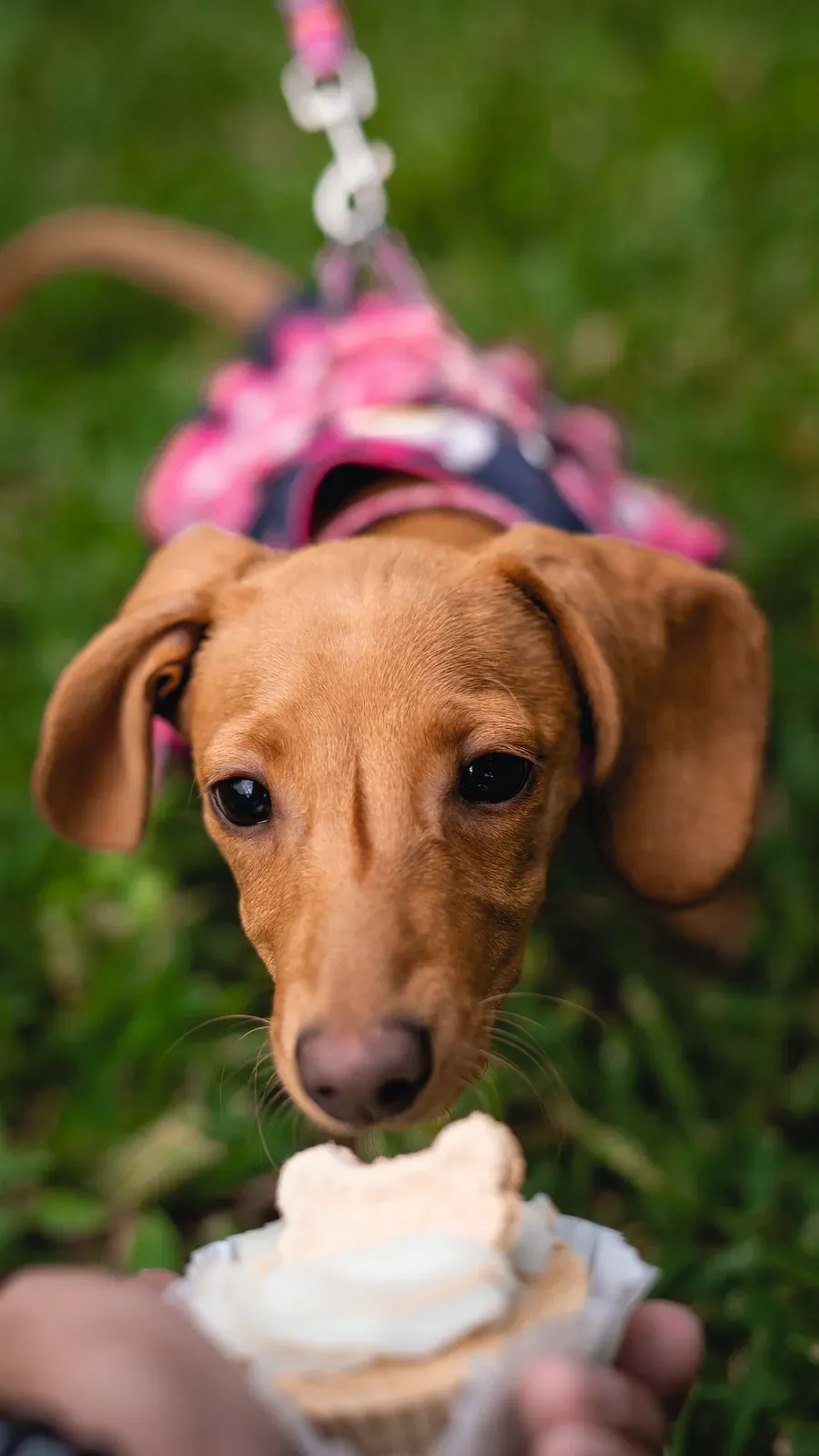
- Alpine Dachsbracke. An Austrian short-legged scent hound. Project data lists the Dachshund as its parent breed.
The Dachsbracke itself is a likely ancestor type of the Dachshund (see history above), so the two breeds are probably cousins in both directions. Records here do not settle which way the blood ran.
What does DNA say?
A 2017 study by Parker and colleagues (Cell Reports) analysed 1,346 dogs from 161 breeds and sorted them into 23 supported clades (families). The Dachshund sits in the Scent Hound family with strong support, alongside other hunting hounds such as the Beagle and the Basset Hound. That fits the breed's job: it follows a scent trail and then goes below ground. The project's shared-haplotype table holds no entries for the Dachshund, so there is no table of closest relatives here.
Descend from it · 1
- Alpine DachsbrackeAustria
What is the Dachshund's temperament like?
 Related breedGreat Dane1600 to 1880 · Germany
Dachshunds are bold, curious and lively dogs with a big-dog bark. Breed clubs and the AKC describe them as clever, brave and stubborn. Many are loyal to one or two people and reserved with strangers. Some are digging, barking and chasing fans, which is not a flaw but a leftover of the job. A long-haired Dachshund is often described as a little calmer than a wire, and a wire as clownish and bold, but these differences come from breed-club descriptions, not controlled studies, and individuals vary widely.
What this means at home:
- Barking. Bred to bark underground so a hunter could find them. Many Dachshunds are loud and alert.
- Digging. Natural for an earth dog. Give a sandpit or a dig box.
- Stubbornness. Hound independence. Short, reward-based sessions work better than repetition.
- Prey drive. Small animals, including pets, can set a Dachshund off. Many chase when they catch a scent and may ignore recall.
- Separation. Often attached to their people, and some bark or chew when left alone.
- Children. Fine with calm, gentle children who know to support the back when lifting. Not suited to very rough handling, because of the spine.
How much exercise does a Dachshund need?
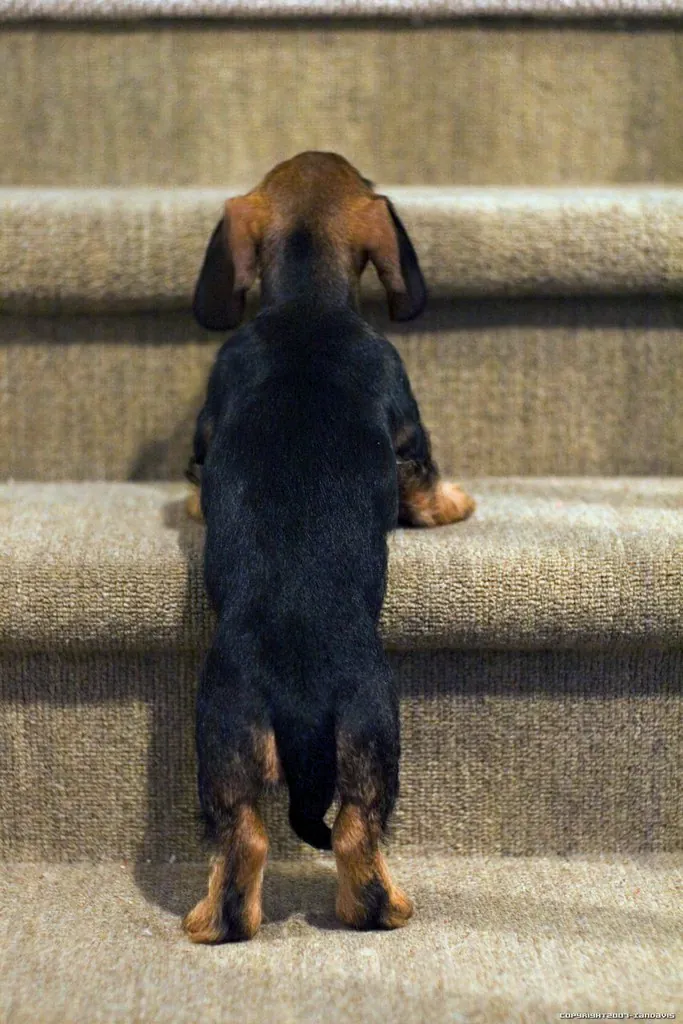
A healthy adult usually does well with 30 to 60 minutes of walking a day, plus play and scent games. Avoid regular jumping off sofas and stairs, and avoid excess weight (see health below).
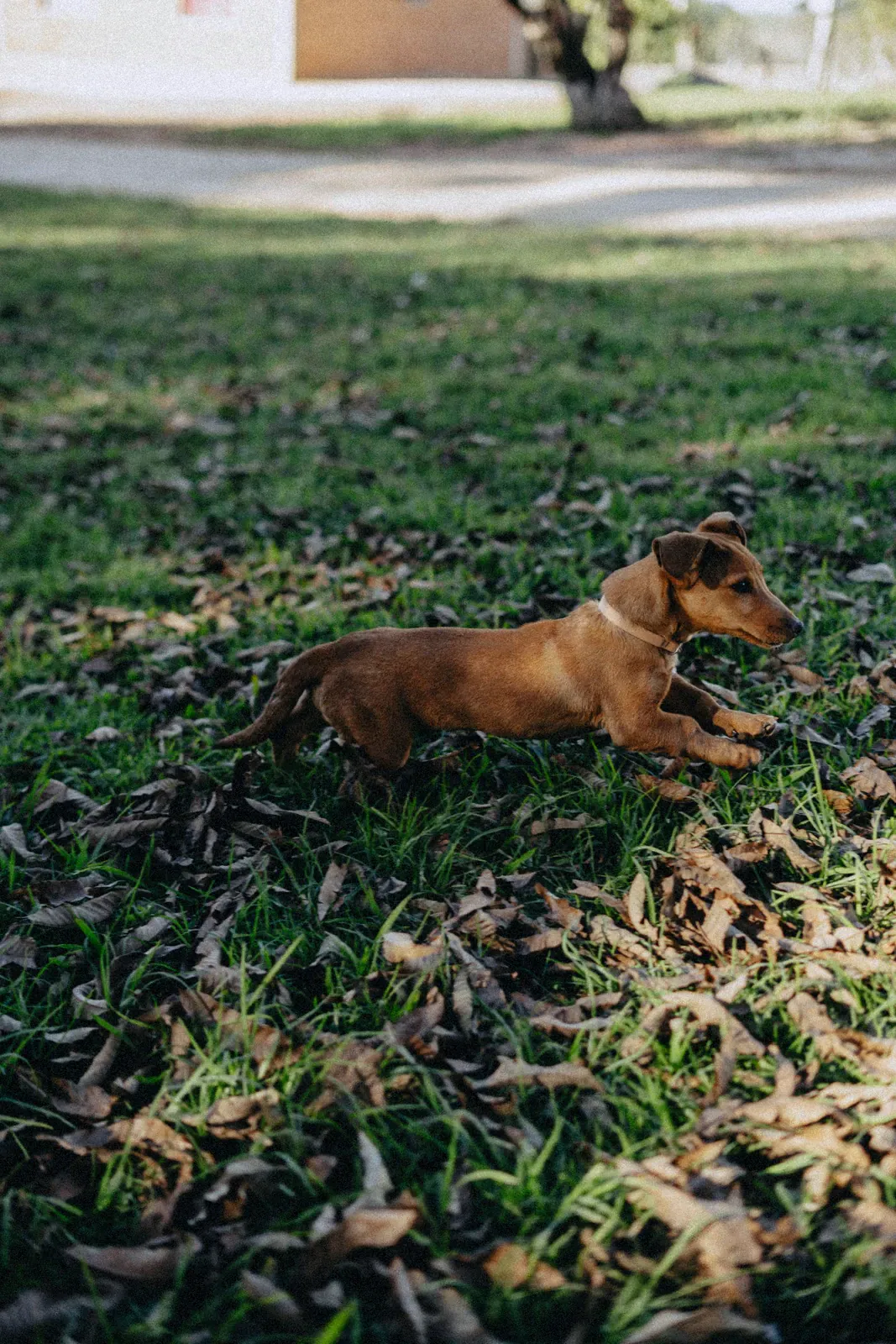
What health problems affect Dachshunds?
 Related breedGreater Swiss Mountain Dog1700 to 1909 · Switzerland
Dachshunds are among the longer-lived dogs, with project data giving 12 to 16 years, but they carry a well-documented spinal risk.
Back disease (IVDD)
Intervertebral disc disease (IVDD, also called intervertebral disc extrusion, IVDE) happens when the cushioning discs between the vertebrae harden or burst and press on the spinal cord. Signs range from pain and a hunched back to weak hind legs and paralysis. Severe cases need emergency surgery.
Key studies on how often this happens:
- Packer and colleagues (Royal Veterinary College, 2016). The "Dachs-Life 2015" owner survey (2,031 Dachshunds, Canine Genetics and Epidemiology) estimated that about 19 to 24 percent of Dachshunds show clinical signs of IVDD in their lifetime, and that the breed's relative risk was about 10 to 12 times that of other breeds.
- Other estimates. Published lifetime prevalence figures for the breed range widely, from about 15 to 62 percent, depending on the study design (clinic records, owner surveys, imaging of healthy young dogs). Read any single number with care.
- Body shape. Royal Veterinary College work led by Packer found that relatively longer-backed dogs were at higher risk: in miniature Dachshunds, the chance of disc herniation rose sharply as the back-length to height ratio increased. Shorter, more moderate-backed dogs fared better in the data.
What owners are advised to do (BVA, breed clubs and vet-school guidance in general terms): keep the dog lean, use ramps or steps for furniture, support the chest and hindquarters when lifting, avoid repeated stair use, and get any sudden back pain or leg weakness to a vet at once. Quick treatment improves the chance of recovery.
Why are Dachshunds short-legged? The FGF4 retrogene story
Short legs in dogs are caused by "retrogenes", extra copies of the gene FGF4 inserted at a new place in the DNA. Retrogenes form when a gene's messenger RNA is copied back into DNA and inserted elsewhere in the genome. Two of them matter:
- The chromosome 18 retrogene (CDPA). Parker and colleagues (Science, 2009) linked an expressed FGF4 retrogene to breed-defining short legs (chondrodysplasia) across many breeds, including the Dachshund, Corgi and Basset Hound.
- The chromosome 12 retrogene (CDDY). Brown and colleagues (PNAS, 2017) showed that a second FGF4 retrogene, on chromosome 12, is responsible for chondrodystrophy: early degeneration and calcification of the spinal discs. In their data it was strongly tied to IVDD risk, with an odds ratio above 50 for disc disease in the dogs studied. It is nearly universal in Dachshunds.
In plain words, the same change that shaped the Dachshund for burrow work is also what makes discs age early. That is why the breed's back risk is a built-in trait, not a sign of poor care. It also means the problem cannot be fixed by diet or exercise alone, and a genetic test cannot yet "clear" most Dachshunds. Researchers at several veterinary schools continue to study how the retrogene changes disc cells, and whether breeding choices can reduce its effect.
The Dachshund Breed Council (UK) and the Dachshund Club of America promote health schemes and research, including DNA and imaging studies of young Dachshunds for disc calcification, which is one marker of risk.
Other health issues in the breed
| Condition | What it is | Evidence |
|---|---|---|
| Obesity | Extra weight loads the spine and joints; Dachshunds gain it easily | Widely stated by breed clubs and vet groups; keep to a lean body shape |
| Dental disease | Long narrow jaw, crowded teeth | General small-breed risk; brush teeth and check yearly |
| Progressive retinal atrophy (PRA) | Inherited eye disease; the cord1 form is a known Dachshund variant (miniature long-haired in particular) | Genetic tests exist for breeders |
| Dapple eye and hearing problems | Double dapple pups can be deaf or have eye defects | Clark et al. 2006 on the merle gene; breed club advice against merle to merle matings |
| Lafora disease | Rare inherited epilepsy in miniature wire-haired Dachshunds | Lee et al. 2005 identified the gene |
| Hip and knee issues | Patella and other joint problems in small dogs | General small-breed risk |
Information here is general. Ask a vet about your own dog.
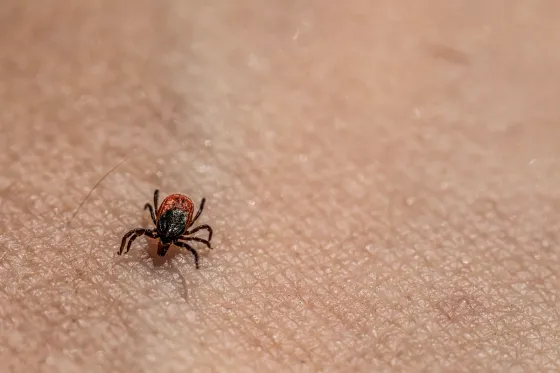 Ticks and fleasTicks and fleas on dogs: how to check, remove and prevent themTicks and fleas on dogs: how to tell them apart, check your dog, remove a tick safely, break the flea life cycle and prevent both.
 GuidesPractical guidesBehaviour, training, health and adoptionRelated breedGreater Swiss Mountain Dog1700 to 1909 · Switzerland
Is a Dachshund right for you?
 Related breedMiniature Pinscher1600 to 1895 · Germany
It suits you if you want a small dog with a big personality, you enjoy short walks and scent games, you are happy to carry or help your dog up and down stairs, you can keep it lean, and you can live with barking and some stubbornness. A flat or small house works if its needs are met.
It does not suit you if you want an easy-to-train, off-lead dog; you have many stairs and cannot offer ramps; you are away all day; you have very young children who handle dogs roughly; or you would be shaken by the cost and stress of back surgery. Small pets in the house are a risk with a hunting dog.
Dachshund fun facts
 Related breedMountain Cur1700 to 1957 · United States
- The word Dachshund in English dates from the late 1800s, but Germans call the breed Teckel or Dackel.
- Wire-coated Dachshunds are mentioned as early as 1797.
- Waldi, a Dachshund, was the mascot of the 1972 Munich Olympics.
- FCI sizes are set by chest girth at 15 months, not by height.
- The breed's short legs and its back disease share the same family of gene changes (FGF4 retrogenes).
- The FCI gives the Dachshund a group of its own, Group 4.
Frequently asked questions
How long do Dachshunds live?
Project data gives 12 to 16 years. Keeping a Dachshund lean and protecting its back helps it live well.
What is the temperament of a Dachshund?
Bold, curious, loyal and stubborn, with a loud bark. Many bond closely with one or two people.
How big do Dachshunds get?
Standard up to about 9 kg, miniature up to about 4 kg and rabbit about 3.5 kg or less under the FCI. Other clubs use different limits.
What are the types of Dachshund?
Three coats (smooth, long, wire) and three FCI sizes (standard, miniature, rabbit). A miniature wire-haired and a standard smooth are the same breed.
Do Dachshunds have back problems?
Many do. Packer and colleagues estimated about 19 to 24 percent show IVDD signs in their lifetime, with a relative risk 10 to 12 times that of other breeds.
Why do Dachshunds have short legs?
Because of FGF4 retrogenes, extra copies of a growth gene (Parker et al. 2009; Brown et al. 2017).
Do Dachshunds shed?
Smooth and long coats shed moderately. Wire coats shed little but need hand stripping.
Read next
Sources (16)
- American Kennel Club, Dachshund breed page and breed history.
- Brown E.A. et al., "FGF4 retrogene on CFA12 is responsible for chondrodystrophy and intervertebral disc disease in dogs", Proceedings of the National Academy of Sciences, 2017.
- Clark L.A. et al., "Retrotransposon insertion in SILV is responsible for merle patterning of the domestic dog", Proceedings of the National Academy of Sciences, 2006.
- Fédération Cynologique Internationale, Dachshund, standard no. 148.
- Fogle B., The New Encyclopedia of the Dog, 2009 (project source fogle2009).
- Lee P. et al., on the canine Lafora disease gene in miniature wire-haired Dachshunds, 2005.
- Online Etymology Dictionary, "dachshund".
- Packer R.M.A. et al., "Dachs-Life 2015: an investigation of IVDD in Dachshunds", Canine Genetics and Epidemiology, 2016.
- Packer R.M.A. et al., Royal Veterinary College studies of body conformation and risk of intervertebral disc extrusion in Dachshunds.
- Parker H.G. et al., "An expressed fgf4 retrogene is associated with breed-defining chondrodysplasia in domestic dogs", Science, 2009.
- Parker H.G. et al., "Genomic analyses reveal the influence of geographic origin, migration, and hybridization on modern dog breed development", Cell Reports, 2017.
- The Kennel Club (UK), Dachshund breed information pages.
- Dachshund Breed Council (UK), research and health information on IVDD.
- Hancock D., Dachshund and Teckel archive articles, David Hancock on Dogs.
- Wikipedia, "Dachshund" (used for summaries, checked against the other sources listed).
- Project knowledge base, breed record and Parker 2017 clade assignment (this site).