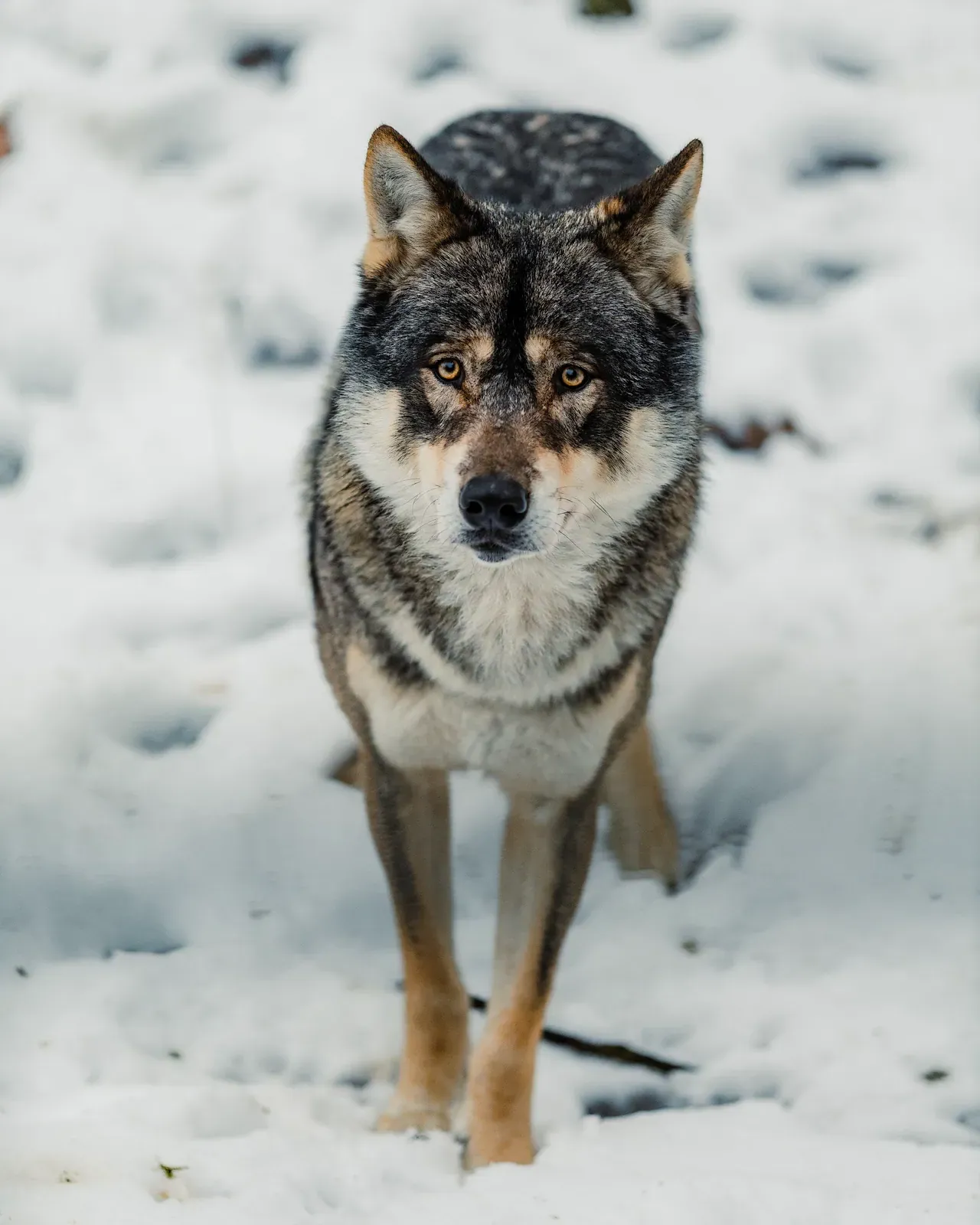
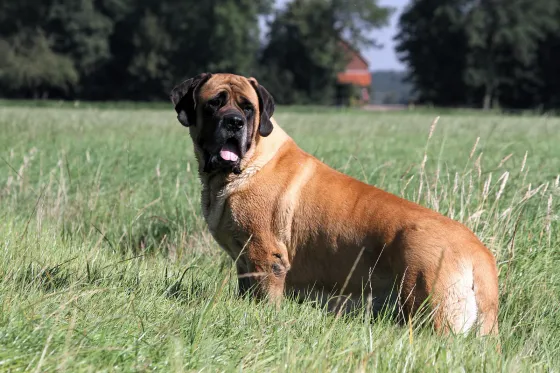
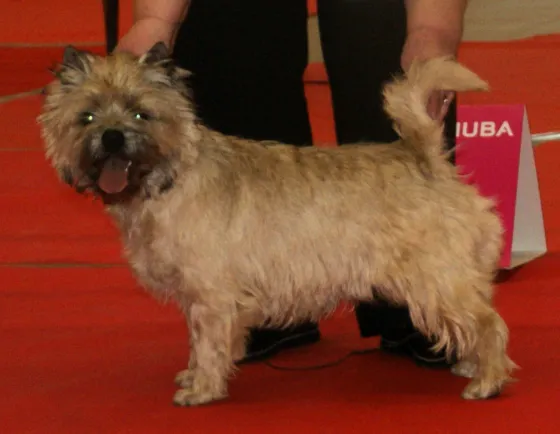
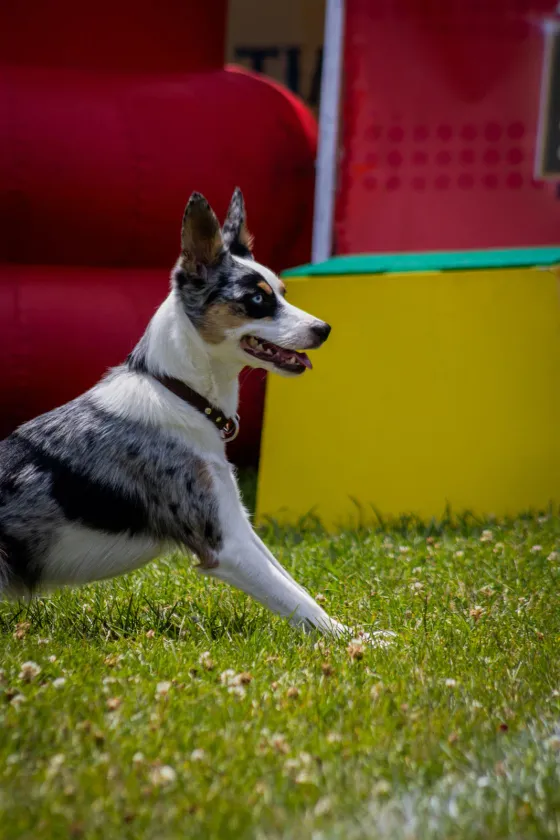
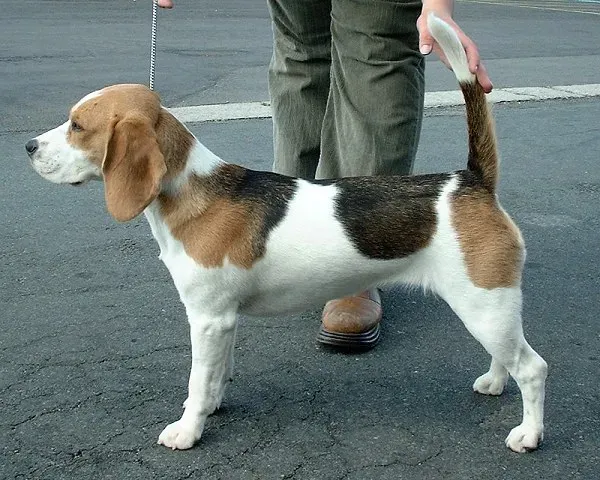
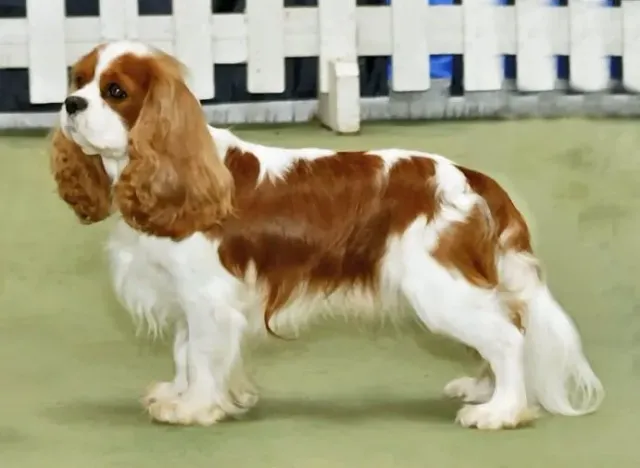
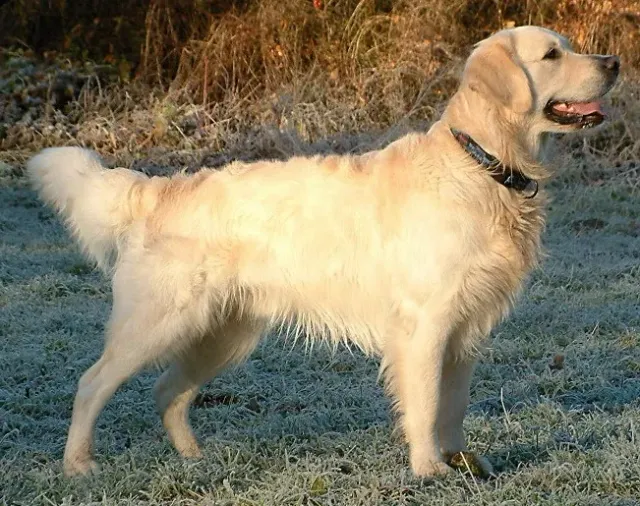
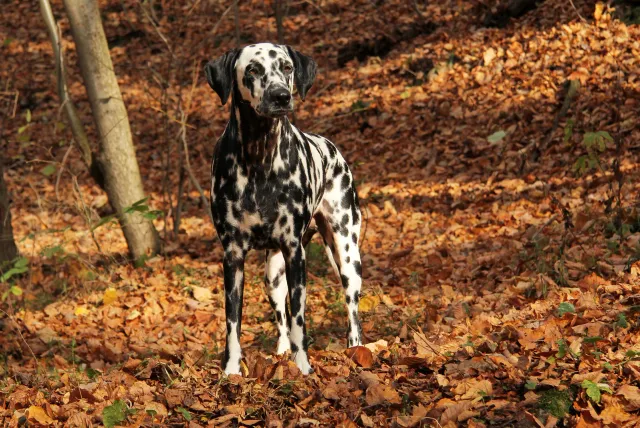
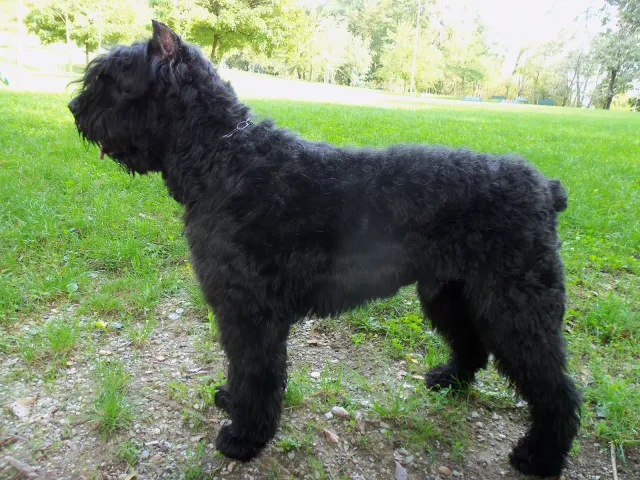
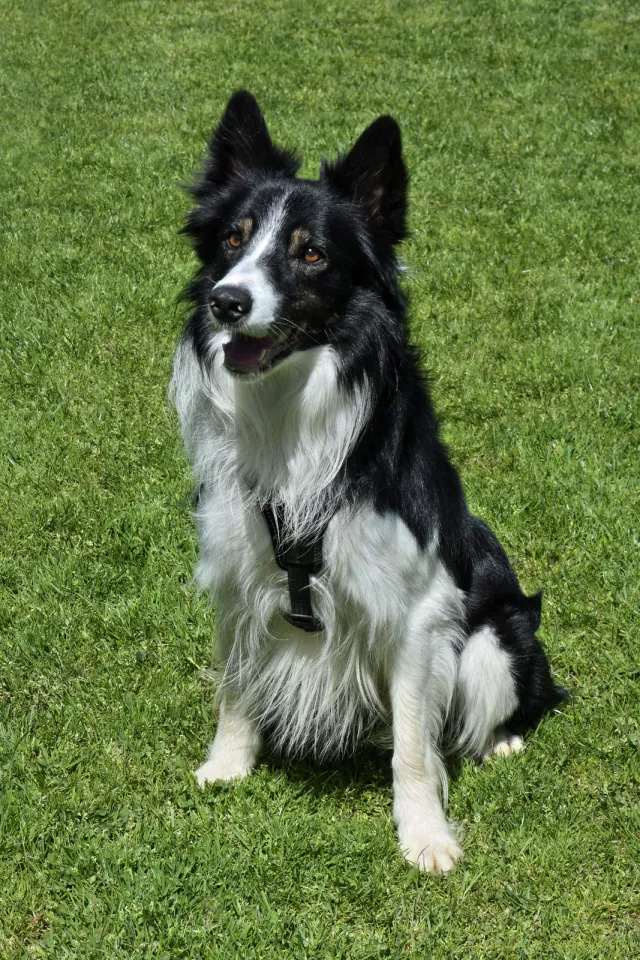
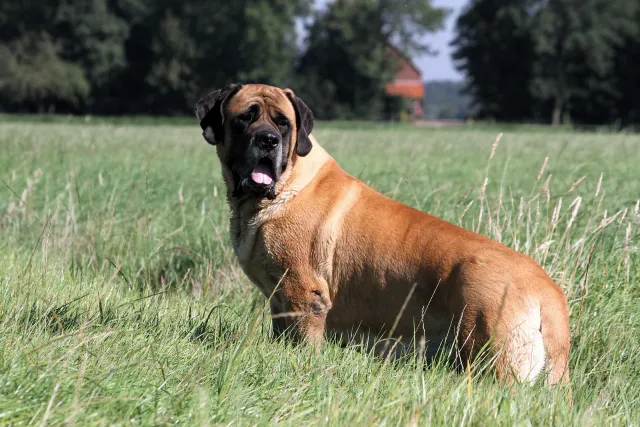
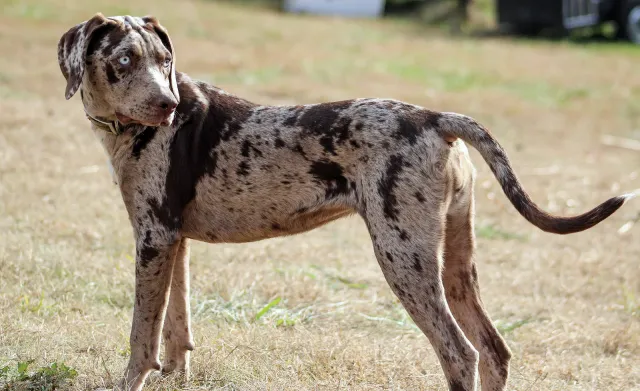
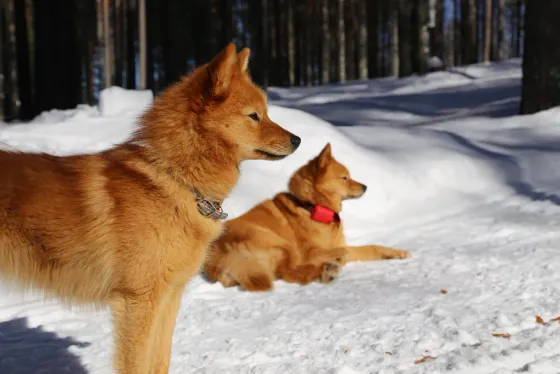
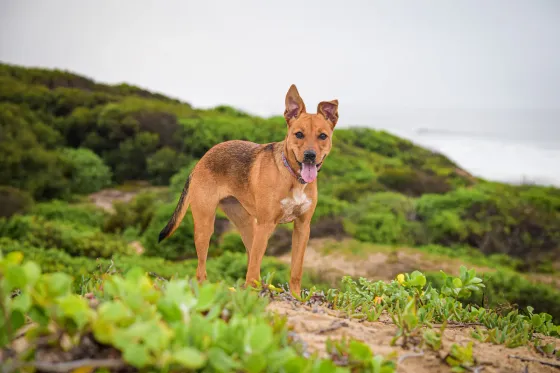
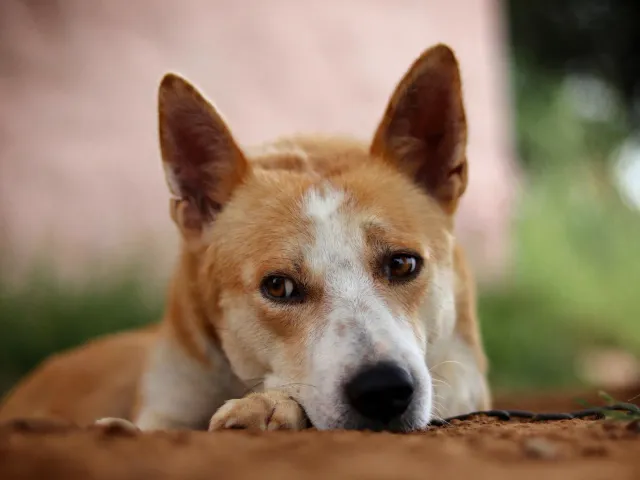
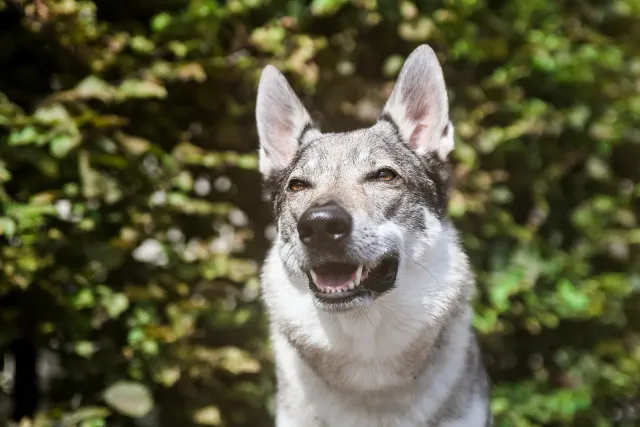
The dog family tree is a map of how dog breeds descend from one another, built from DNA. It starts with an Ice Age wolf population that no longer exists, runs through the first dogs, splits into two big lineages (East Eurasian and West Eurasian), and ends in 29 breed families in this atlas. Breeds in the same family share long stretches of DNA from recent common ancestors, even when they look and work very differently. The tree is a work in progress: 23 of the families come straight from one large 2017 study, and 6 were added by this project from other evidence.
Dogs descend from an extinct Late Pleistocene wolf population, not from today's grey wolf. Early dogs split into East and West Eurasian branches, and modern breeds grew out of those branches, mostly in the last few centuries. Scientists group them into families, called clades. This atlas counts 29.
Quick fact
Value
Breed families (clades) in the atlas
29 (23 from Parker et al. 2017, 6 inferred by this project)
Deeper lineages above the families
6 (East Eurasian, Arctic, Ancient American, West Eurasian, European, Levantine and African)
Breeds and types in the atlas
654, of which 80 are extinct
Breeds with DNA tested in the 2017 study
160 in the atlas data (the paper reports 161)
Root of the tree
Late Pleistocene wolf, then Domestic dog
Biggest family
Scent Hound, 113 breeds
Smallest families
Ancient Basal, 1 breed; Schnauzer, American Toy, 2 breeds each
In this atlas, family means a genetic , which is a branch of the tree where all members descend from one shared ancestor. Group is used only for kennel club groups, such as the groups of the American Kennel Club (AKC) or the FCI, the international federation of kennel clubs. Clubs sort breeds by the job they were made for. DNA sorts them by who their relatives are.
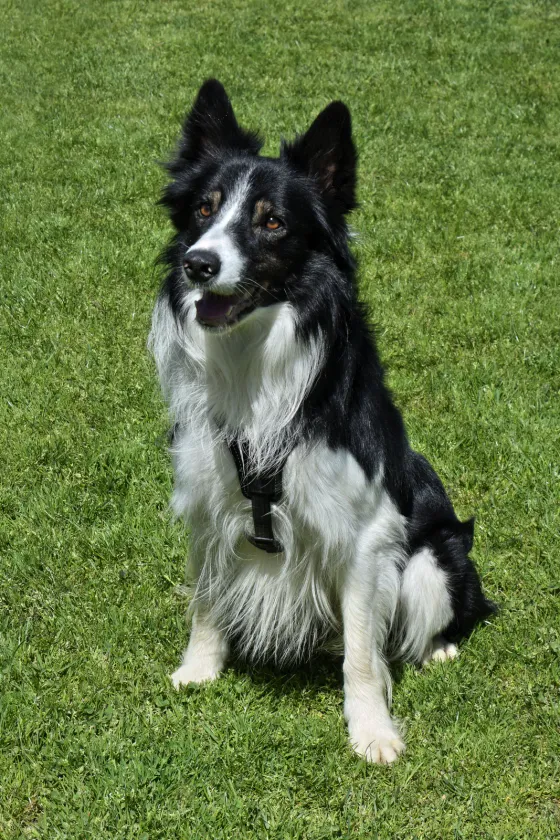
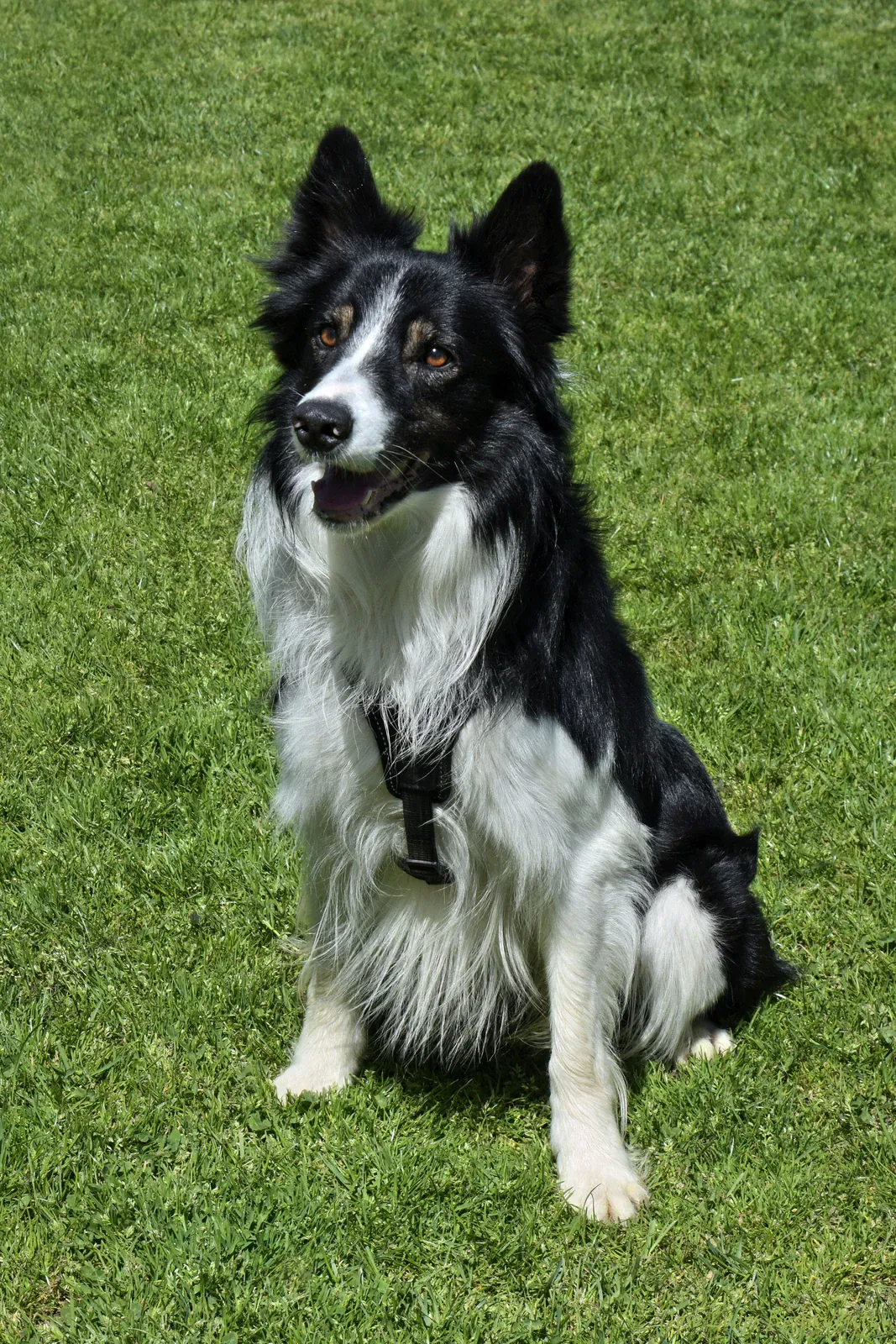
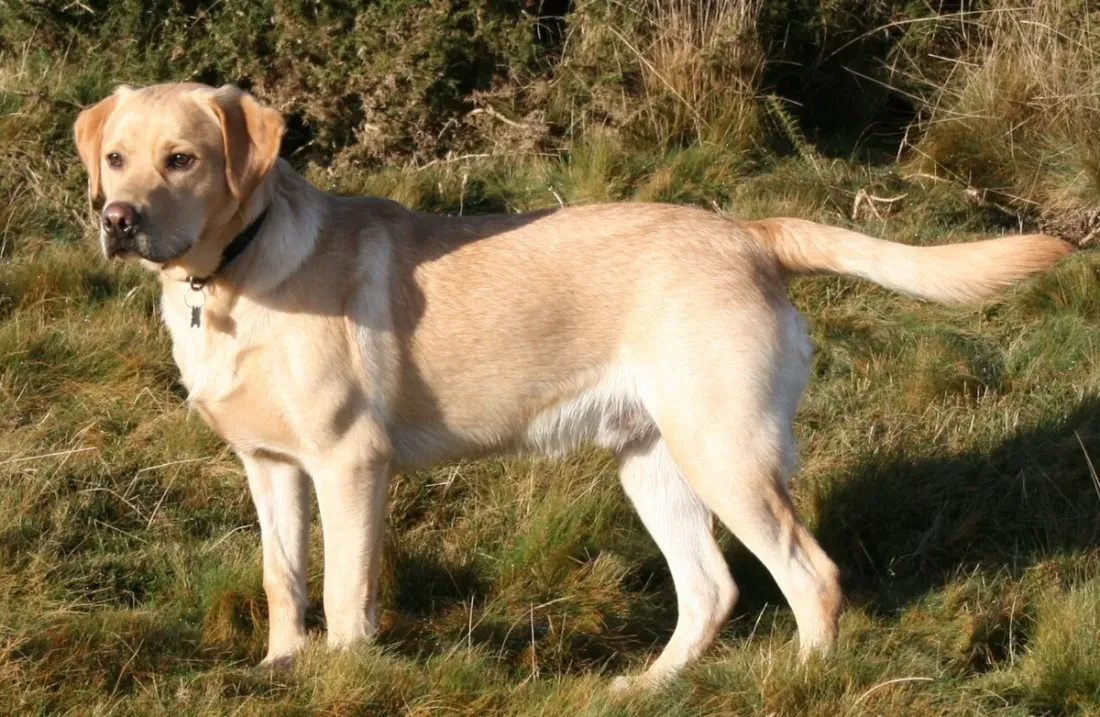
The two systems often disagree. The Greyhound and the Border Collie sit in the same DNA family, UK Rural. A kennel club puts the Greyhound with the sighthounds (FCI Group 10) and the Border Collie with the sheepdogs (FCI Group 1). The Boston Terrier has terrier in its name, yet its DNA places it in the European Mastiff family, next to the Bulldog and the Boxer. When you see "family" on this site, think relatives. When you see "group", think job.
A third word, lineage, means the deeper branches above the families. East Eurasian dogs and West Eurasian dogs are lineages. Families grow out of them.
They compare DNA from many dogs and measure how alike each pair of breeds is. The main source for this atlas is Parker and colleagues (Cell Reports, 2017), who studied 1,346 dogs from 161 breeds and found 23 well supported clades. Three ideas sit behind the method.
First, genetic distance. Two breeds that share many of the same DNA variants are close on the tree. Breeds that share few are far apart.
Second, haplotype sharing. A haplotype is a long stretch of DNA that travels together from parent to puppy. When two breeds carry the same long stretches, they probably share a recent ancestor, or one breed was crossed into the other. Long matches point to recent history, short ones to older history.
Third, , which means mixing between populations. The 2017 study found that dog breeds were often built by crossing existing breeds, and it reported more than 150 such mixing events. It also found that some traits, such as a short muzzle or a herding style, appeared more than once in separate parts of the tree.
This is why the tree and the kennel clubs do not match. Clubs group breeds by looks and work. Because the same job and the same look can be reached from different ancestors, breeds that look alike are not always relatives.
Dogs and grey wolves both come from a Late Pleistocene wolf population that is now extinct. Skoglund and colleagues (Current Biology, 2015) used the genome of a wolf from the Taimyr Peninsula in Siberia, about 35,000 years old, and placed the split between dog ancestors and modern wolves at roughly 27,000 to 40,000 years ago. That is a wide range, and scientists still argue about it.
Where the first dogs lived is also unsettled. Thalmann and colleagues (Science, 2013) read ancient mitochondrial DNA, which passes down the mother line, as pointing to Europe. Perri and colleagues (PNAS, 2021) argued for Siberia by about 23,000 years ago. Bergström and colleagues (Nature, 2022) found that dogs are closer to ancient wolves from eastern Eurasia, but that dogs in the Near East and Africa carry up to half of their ancestry from a second population linked to southwest Eurasian wolves. None of the ancient wolf genomes they studied was a direct match for either source.
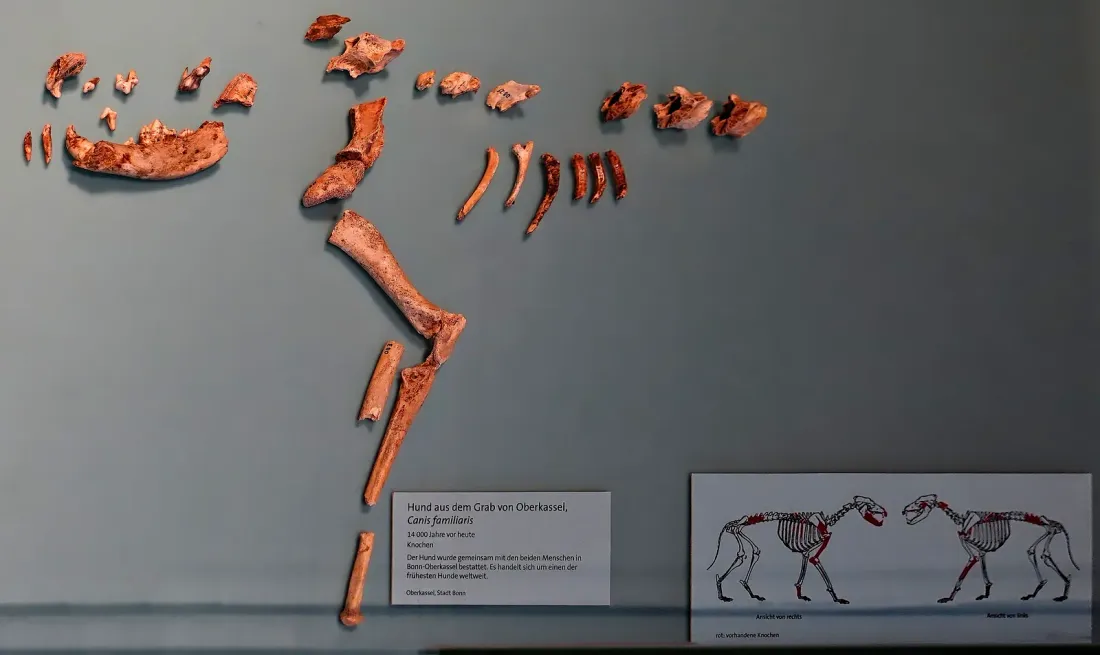
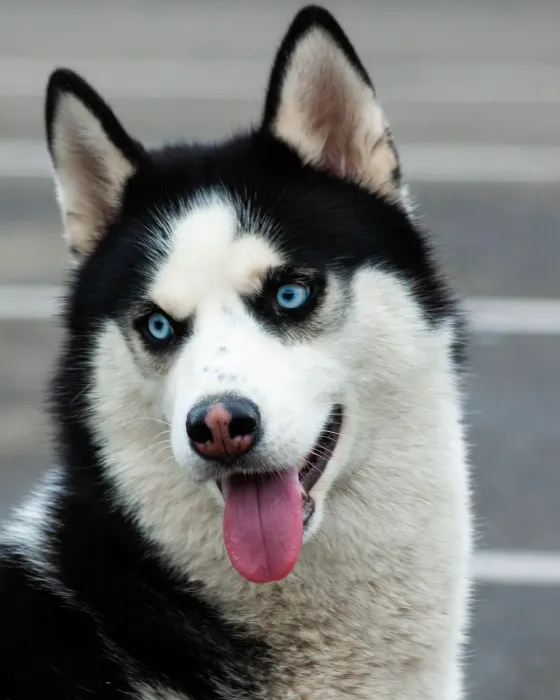
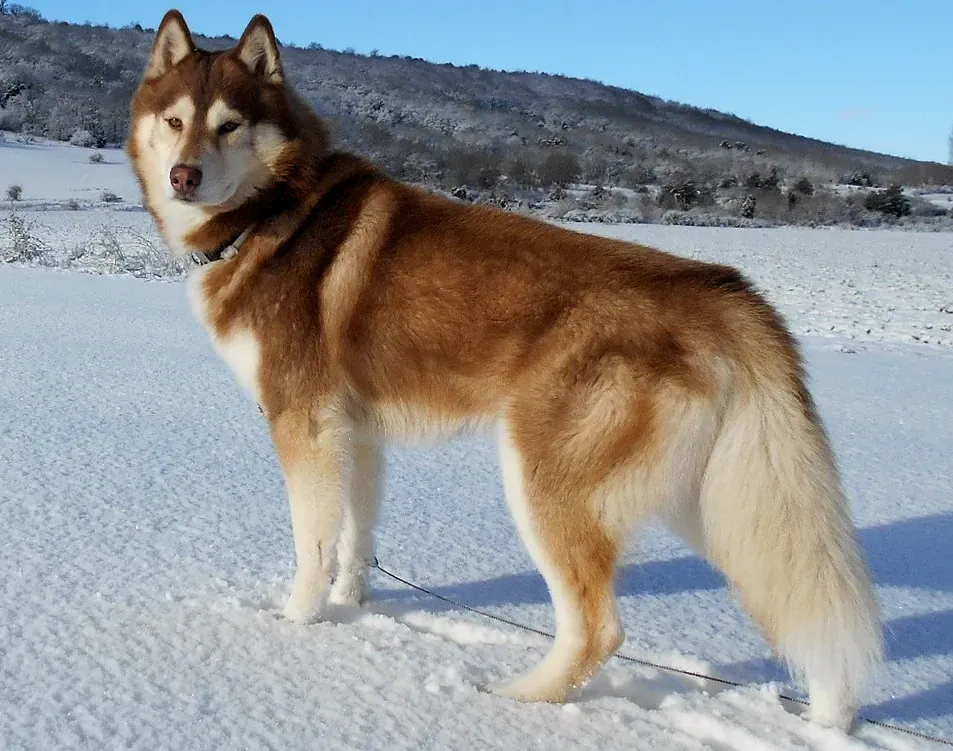
The oldest dog that most researchers accept is the Bonn-Oberkassel dog from Germany, buried about 14,200 years ago (Janssens and colleagues, Journal of Archaeological Science, 2018). Bergström and colleagues (Science, 2020) call about 14,500 years a conservative date for the first dogs. By 11,000 years ago, the same study found at least five dog lineages that had already separated. Dogs and wolves have also mixed since: Skoglund's team found Taimyr wolf ancestry in high-latitude breeds such as the Siberian Husky and the Greenland Dog.
So the path runs like this: Late Pleistocene wolf, then a population of domestic dogs, then deeper lineages, then breed families. The Prehistory era in the atlas covers all of that.
Bones of the Bonn-Oberkassel dog on museum display, with a skeleton diagram
The two big lineages are East Eurasian dogs and West Eurasian dogs. Modern breeds sit on one side or the other, with a few that mix.
East Eurasian dogs hold the spitz-type breeds of Asia and the Arctic, the small Asian companion dogs, and the dingo group. Inside them, the Arctic dogs lineage covers sled and spitz dogs from high latitudes. Ancient American dogs, a branch of the Arctic lineage, were the dogs that came into the Americas with the first people. Ní Leathlobhair and colleagues (Science, 2018) found that they were almost completely replaced after Europeans arrived, so modern American breeds carry little of their ancestry.
West Eurasian dogs hold nearly all European and Mediterranean breeds. Two branches sit inside: European dogs, the home of most Western breeds, and Levantine and African dogs, a branch from Bergström's 2020 finding that African dogs carry Levant-related ancestry. The Mediterranean family hangs directly on the West Eurasian lineage.
Two families hang outside both big lineages in the project's tree, because no study has placed them: Pariah and Village Dog, and the Wolfdog Hybrid family.
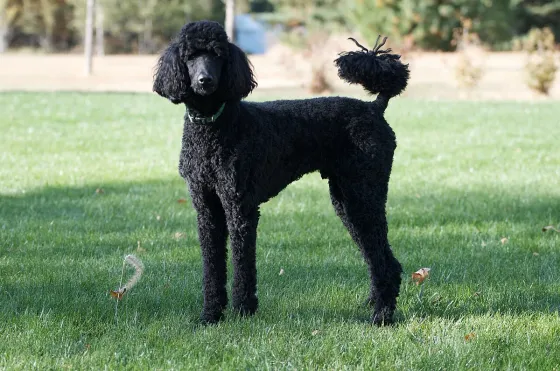
Twenty-three families are the clades named in Parker and colleagues (2017): Asian Spitz, Asian Toy, Nordic Spitz, Small Spitz, Toy Spitz, Schnauzer, Pinscher, Drover, Alpine, Hungarian, Poodle, Terrier, American Terrier, American Toy, New World, Scent Hound, Spaniel, Retriever, Pointer Setter, Continental Herder, UK Rural, European Mastiff and Mediterranean.
Six families are inferred. The study did not name them. This project made them so every breed in the atlas has a home, and it marks them as inferred in the data.
Pariah and Village Dog: free-breeding landraces, with no DNA-tested breed in the study.
Wolfdog Hybrid: recent crosses between dogs and wolves.
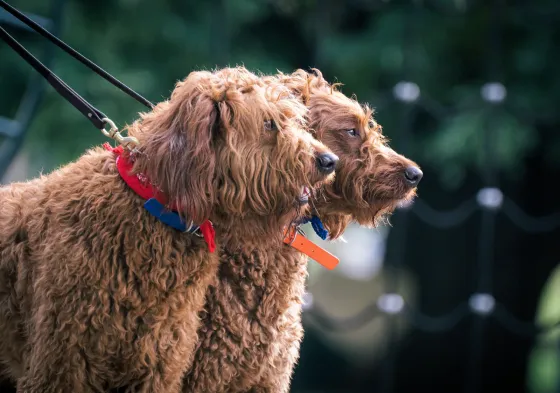
Modern Crossbreed: designer crosses such as the Labradoodle.
American Cur and Feist: American hunting dogs, no DNA-tested breed.
Dingo and Pacific: the dingo and Pacific island dogs, none tested.
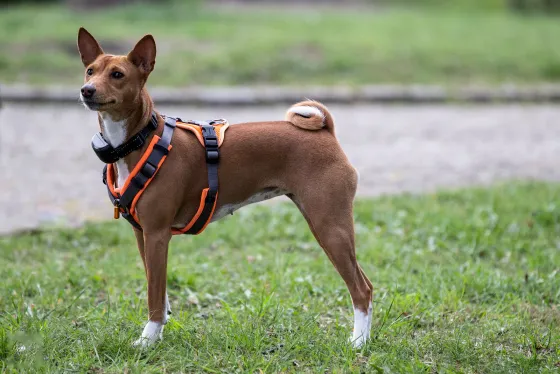
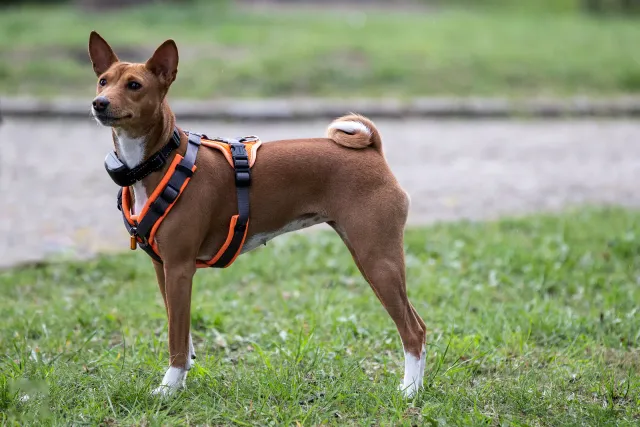
Ancient Basal: a single breed, the Basenji, which stands alone in the project's tree.
Treat the placement of these six as the project's best reading, not a published result.
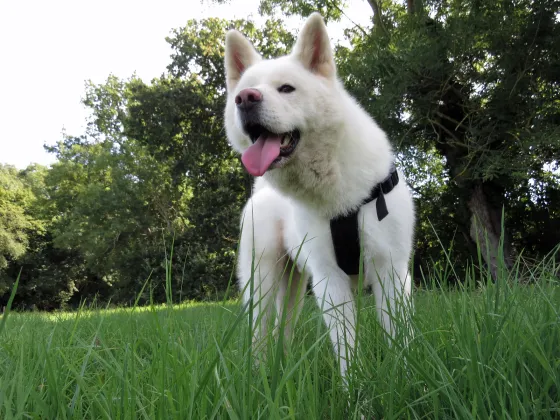
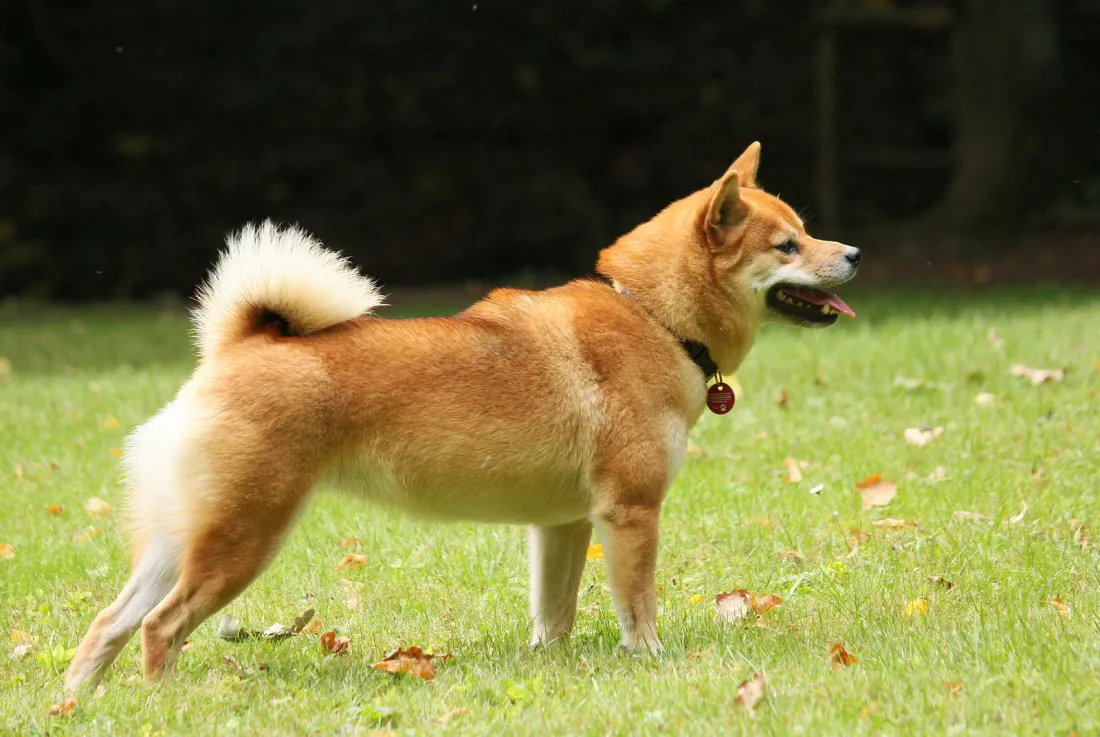
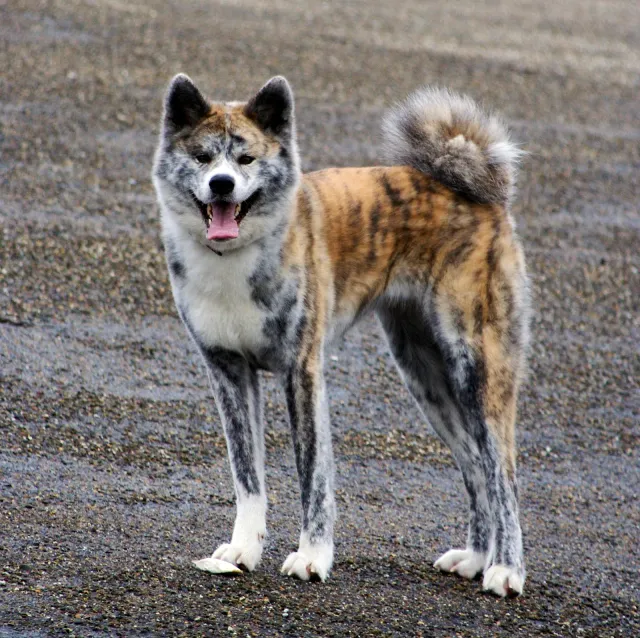
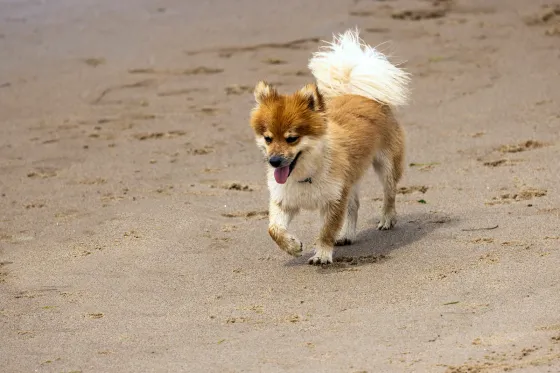
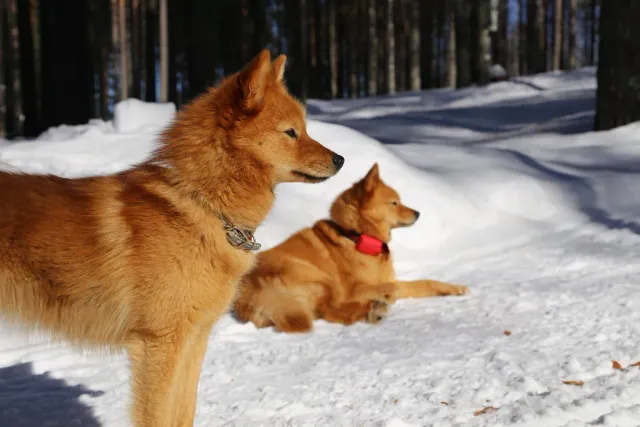
Spitz-type dogs from Asia and the Arctic with thick coats, curled tails and prick ears, from sled dogs to Japanese breeds. Two parents in the tree, East Eurasian dogs and Arctic dogs.
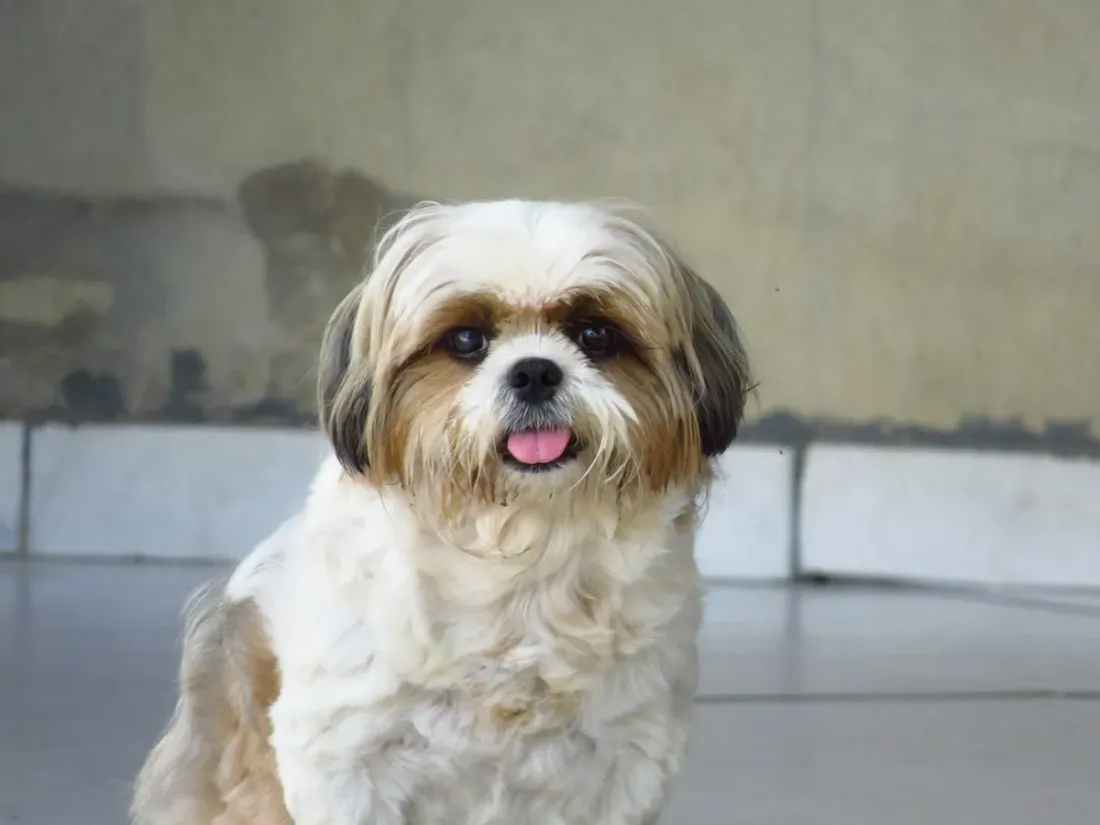
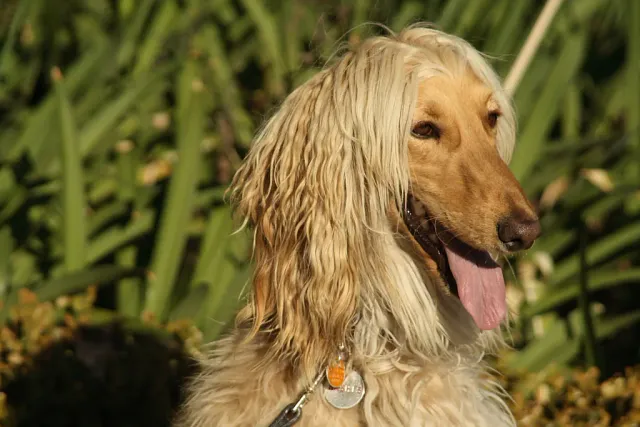
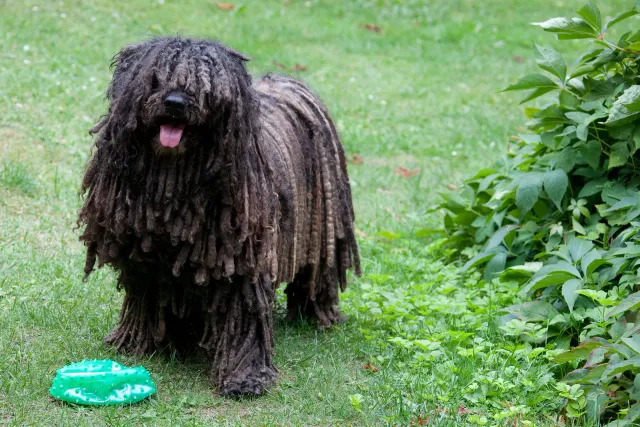
Small companion dogs from East and Central Asia, with flat faces and long silky coats in several breeds. Six of the seven were DNA-tested in the study.
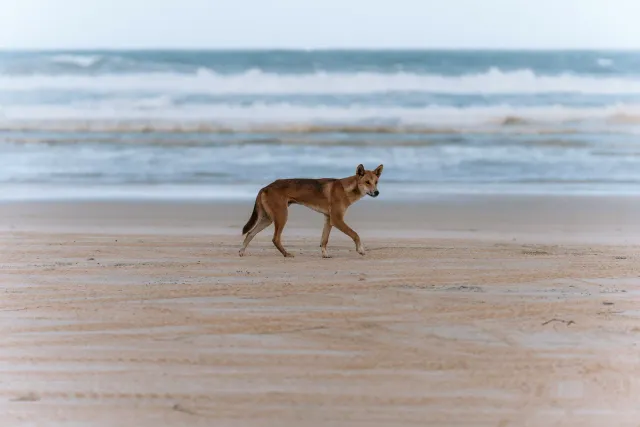
The dingo and its relatives, including island dogs that people carried across the Pacific. Most of the family is extinct. This is an inferred family, placed in the East Eurasian lineage because dingoes reached Australia from island Southeast Asia, carried by people.
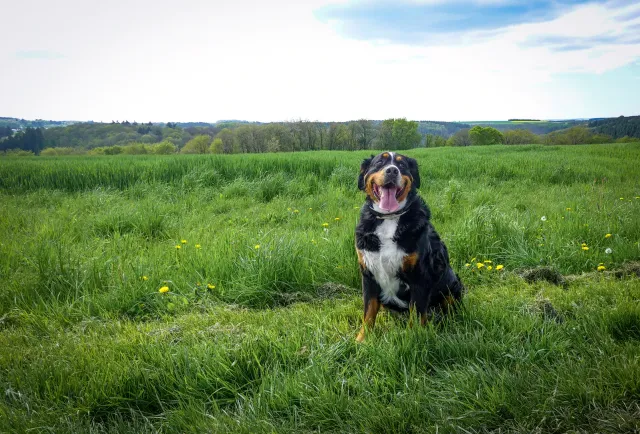
Sighthounds, mountain dogs and livestock guardians from southern Europe, the Middle East and Africa. It holds both slim runners and heavy guard dogs, so kennel clubs split it over several groups.
This is the biggest branch. Most breeds that kennel clubs recognise today sit here. Many took their present shape in the Victorian breed boom, when dog shows and stud books began.
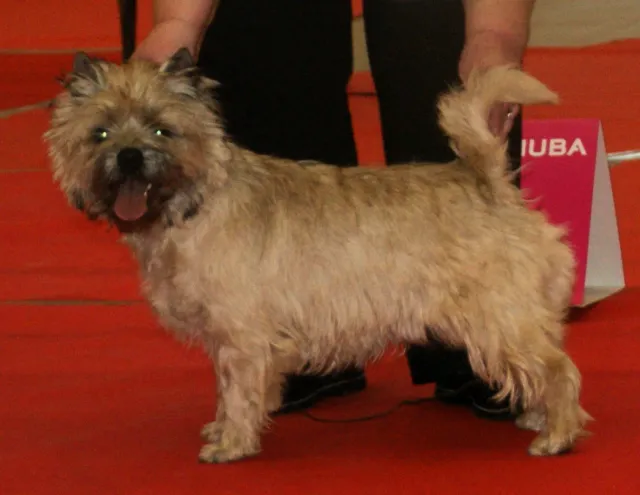
Dogs bred to hunt vermin and go to ground, mostly from Britain and Ireland. The Terrier clade is not the same thing as a kennel club's Terrier group: some "terriers" by name sit in other families.
A mixed family of breeds from the Americas, plus several European herders. It has two parents in the tree (see the next section). Six of its 15 breeds are extinct.
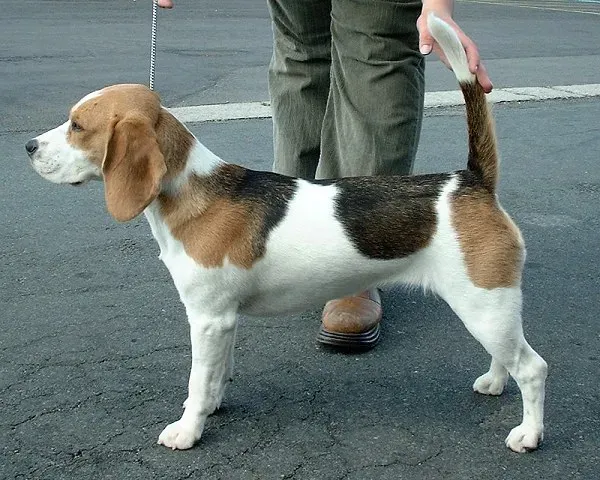
The largest family: dogs that follow a trail by nose. It includes packs of foxhounds, coonhounds, basset-type dogs and many regional French hounds. One in six is extinct.
British herding dogs and the places their dogs were taken, joined with a set of sighthounds. The name is a regional label from the 2017 study, not a job.
Free-breeding local dogs, shaped mostly by the places they live and not by breeders. They hang straight off Domestic dog in the tree because no study in the data has placed them in a lineage. Inferred family.
Dog families are not always clean branches. When a family grew from two sources, the tree shows both parents. Three families have two.
Asian Spitz descends from East Eurasian dogs and from the Arctic dogs inside them. The tree shows both links because the breeds belong to the wider East Eurasian lineage and to its Arctic branch.
New World has European dogs as its main parent and the pre-contact Ancient American dogs as a minor second parent. Ní Leathlobhair and colleagues (2018) found that modern breeds carry little pre-contact American ancestry, so the second link is small and mostly matters for the hairless dogs.
Wolfdog Hybrid has Domestic dog and Grey wolf as parents, because breeders crossed dogs with wolves on purpose.
A tree with only one parent per family would hide these crosses. Two parents show that mixing is part of dog history, not an exception.
Only roughly. The table shows the main kennel club group for each family, taken from the atlas data. Many breeds are not recognised by any large club, and some families spread over several groups.
DNA family
Main FCI group
Main AKC group
Terrier
3, Terriers
Terrier
Scent Hound
6, Scent hounds
Hound
Retriever
8, Retrievers, flushing dogs and water dogs
Sporting
Spaniel
8 and 7
Sporting
Pointer Setter
7, Pointing dogs
Sporting
Continental Herder
1, Sheepdogs and cattledogs
Herding
UK Rural
1 and 10, Sighthounds
Herding and Hound
Mediterranean
2, 1 and 10, among others
Hound and Working
European Mastiff
2, Pinscher, Schnauzer and Molossoid breeds
Working
Asian Spitz and Nordic Spitz
5, Spitz and primitive types
Working and Non-Sporting
Asian Toy, American Toy, Toy Spitz
9, Companion and toy dogs
Toy
Poodle
9 and 8
Non-Sporting, Sporting and Toy
No group matches one family exactly. FCI Group 2 holds the European Mastiff, Drover, Alpine and Pinscher families, and the Mediterranean family holds breeds from Groups 1, 2, 5 and 10. The Dachshund is another case: the FCI gives dachshunds their own Group 4, while DNA puts the Dachshund in the Scent Hound family.
The Greyhound and the Border Collie are relatives. Both sit in UK Rural, so a racing dog and a herding dog share recent ancestors.
The Boston Terrier is not a terrier. Its DNA puts it in the European Mastiff family, with the Bulldog and the Boxer.
The Dalmatian is a Pointer Setter. The carriage dog that kennel clubs treat as a companion sits with bird dogs.
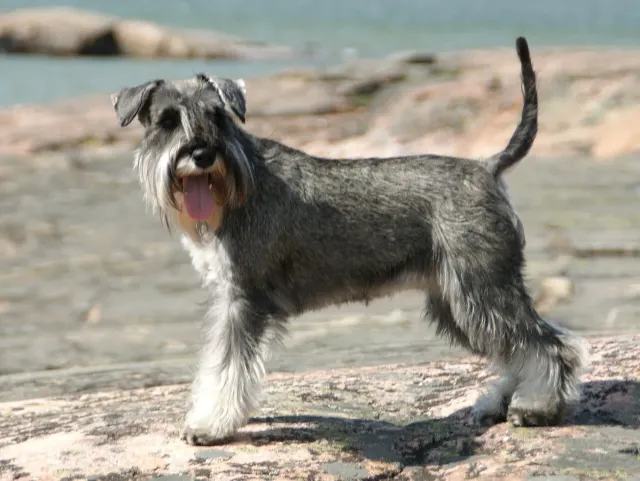
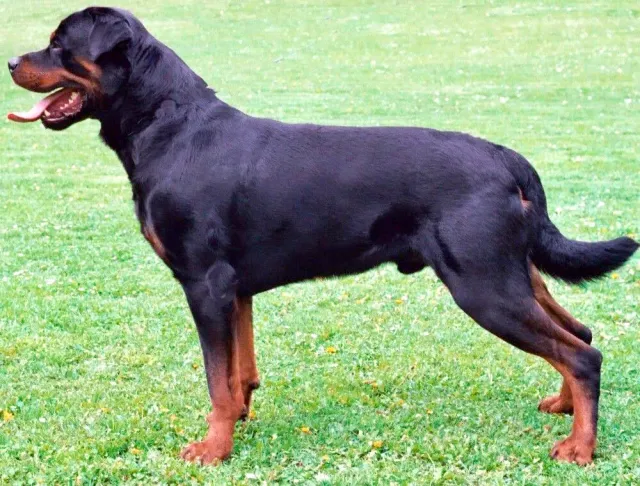
The Giant Schnauzer is not a Schnauzer. The Schnauzer family holds only two breeds. The giant version groups with the Rottweiler and Dobermann in the Drover family.
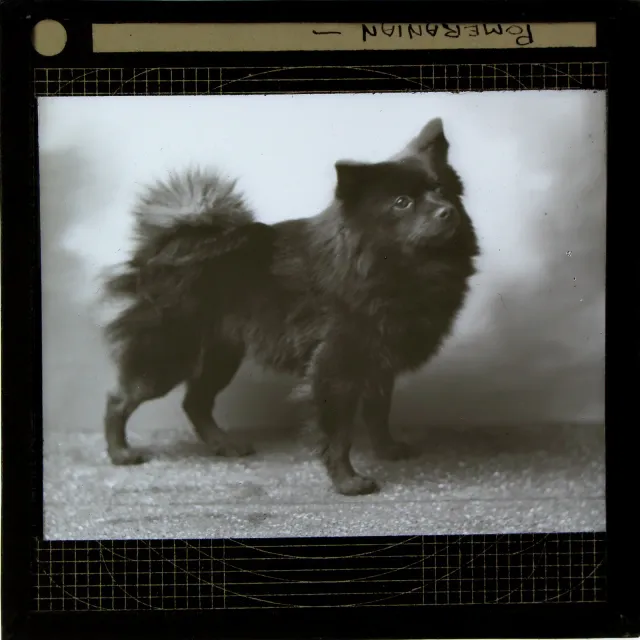
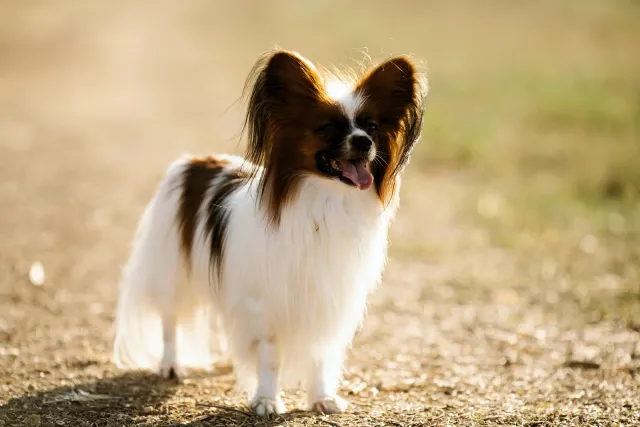
The Pug is not an Asian Toy. The flat-faced Pug sits with the Papillon in the Toy Spitz family, not with the Pekingese and Shih Tzu.
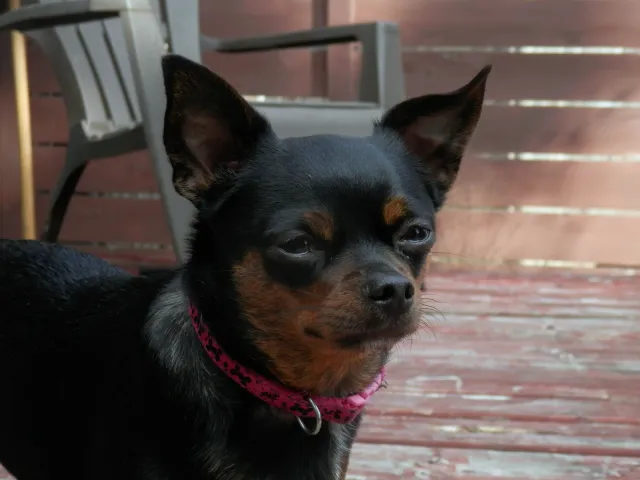
The Chinese Crested is in the American Toy family. The Chihuahua shares the family, and the two are both very small or hairless.
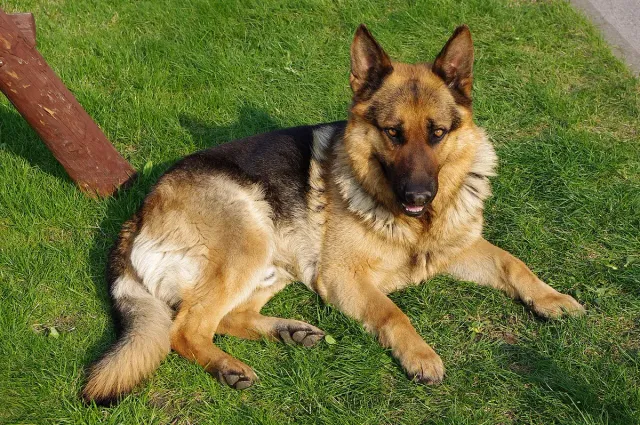
A German herder sits in a family called New World. The German Shepherd is one of the breeds the data places there.
Many breeds are young. A breed that looks ancient may have taken its present form in the last 150 years or so. The Kennel Club in the United Kingdom was founded in 1873,.
It depends on what "oldest" means. Dogs themselves are at least 14,000 years old, and the lineages behind modern breeds are older still. Breeds as kennel clubs define them, with written standards and closed stud books, are mostly young. Sighthounds and livestock guards of the Mediterranean family, spitz dogs of the Asian Spitz and Nordic Spitz families, and some Pariah and Village Dog types are the ones most often called ancient. For most of these the dates are estimates from art, writing and village history, not DNA-dated finds. The Basenji, often called ancient, sits alone in an inferred family, so the DNA data used here does not settle its age.
A diagram of how dog breeds are related, built from DNA. It starts at an extinct Ice Age wolf and ends at modern breed families. Breeds on the same branch share recent ancestors.
How many dog breed families are there?
This atlas shows 29. Twenty-three come from the 2017 Parker study, and 6 were added by the project. Other researchers might count a different number, because the answer depends on which breeds are tested and how branches are cut.
Are dogs descended from grey wolves?
Not from living ones. Dogs and today's grey wolves share an extinct wolf ancestor. Dogs and wolves have mixed since then, and some northern breeds carry traces of ancient wolf ancestry.
How are dog breeds related?
Through shared ancestors and through crossing. Breeds that share long stretches of DNA sit in the same family. Many breeds were made by crossing older ones, so a breed can belong to one family and still carry a link to another.
Is a family the same as a kennel club group?
No. A family is a DNA branch. A group is a kennel club category based on the dog's job. The Greyhound and the Border Collie share a family but sit in different kennel groups.
Are mixed breeds and designer crosses on the tree?
The atlas places them in Modern Crossbreed, next to European dogs. That family is a project grouping, not a genetic clade from a study.
Where can I learn about each family?
Each family has a card in this guide and will get its own full article.
Parker, H.G. et al. (2017). Genomic analyses reveal the influence of geographic origin, migration, and hybridization on modern dog breed development. Cell Reports 19(4): 697-708.
Skoglund, P., Ersmark, E., Palkopoulou, E. and Dalén, L. (2015). Ancient wolf genome reveals an early divergence of domestic dog ancestors and admixture into high-latitude breeds. Current Biology 25(11): 1515-1519.
Bergström, A. et al. (2020). Origins and genetic legacy of prehistoric dogs. Science 370(6516): 557-564.
Bergström, A. et al. (2022). Grey wolf genomic history reveals a dual ancestry of dogs. Nature.
Thalmann, O. et al. (2013). Complete mitochondrial genomes of ancient canids suggest a European origin of domestic dogs. Science 342(6160): 871-874.
Perri, A.R. et al. (2021). Dog domestication and the dual dispersal of people and dogs into the Americas. PNAS.
Ní Leathlobhair, M. et al. (2018). The evolutionary history of dogs in the Americas. Science 361(6397): 81-85.
Janssens, L. et al. (2018). A new look at an old dog: Bonn-Oberkassel reconsidered. Journal of Archaeological Science.
Atlas knowledge base: breed, family and period records, with family counts as of this draft.