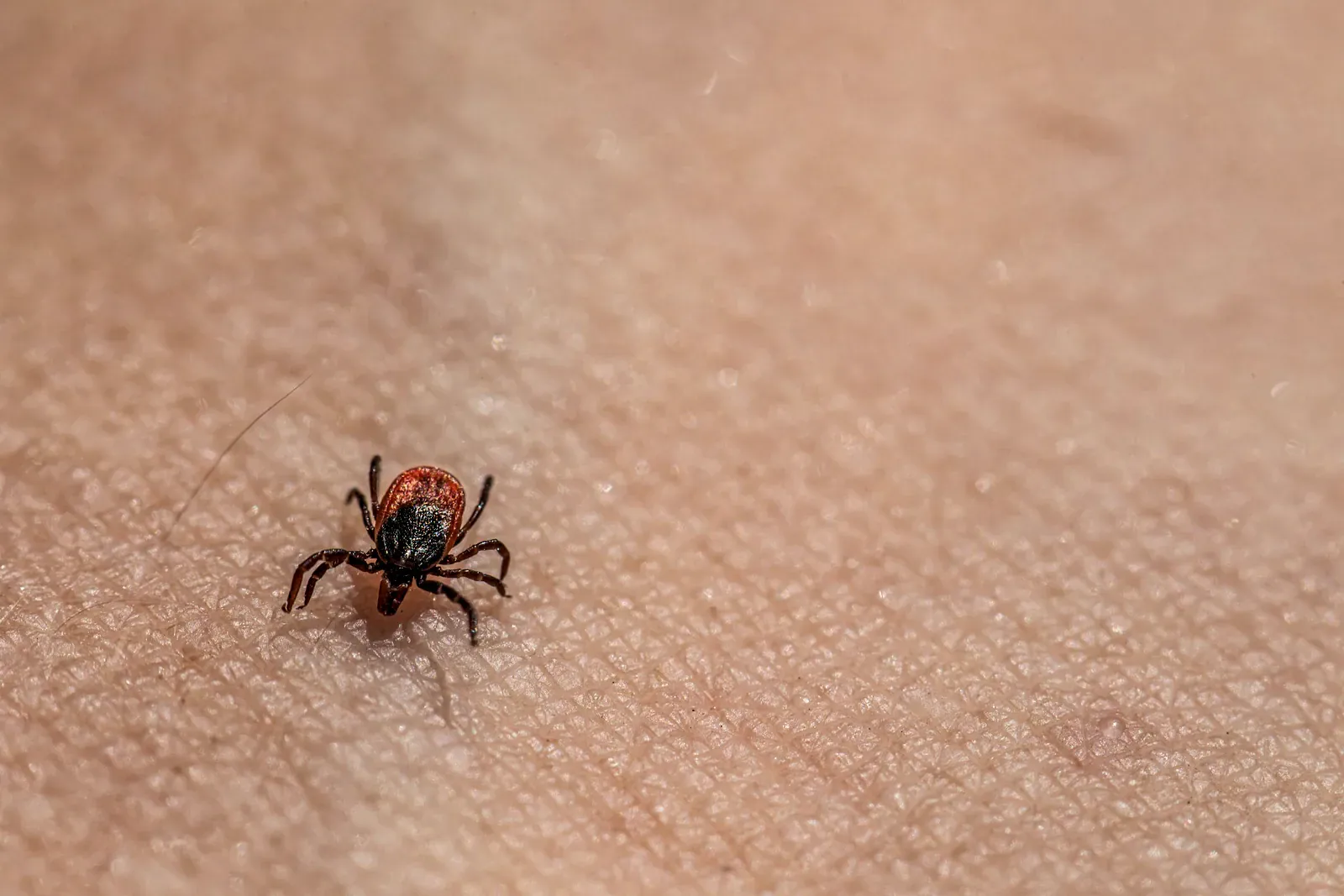
Most bites cause nothing worse than a small itchy spot. A few can pass on infections or trigger allergies, which is why a short routine matters more than worry: check your dog after walks, remove ticks properly, treat the home when fleas appear, and use a prevention product your vet has chosen for your dog and your region. This guide is general information for dog owners in the US, UK and Europe. It is not veterinary advice, and the choice of treatment belongs to your vet.
Quick answer
- Ticks are small, slow, eight-legged parasites that attach and feed for days. They are found in long grass, woodland edges, heath and leaf litter, mostly from spring to autumn, and in mild winters too.
- Fleas are tiny, fast, jumping insects. They live in the home as well as on the dog, so treating only the dog rarely clears an infestation.
- Check your dog's coat and skin by hand after walks in tick country.
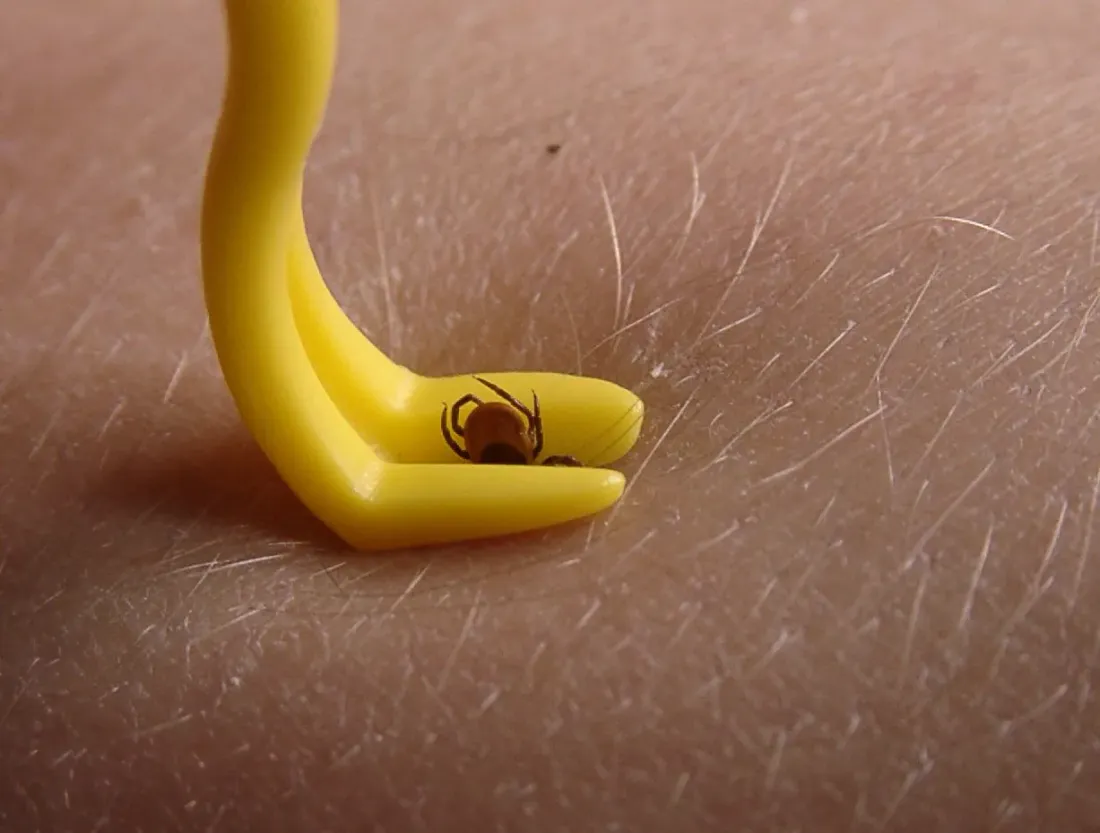
- Remove a tick with a tick hook or fine tweezers, close to the skin, with steady pulling. Do not burn it, smother it in oil or squeeze its body.
- Prevent with a vet-recommended product. Dosing, species and the local disease risk decide the choice.
- See a vet if your dog is unwell after a tick bite, if the mouthparts stay in the skin and the area looks sore, or if fleas keep coming back.

How to tell ticks from fleas
| Ticks | Fleas | |
|---|---|---|
| Group | Arachnids (relatives of spiders), eight legs as adults | Insects, six legs |
| Size | 1 to 3 mm unfed, up to a pea (about 10 mm) when full | About 1 to 3 mm |
| Movement | Crawl slowly, then attach in one spot | Fast, jump, hard to catch |
| Where on the dog | Head, ears, neck, armpits, groin, between toes | Lower back, base of the tail, belly, thighs |
| Where they live | Outdoors: grass, shrubs, woodland, leaf litter | On the dog plus bedding, carpets and cracks in floors |
| Feeding | One long meal of several days per stage | Frequent small meals, they stay on the dog |
| Typical sign | A lump that looks like a wart or a grey bean | Scratching, biting at the skin, black specks in the coat |
Fleas leave "flea dirt", which is their droppings: small black specks that look like ground pepper. Brush some onto damp white kitchen paper. If it smears reddish brown, it is digested blood, so it is flea dirt and not ordinary dirt.

Signs of fleas on dogs
- Scratching, chewing or licking, often near the tail base and hind legs.
- Flea dirt in the coat, or live fleas seen when you part the hair on the belly.
- Small red bumps, hair thinning or scabs, especially at the lower back.
- Restless nights, or a dog that suddenly dislikes being touched around the hips.
- Bites on people's ankles and lower legs.
Some dogs hardly scratch even with a real infestation, so absence of itching does not rule fleas out. Dogs with flea allergy (see below) can react badly to just a few bites.

How to check your dog for ticks
Ticks are easiest to deal with in the first hours, before they have been feeding long. Many tick-borne bacteria take time to pass from tick to dog, so early removal lowers the risk. The exact time varies by pathogen and tick species, so treat "quickly" as the aim and not as a safe window.
An after-walk routine
- Use a towel or hand rub as soon as you are home. Feel for bumps while the dog relaxes.
- Run your fingertips slowly against the lie of the coat, covering the whole body.
- Check the usual spots one by one: around the lips and chin, behind and inside the ears, under the collar, neck, armpits, chest, belly, groin, inner thighs, tail base and between the toes.
- Part the hair on thick or curly coats. Dark coats hide ticks well, so rely on touch and good light.
- Check yourself, children and anyone who shared the walk. Ticks often drop off clothing indoors.
- Do a slower full check at the weekend or once a week in tick season, even if walks were short.
- Brush or comb the coat with a fine comb. It also catches fleas.
Long-coated breeds, breeds with drop ears and dogs that rummage in undergrowth need more careful checking. A tick is easy to confuse with a skin tag, a wart or a scab, so look closely. A tick often has visible legs near the skin surface.


How to remove a tick safely
You need a tick hook or fine pointed tweezers. Many vets and pet shops stock simple tick removal tools. They are cheap and kept in a coat pocket or walking bag.
- Keep the dog calm. Ask a helper to hold or distract the dog with a treat.
- Part the hair so you can see the tick and where its mouthparts enter the skin.
- Grip the tick as close to the skin as you can, by the head and mouthparts, not by the swollen body.
- Pull out steadily and straight, without twisting jerks. With a hook tool, slide it under the tick and rotate gently as its instructions say until the tick lets go.
- Check that the tick came out whole. A tiny black dot of mouthparts left behind is usually pushed out by the skin over days, though it can cause a small sore spot.
- Clean the skin with mild antiseptic made for pets, or soap and water, and wash your hands.
- Put the tick in a sealed container or tape it to paper. Note the date and where on the dog it was. Your vet can identify it if the dog becomes unwell.
- Watch the spot and the dog for the next weeks (see "When to see a vet").
What not to do
- Do not burn it with a match or cigarette. You risk burning your dog.
- Do not smother it with oil, petrol, nail varnish remover, alcohol or petroleum jelly. This does not make it let go, and a stressed tick may release more of its gut contents into the wound.
- Do not squeeze the body. The gut contents can be pushed into the skin.
- Do not crush it with bare fingers. Disease agents can pass to people through broken skin.
- Do not leave it hoping it drops off. A feeding tick can stay for days.
- Do not use household sprays or human insect repellents on the dog. Some are poisonous to dogs.
The flea life cycle and why the home matters
A flea has four stages: egg, larva, pupa and adult. Only the adult lives on the dog. The rest of the cycle happens in the environment, which explains why a flea problem seems to "come back" after treatment.
| Stage | Where | Notes |
|---|---|---|
| Egg | Drops off the dog into bedding, carpets, sofas, gaps in floorboards | Laid in large numbers by the adult female each day |
| Larva | Dark, warm places away from light, feeding on flea dirt and debris | Avoids light, hides deep in carpets and bedding |
| Pupa | Cocoon in the same places | Can stay dormant for weeks or longer, then hatch when it senses warmth, movement or vibration |
| Adult | Jumps on a host and starts feeding within minutes | Lives and breeds on the dog |
Veterinary parasitology guidance, including from ESCCAP (the European Scientific Counsel Companion Animal Parasites) and CAPC (the US Companion Animal Parasite Council), commonly describes the adults on the pet as only a small share of the total flea population, with most of the population in the home as eggs, larvae and pupae. This is why guidance usually combines treating all pets in the home with cleaning the environment.
What clearing a flea problem usually involves
- Treat every dog and cat in the home with a product your vet recommends, on schedule and without gaps.
- Wash bedding, blankets and soft toys at a hot wash, as hot as the fabric allows.
- Vacuum often, including edges, under furniture, car seats and the dog's favourite spots. Empty or bin the bag or dust container outside straight away.
- Keep going. Pupae hatch for weeks after the first treatment, so plan on at least a few months of steady prevention. Your vet can say how long for your situation.
- Ask your vet about home treatments if the infestation is heavy. Use only products labelled for that purpose, and keep pets and children away as the label says.
Central heating can keep fleas active in winter, so "flea season" is year round in many homes.
Diseases carried by ticks and fleas
The chance that a tick bite makes a dog ill depends on where you live, which tick it is, how long it fed and whether it carried an infection. Most bites do not lead to illness. A vet can tell you which diseases matter in your area.
Tick species and regions
- Europe and the UK: the sheep tick or castor bean tick (Ixodes ricinus) is widespread across most of Europe except the hot, dry Mediterranean areas. It carries the bacteria behind Lyme disease (Borrelia burgdorferi sensu lato) and Anaplasma phagocytophilum. The ornate dog tick or marsh tick (Dermacentor reticulatus) carries Babesia canis. The brown dog tick (Rhipicephalus sanguineus) is common in southern Europe and can live indoors.
- UK specific: in 2016, researchers reported dogs in Harlow, Essex, with babesiosis and no history of travel abroad. A Dermacentor reticulatus tick from one dog carried Babesia canis. Local surveys found infected ticks in the area. Researchers and vets have watched UK spread since.
- North America: the blacklegged or deer tick (Ixodes scapularis, and Ixodes pacificus on the Pacific coast) carries Lyme disease and anaplasmosis. The American dog tick and the lone star tick are more widespread, with other regional diseases. The brown dog tick can infest homes and kennels in many places.
Common diseases
| Condition | What it is | Spread by | Where | How common |
|---|---|---|---|---|
| Lyme disease (borreliosis) | Bacterial infection that can cause lameness, fever and low energy | Ixodes ticks | North America, much of Europe including the UK | See below |
| Babesiosis | Parasite that infects red blood cells, can cause pale gums, weakness, dark urine | Dermacentor, Rhipicephalus and others | Southern and central Europe, parts of the UK, parts of North America | Region and breed dependent |
| Anaplasmosis | Bacterial infection with fever, joint pain, lethargy | Ixodes ticks | Europe, North America | Common exposure in tick areas, most dogs show mild or no signs |
| Ehrlichiosis | Bacterial infection that can affect blood cells | Brown dog tick, lone star tick | Southern Europe, southern US, many warm areas | More common in warm regions |
| Tapeworm (Dipylidium caninum) | Intestinal worm, segments like rice grains near the tail | Dog swallows an infected flea | Worldwide | Linked to flea presence |
| Flea allergy dermatitis | Itchy skin reaction to flea saliva | Fleas | Worldwide | Seen in sensitive dogs |
Lyme disease in dogs. CAPC data on US dog tests reported that about 5% of canine samples submitted in 2019 were positive for antibodies to Borrelia burgdorferi (359,461 of 7,057,815). That is about 1 in 20 dogs tested, and it is a figure for dogs that were tested, not for all dogs. A positive antibody test shows exposure, not disease. Veterinary sources commonly state that only a small share of exposed dogs, around 5 to 10 per cent, show signs, which can include shifting lameness, fever and tiredness. Treatment is usually with antibiotics, decided by the vet.
Babesiosis. Babesia parasites invade red blood cells. Signs can include fever, tiredness, pale gums and dark urine. Vets treat it with specific drugs, and dogs that become ill need prompt veterinary care.
Anaplasmosis and ehrlichiosis. Both are bacterial infections spread by ticks. Many exposed dogs show nothing or a mild fever. Where a dog has signs, a blood test and antibiotics are typical.
Tapeworm. Dogs get Dipylidium caninum by swallowing an infected flea, often while grooming. Owners may see rice grain segments around the tail or on bedding. Fleas and tapeworm treatment go together, and a vet will advise.
Flea allergy dermatitis. In dogs that are allergic to flea saliva, a few bites can cause intense itching, hair loss, red skin and secondary skin infections. Strict flea control matters for these dogs, and a vet may treat the skin as well.
In some regions, other tick-borne infections occur. Ask your vet which ones are local.
Prevention: types of products
No single product suits every dog. Vets usually choose based on the dog's age, weight and health, the other animals in the home, whether the dog swims, and the local tick and flea species and disease risk. Never use a product made for another species, and weigh the dog before dosing.
| Type | How it works in general terms | Points to know |
|---|---|---|
| Spot-on | Liquid applied to the skin between the shoulder blades, spreads over the skin | Waiting time before bathing or swimming. Keep children and other pets from the application site until dry |
| Oral tablet or chew | Dog swallows a drug that circulates in the blood, parasites die after biting | Often lasts weeks to months. Check the label for dogs with seizure history or other health conditions, and ask your vet |
| Collar | Releases active ingredients slowly over months | Check fit and age limits. Remove before grooming or swimming if the label says so |
| Spray or shampoo | Applied to the coat, short term | Often used for quick relief or as an extra. Needs correct use and does not protect long term |
| Prescription injectable or other | Given by a vet for specific problems (for example, flea control in some countries) | Availability differs by country |
Drug classes
Vets mention classes of active ingredients rather than brands. Examples include the isoxazolines, a class of oral and spot-on drugs that act on the parasite's nerve cells, plus others such as permethrin, a synthetic pyrethroid. Which classes are licensed and which are common differs by country. Regulators in the US (the FDA) and Europe have published safety information on the isoxazolines, including a warning about dogs with a history of seizures. Discuss any history with your vet before choosing.
Warning: permethrin and cats
Some dog products containing permethrin can be seriously poisonous to cats. Cats can be harmed by contact with a recently treated dog, for example by grooming it or sleeping on the same bed. Never use a dog flea product on a cat. In a home with cats, tell your vet when choosing a dog product, read the label and follow its advice about separating pets. If a cat shows tremors, drooling or twitching after contact with a dog product, go to a vet at once.
Getting the schedule right
- Prevention works best when applied on time all year, or at least through the months that ticks and fleas are active where you live.
- Missed doses create gaps. Set a calendar reminder.
- A tick can attach to a treated dog, because many products work after the parasite bites. This is why checking continues even on prevention.
- Always give the full dose for the dog's weight, and re-check as puppies grow.
- If a product does not seem to work, tell your vet and do not just add a second one.
Environmental concerns about flea treatments
Some active ingredients used in spot-on flea products are toxic to aquatic life. A study by Perkins and Goulson at the University of Sussex, published in the journal Science of the Total Environment in 2021, analysed Environment Agency monitoring data from English rivers for 2016 to 2018. It found fipronil in 98 per cent of freshwater samples and imidacloprid in 66 per cent. The authors concluded fipronil and its breakdown products posed a high risk to aquatic life. They also noted that these chemicals have limited environmental assessment for pet use, compared to use on farms. The study cannot tell how much comes from dogs and cats compared with other sources.
What owners can do without leaving the dog unprotected:
- Use prevention only when the risk is there, on the label's schedule, and choose with your vet, who can discuss options for your area.
- Do not let a dog swim or paddle in a river, pond or stream shortly after a spot-on treatment. Follow the product's waiting time.
- Wash the dog only when needed. Frequent baths wash active ingredients into drains, and many wastewater plants do not filter them out.
- Treat when needed instead of using products "just in case" if your vet confirms the risk is low in your area.
- Dispose of used applicators and unused product as the label says, never down the drain.
"Natural" remedies: what the evidence says
Many owners prefer to avoid chemicals. It helps to be clear about what the evidence supports.
- Garlic and brewer's yeast: a controlled study reported in the Journal of the American Veterinary Medical Association found brewer's yeast fed to dogs did not repel or kill fleas. Garlic has no good evidence for flea control, and can harm dogs in larger amounts.
- Essential oils: some oils repel insects in laboratory conditions, but repelling is not the same as protecting a dog from tick-borne disease. Many essential oils, such as tea tree, are poisonous to dogs and especially to cats. Do not apply them undiluted, and do not use them on cats.
- Diatomaceous earth: it can dry out insects. It works only when dry, can irritate lungs and eyes if inhaled, and has not been shown to protect a dog against ticks. Use only as a minor home aid, if at all, and never on the dog's coat without veterinary advice.
- Apple cider vinegar, coconut oil and similar household items: there is no reliable evidence that they prevent ticks or fleas.
- Physical measures with real value: regular coat checks, combing with a flea comb, avoiding long grass in peak tick season, keeping lawns short, and washing bedding and vacuuming often. These reduce exposure but do not replace a licensed product in areas of tick-borne disease.
"Natural" does not mean harmless, and "chemical" does not always mean worse. Tell your vet what you are considering and ask which option fits your dog.
When to see a vet
Contact a vet if:
- Your dog is lethargic, off food, feverish, lame (especially if the leg that hurts changes), has swollen joints, pale gums, or dark or red urine in the weeks after a tick bite.
- A tick's mouthparts remain and the skin is red, swollen or weeping.
- You cannot remove a tick, for instance one on an eyelid, or a dog that will not allow it.
- A puppy, a senior dog or a dog with another illness has fleas, since heavy flea burdens can cause anaemia in small or weak dogs.
- Itching is intense, skin is broken or bald, or fleas return after treatment.
- Your dog has been in a part of the world with other tick-borne diseases (for example after travelling in southern or eastern Europe), and shows any of the signs above even months later.
- You are unsure which product is safe for your dog, especially with a seizure history, kidney or liver disease, or a pregnant or nursing dog.
If you took a tick off, keep it and tell the vet when and where it was found.
People and pets
Ticks and fleas can bite people. Ticks pass Lyme disease and other infections to people in the same woods your dog walks through. Dogs do not directly pass Lyme disease to people. However, a dog can carry ticks home, where they drop off and bite someone. Veterinary and public health sources, including CAPC, describe dogs as signs of local tick risk, because a tick found on a dog says something about the area.
Dogs do carry fleas, and those fleas bite people, usually on the ankles and lower legs, leaving small itchy bumps. Fleas do not live on humans for long. That answers the common question "can dogs give humans fleas": a dog can bring fleas into the house, and the fleas may bite you, but they cannot set up home on your skin. Children can also swallow an infected flea and get tapeworm, but this is rare.
Keep calm and keep it practical: check everyone after outdoor time, treat pets on schedule, and wash hands after removing ticks. If you have a tick bite, see the local public health guidance, and ask your doctor if you develop a rash or fever.
Frequently asked questions
How do I remove a tick from my dog?
Use a tick hook or fine tweezers, grip close to the skin, and pull out steadily. Do not burn, smother or squeeze it. Clean the spot and keep the tick in a sealed container in case the dog becomes ill.
What is tick season for dogs?
It varies by region and weather. In much of Europe and North America ticks are most active from spring to autumn, with peaks in spring and autumn in many places. Mild winters mean ticks can be active in the cold months too, so many vets suggest year round vigilance. Ask your vet about your area.
What are the signs of fleas on dogs?
Scratching, chewing, black flea dirt in the coat, red bumps, hair loss near the tail base, and bites on people's ankles. Some dogs show few signs.
How do I check a dog for ticks?
After walks, run your hands slowly over the whole body, including ears, chin, armpits, groin and between the toes. Do a slower full check weekly in tick season.
Can dogs give humans fleas?
Dogs can bring fleas into the home, and the fleas can bite people, usually on the ankles. They do not live on human skin.
Can I get Lyme disease from my dog?
Not directly from the dog. People get it from infected tick bites. A dog can carry a tick that then bites you.
Do indoor dogs get fleas?
Yes. Fleas hitch a ride on people, other pets and wildlife and can be picked up in the garden, on pavements and in shared spaces. Central heating helps them survive in winter.
Is natural flea treatment for dogs safe and effective?
Evidence for most home remedies is weak, and some, such as many essential oils, can poison pets. Ask your vet before trying one.
How long does it take to get rid of fleas?
Often several weeks to a few months, because eggs and pupae in the home keep hatching after the first treatment. Treating all pets and cleaning the home together works best.
Can fleas or ticks make my dog seriously ill?
Most do not. A small number cause tick-borne disease, anaemia from heavy flea burdens, or severe itching. Contact the vet if your dog seems unwell.
What if the tick head stays in the skin?
Usually the skin pushes out small remains over days. Clean the area and watch it. If it is red, swollen or sore, see the vet.
Read next
Sources (7)
- ESCCAP (European Scientific Counsel Companion Animal Parasites), guidelines on control of ectoparasites in dogs and cats.
- CAPC (Companion Animal Parasite Council), parasite prevalence maps and guidelines for ticks, fleas and tick-borne disease, including the 2019 canine Borrelia burgdorferi antibody test data (359,461 of 7,057,815 samples positive).
- Perkins R, Goulson D, University of Sussex, "Widespread contamination of English rivers by fipronil and imidacloprid", Science of the Total Environment, 2021, using Environment Agency data for 2016 to 2018.
- Hansford K and colleagues, reports on Babesia canis in Dermacentor reticulatus ticks and dogs in Harlow, Essex, UK, 2016, Parasites and Vectors and veterinary press.
- Journal of the American Veterinary Medical Association, controlled study of brewer's yeast as a flea repellent in dogs.
- BVA (British Veterinary Association), BSAVA (British Small Animal Veterinary Association) and US FDA public safety information on flea and tick products, including isoxazoline warnings.
- Public health agencies in the US, UK and Europe (CDC, UKHSA, ECDC), general information on tick bites and Lyme disease in people.