Older bones from Belgium, Siberia and Czechia, 31,000 to 36,000 years old, are still argued over. Dogs then reached every inhabited continent by following people: the Near East about 12,000 years ago, the Americas about 10,000 years ago by the oldest finds (people arrived about 15,000 years ago), Africa about 6,500 years ago, Australia about 3,300 years ago. South America's first securely dated dogs are younger than expected, and Antarctica has no native dogs at all.
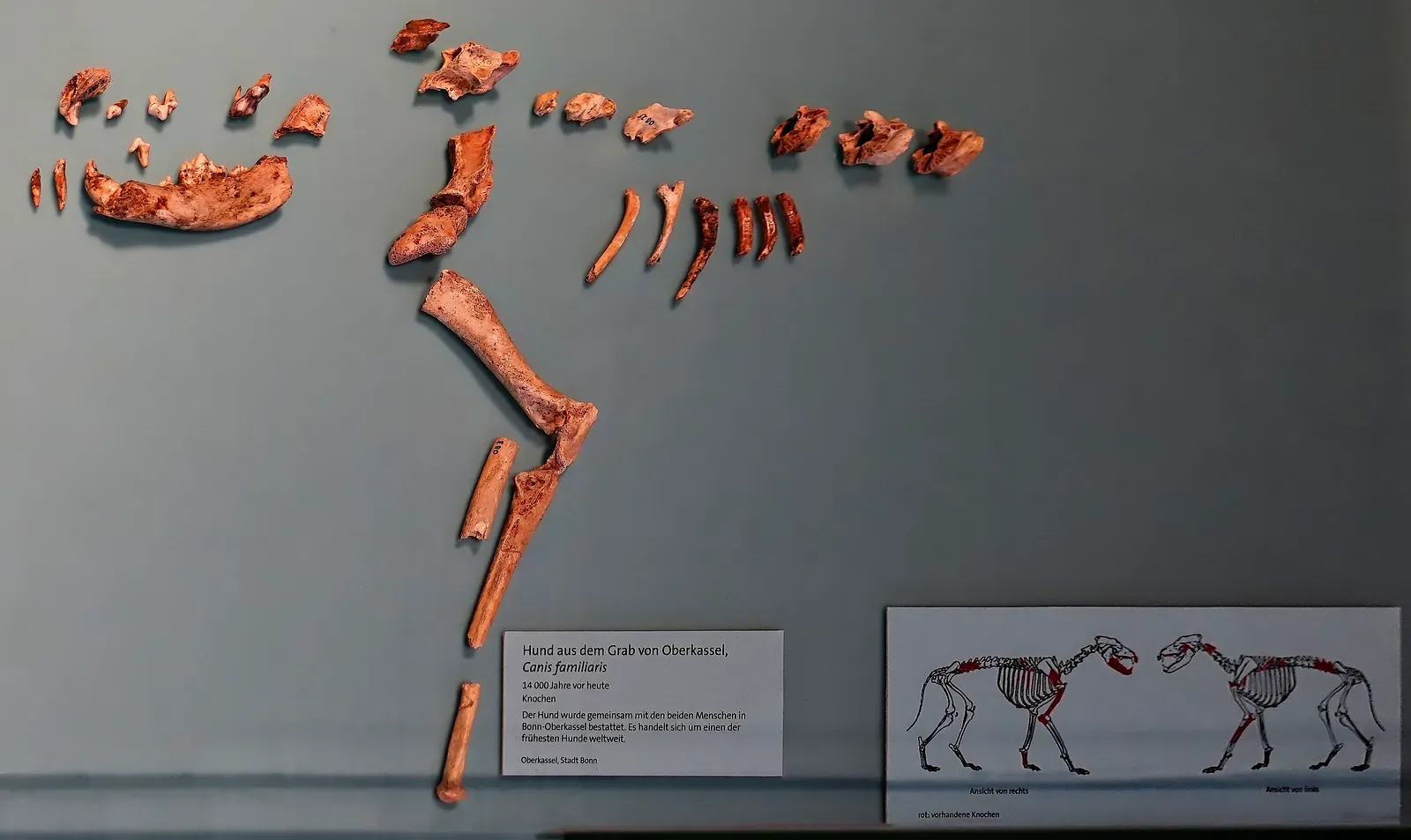
- Europe: Bonn-Oberkassel, Germany, about 14,200 years ago.
- Asia: Ain Mallaha, Israel, about 12,000 years ago (Near East); Zhokhov Island, Siberia, about 9,500 years ago (sled-linked dog genome).
- Africa: Nile Delta and Nabta Playa, Egypt, about 6,500 years ago (secondary sources, see below).
- North America: Lawyer's Cave, Alaska, about 10,150 years ago; Koster, Illinois, about 10,000 years ago.
- South America: Andean Peru and Ecuador, about 5,000 years ago (review figure).
- Oceania: Madura Cave, Australia, 3,348 to 3,081 cal BP; the New Guinea Singing Dog has no equally firm date.
- Antarctica: no native dogs; expedition sled dogs were removed in 1994.
Summary table: first known dogs by continent
Related familyLevantine and African dogs0 breeds in this family| Continent | Earliest widely accepted dog find | Site, country | Date | How dogs arrived | Related families |
|---|---|---|---|---|---|
| Europe | Burial of a sick juvenile dog with two people | Bonn-Oberkassel, Germany | 14,223 +/- 58 cal BP | Probably with Late Glacial hunter-gatherers; origin of the first dogs unsettled | West Eurasian dogs, European dogs |
| Asia | Puppy buried beneath a human hand (Natufian) | Ain Mallaha, Israel | About 12,000 years ago | Dogs already living with Near Eastern hunter-gatherers | Levantine and African dogs, Mediterranean |
| Asia (Siberia) | First genome of a sled-linked dog | Zhokhov Island, Russia | About 9,500 years ago | Dogs of Siberian hunter-gatherers | Arctic dogs, Asian Spitz |
| Africa | Dog remains at Neolithic herder and farmer sites | Merimde Beni-Salame and Nabta Playa, Egypt | Reported 4700 to 4500 BCE | Probably from the Levant with herders | Levantine and African dogs, Ancient Basal, Pariah and village dogs |
| North America | Femur genetically confirmed as dog (Alaska); intentional dog burials (Illinois) | Lawyer's Cave, Alaska, USA; Koster, Illinois, USA | About 10,150 years ago; about 10,000 years ago | From Siberia with the first Americans, then isolated | Ancient American dogs, Arctic dogs, New World |
| South America | Early Andean dog remains | Peru and Ecuador | About 5,200 to 5,000 years ago (review figure) | Spread south from North and Central America | New World |
| Oceania | Directly dated dingo bones | Madura Cave, Nullarbor Plain, Australia | 3,348 to 3,081 cal BP | By sea from island Southeast Asia, carried by people | Dingo and Pacific, East Eurasian dogs |
| Antarctica | No native dogs | Expedition bases | Removed 1994 | Expedition ships | none |
"cal BP" means calibrated radiocarbon years before 1950. BCE dates are calendar years.
How do scientists date and identify the first dogs?
Related familyDomestic dog0 breeds in this familyFour kinds of evidence are combined, and each has limits.
- Radiocarbon dating. Bone is dated directly, then calibrated. A date on the bone itself is stronger than a date on the soil layer around it, which is why the dingo story changed in 2018 (see Oceania).
- Shape. Early dogs are told from wolves by shorter snouts, crowded teeth and smaller bodies. Late Ice Age wolves varied a lot, so shape alone can mislead.
- Ancient DNA. Mitochondrial DNA traces the maternal line. Whole genomes can place a dog on the family tree. Bergström and colleagues (Science, 2020) sequenced 27 ancient dog genomes and found that all dogs share an ancestry distinct from present-day wolves.
- Context. A burial, or a diet matching human food (measured by isotopes), argues for a domestic animal.
Why are older finds contested? The Goyet bones (Belgium, about 36,000 years old), the Razboinichya skull (Altai, Siberia, about 33,000 cal BP; Ovodov et al., PLoS ONE, 2011, "incipient dog") and finds at Predmosti (Czechia, about 31,000 years old) look dog-like, but they have no secure genetic line to later dogs, and the Ice Age wolf range was wide. Thalmann and colleagues (Science, 2013) read the mitochondrial DNA of ancient canids as pointing to Europe and dated the start of domestication there to 18,800 to 32,100 years ago. Perri and colleagues (PNAS, 2021) argued instead for Siberia by about 23,000 years ago. Bergström and colleagues (Nature, 2022) found that dogs are closer to ancient wolves of eastern Eurasia, but that dogs in the Near East and Africa draw up to half their ancestry from a distinct population tied to southwest Eurasian wolves. None of the 72 ancient wolf genomes they studied was a direct match for either dog ancestry. The birthplace remains unsettled.
Skoglund and colleagues (Current Biology, 2015) placed the split of dogs and wolves from a Late Pleistocene wolf population at about 27,000 to 40,000 years ago, using a 35,000-year-old Taimyr wolf genome. The project's Late Pleistocene wolf and Domestic dog roots, in the Prehistory era, use these wide ranges.
Where is the first known dog in Europe?
 Related familyUK RuralRead the family's story: origins, members, DNA
The earliest widely accepted European dog was found in 1914 in a double grave at Bonn-Oberkassel, Germany, with two people and grave goods. Janssens and colleagues (Journal of Archaeological Science, 2018) dated the remains to 14,223 +/- 58 cal BP. The dog was a juvenile of about 27 to 28 weeks. Lesions in its mouth suggest canine distemper, so it probably survived for weeks only with human care. A re-examination also found a tooth from a second, older, smaller dog, making it the only burial of this age with two dogs. Bergström and colleagues (2020) call about 14,500 years a conservative date for the first dogs.
Contested older claims: Goyet in Belgium (about 36,000 years) and Predmosti in Czechia (about 31,000 years).
How did dogs get there? Nobody knows where the Oberkassel dog's ancestors came from.
What happened to Europe's first dogs? The oldest sequenced genome in Bergström's 2020 study is a 10,900-year-old Mesolithic dog from Karelia. Early farmers then brought Levant-related dog ancestry into Europe. Later, the study reports a "near-complete turnover" of Neolithic European dog ancestry. A dog from a megalith context at Frälsegården, Sweden, about 5,000 years old, can be modelled as 90 to 100 percent of the ancestry of most modern European dogs. The first Europeans' dogs left little trace.
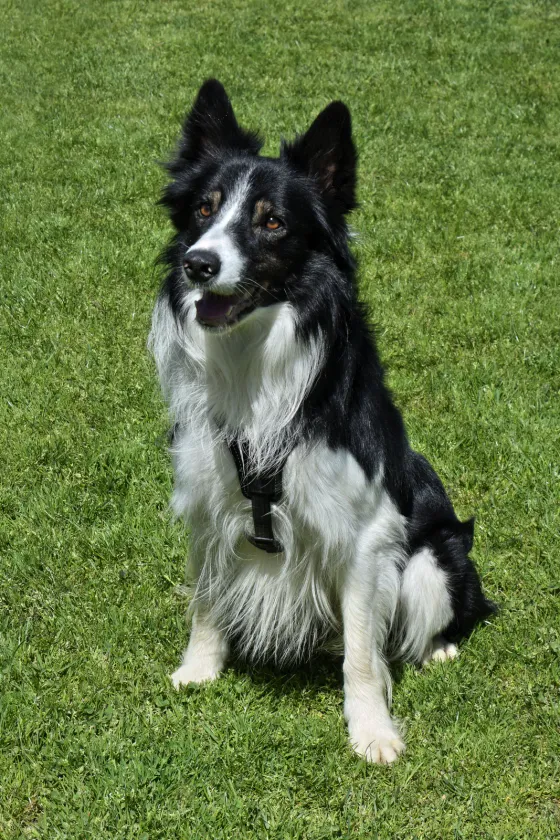
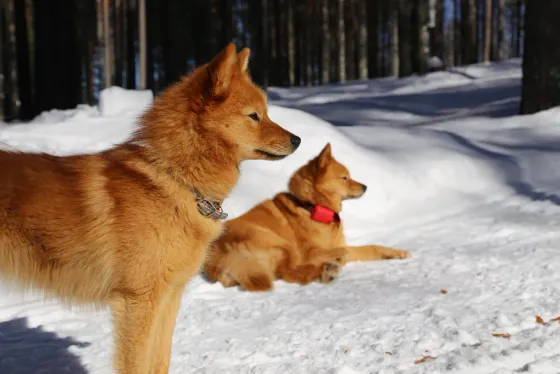
Which families come from them? Modern European breeds sit in the European dogs branch of West Eurasian dogs, with clades such as UK Rural, Nordic Spitz and Scent Hound. This tracks later Neolithic dogs, not the Oberkassel dog. The Norwegian Elkhound and Finnish Spitz are among the oldest European types in the knowledge base, but their dates are estimates, not finds.
Where is the first known dog in Asia?
 See alsoAkita1600 to 1931 · Japan
Asia has the widest spread of candidates. Three matter most.
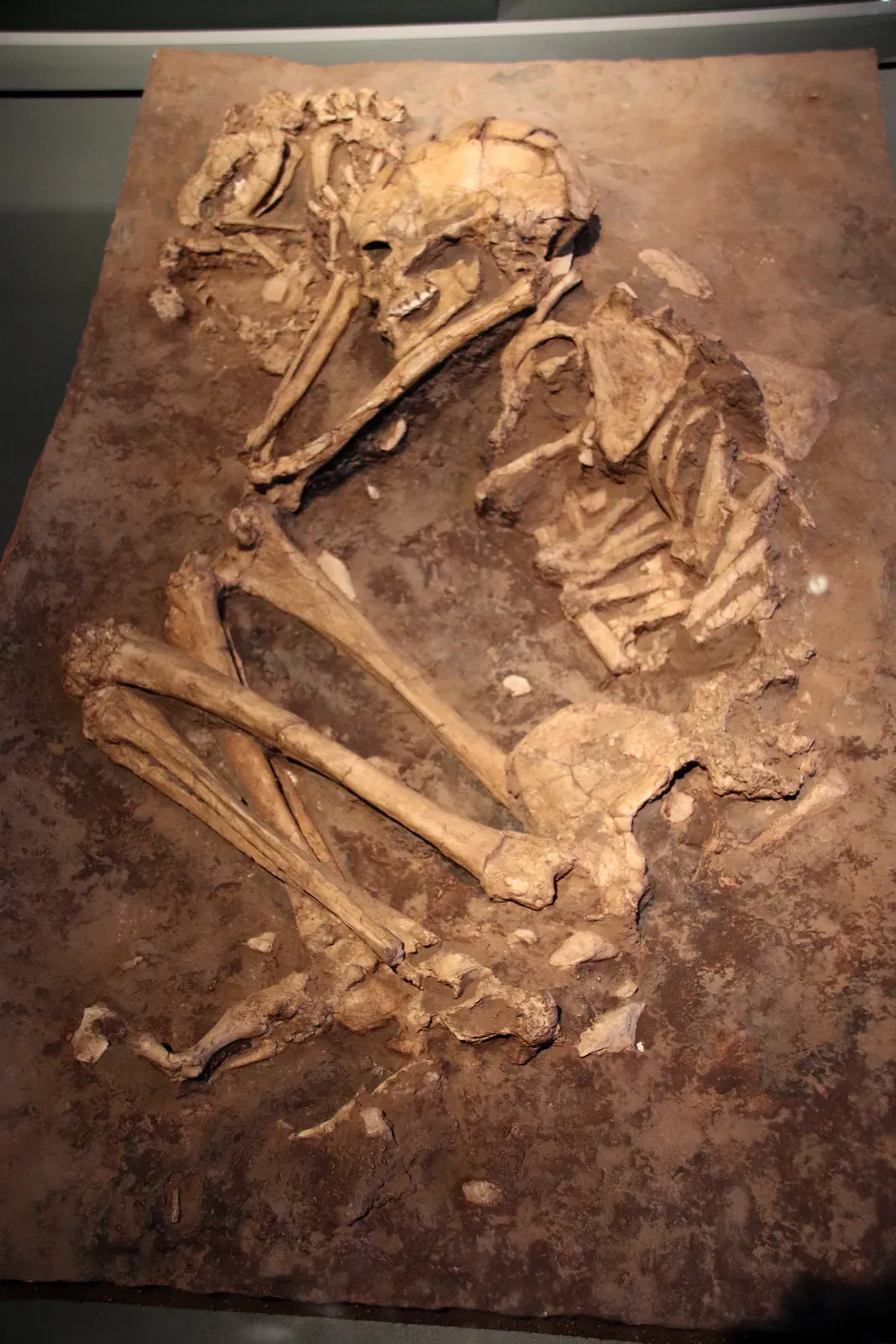
- Ain Mallaha (Eynan), northern Israel. A Natufian grave of about 12,000 years ago holds an old adult with a puppy beneath the left hand. Sources call it a dog puppy, and some keep open whether it was a young wolf. It is usually treated as the earliest Near Eastern evidence of a close bond.
- Zhokhov Island, Siberian Arctic. Sinding and colleagues (Science, 2020) sequenced a dog of about 9,500 years ago found with sled technology. It resembles modern Greenland sled dogs, and the study concludes that the main ancestry of sled dogs traces to Siberia.
- East Asia. Japanese Jomon dog burials at Kamikuroiwa Rock Shelter date to about 7,400 to 7,200 cal BP in one study, although other sources give about 9,300 years. A figure of about 10,000 years for the oldest Chinese dog appears in secondary sources only.
Contested older claim: the Razboinichya Cave skull in the Altai, Siberia, about 33,000 cal BP.
How did dogs get there? Dogs lived across Eurasia from the Ice Age. Bergström's 2020 study found a 7,000-year-old Lake Baikal dog lineage and a 7,000-year-old Levant lineage among five deep lineages. Chinese dogs mix West Eurasian ancestry with a population related to the New Guinea Singing Dog. Steppe pastoralists later left a clear mark on dogs in both West and East Eurasia.
What happened to them? Asia did not lose its first dogs the way Europe did. The Arctic sled dog lineage survives, and so do the East Asian lines that reached the Pacific.
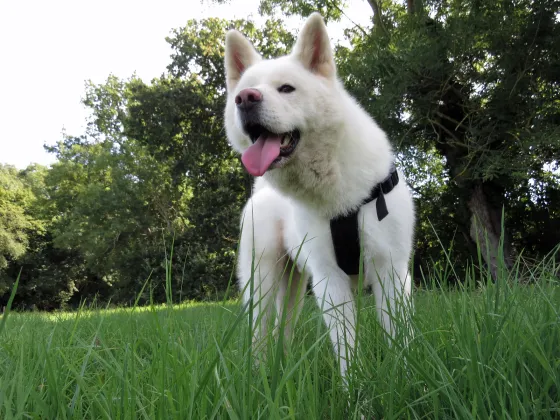
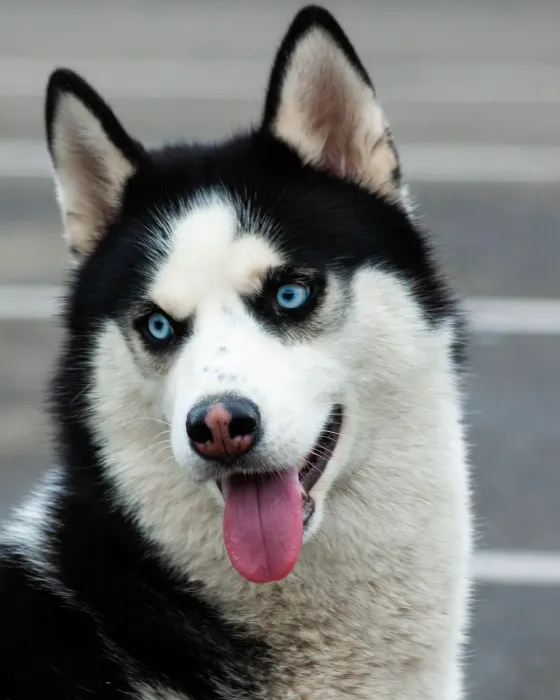
Which families come from them? East Eurasian dogs and Arctic dogs hold the Asian Spitz breeds: Siberian Husky, Samoyed, Akita, Shiba Inu, Chow Chow, Tibetan Mastiff. Skoglund's 2015 study found Taimyr wolf ancestry in high-latitude breeds such as the Siberian Husky and Greenland Dog. The Pariah and village dogs include the Indian Pariah Dog, Taiwan Dog and Canaan Dog, a of the Levant. The Saluki sits in the Mediterranean , but no study reviewed here ties it to the Natufian dogs.
Where is the first known dog in Africa?
 See alsoAfricanis300 CE to 1000 · South Africa
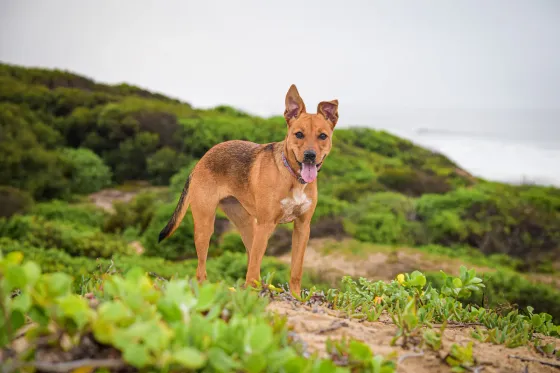
Dogs reached Africa late. Secondary sources give the earliest Egyptian dogs as Nabta Playa (about 4700 BCE) and Merimde Beni-Salame in the Nile Delta (about 4500 BCE), with Esh Shareinab in Sudan (about 5,500 years before present) next. These dates come from summaries, not from primary papers checked here.
How did dogs get there? From the Near East. Bergström and colleagues (2020) found that a 7,000-year-old Levant dog explains African dog ancestry better than an Iranian one, matching the path of early farmers and herders into Africa. Bergström's 2022 wolf study says dogs in the Near East and Africa draw up to half their ancestry from a distinct population tied to southwest Eurasian wolves.
What happened to them? They spread and became the village dogs of Africa. Whether any earlier dog population was replaced is not known from the sources checked.
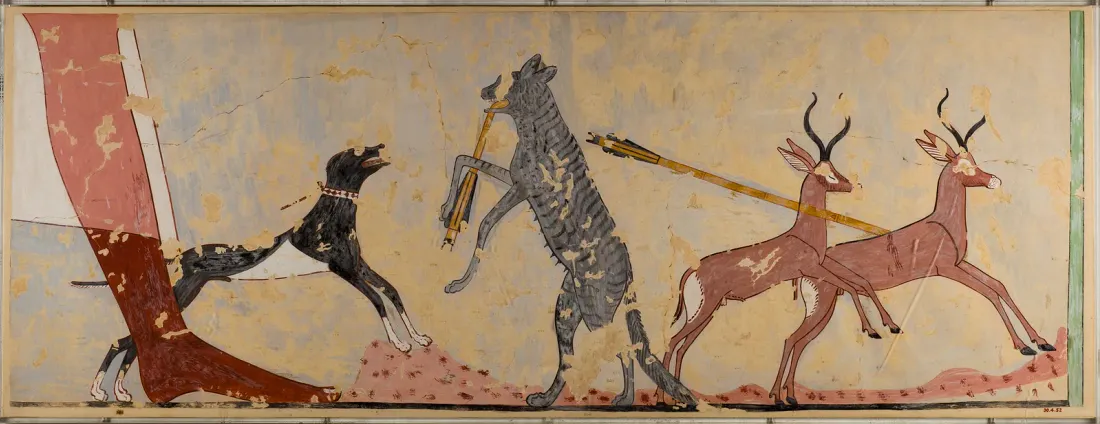
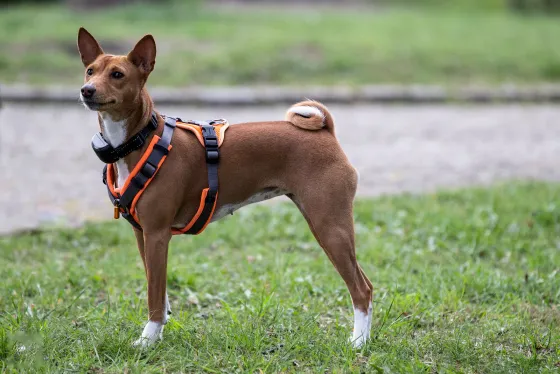
Which families come from them? The knowledge base places Basenji in Ancient Basal, under Levantine and African dogs. Parker and colleagues (Cell Reports, 2017) found the Basenji did not sit in any main clade, so the placement is an inference. Africanis is listed under Pariah and village dogs. The extinct Tesem of ancient Egypt is listed under Mediterranean, as are the Sloughi and Azawakh.
Knowledge base note. The Levant-African lineage and the Mediterranean clade are sister branches in the project tree. African sighthounds sit in the second, yet genetic ancestry of Africa's dogs points to the first. Treat the tree as a grouping by breed DNA, not as a map of first dogs.
Where is the first known dog in North America?
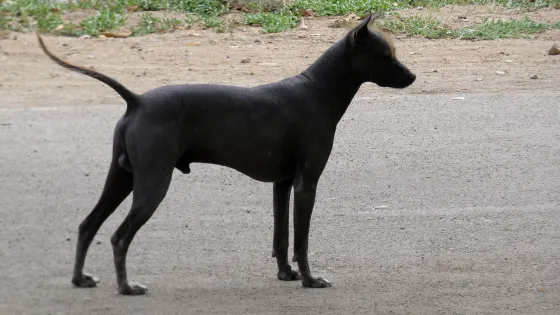 See alsoXoloitzcuintle1000 BCE to 1956 · Mexico
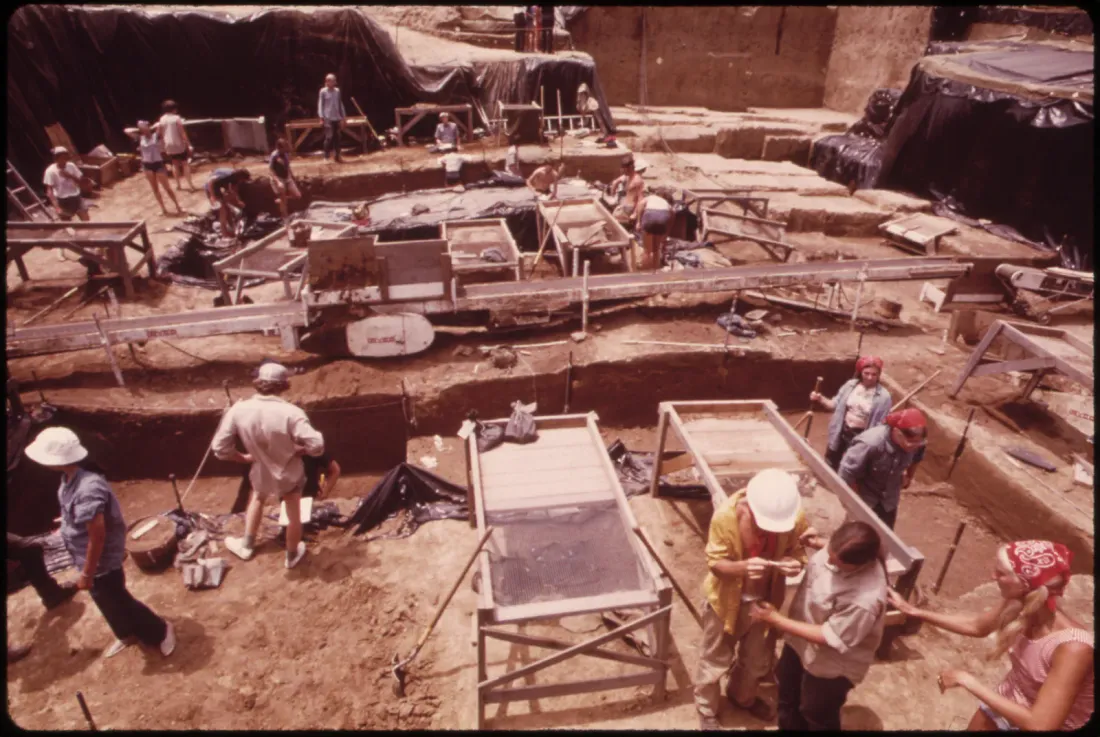
The oldest genetically confirmed dog in the Americas is a femur, specimen PP-00128, from Lawyer's Cave in southeast Alaska. It is about 10,150 years old and was stored as a bear bone for about 20 years before DNA proved otherwise. Isotopes suggest a marine diet. The oldest securely dated archaeological dogs are from Koster and Stilwell II, Illinois, about 10,000 years ago (Perri et al., PNAS, 2021). The Alaska genome and the Koster burials both show dogs with people.
How did dogs get there? Perri and colleagues (2021) compared human and dog lineages and propose dogs domesticated in Siberia by about 23,000 years ago, entering the Americas with the first people about 15,000 years ago. Ní Leathlobhair and colleagues (Science, 2018) sequenced 71 mitochondrial and 7 nuclear genomes of ancient North American and Siberian dogs spanning about 9,000 years. American dogs form one lineage that likely came from Siberia, not from American wolves.
What happened to them? Almost all of them vanished. After Europeans arrived, native American dogs "almost completely disappeared," leaving a minimal genetic legacy. Perri and colleagues report the unique American dog mitochondrial lineage in about 0.5 percent of modern dogs. The closest detectable living relative of pre-contact American dogs is the canine transmissible venereal tumour, a contagious cancer clone from one dog that lived up to 8,000 years ago.
Which breeds carry the first dogs? The picture splits by DNA type:
- Maternal DNA. Van Asch and colleagues (Proceedings of the Royal Society B, 2013) found pre-Columbian maternal lineages in Inuit, Eskimo and Greenland dogs, the Chihuahua, the Xoloitzcuintli and the Peruvian hairless dog. The Alaskan Malamute result was ambiguous. They also said the Carolina Dog, a free-ranging American population, may have an ancient Asian origin, and offered no further proof. The Chihuahua shares a haplotype with ancient Mexican samples.
- Whole genomes. Ní Leathlobhair's nuclear data show a minimal legacy in modern dogs overall, with the Arctic dogs the main exception.
The two views can both hold, since mitochondrial DNA traces only the mother line. The Greenland Dog, Canadian Eskimo Dog and Alaskan Malamute in Asian Spitz trace mainly to later Siberian dogs (Sinding et al. 2020).
Knowledge base note. The project puts the New World clade under Ancient American dogs, which implies descent from the first American dogs. Ní Leathlobhair's results show little nuclear ancestry from them in modern breeds. The clade also contains the European herders German Shepherd, Berger Picard and Cane Paratore. The Carolina Dog is placed under Pariah and village dogs.

Where is the first known dog in South America?
Family storyUK RuralRead the family's story: origins, members, DNASouth America has the thinnest record. A review summary gives the earliest commonly accepted dogs in Ecuador and Peru as 5,200 to 5,000 years old, with dogs becoming common about 3,500 years ago in Andean farming societies. Elsewhere the record is younger: the first dog in Brazil (Pontal da Barra, Rio Grande do Sul) is dated to 1,701 to 1,526 cal BP, and a dog from Los Chonos in western Patagonia, Chile, to 769 to 684 cal BP. No securely dated dog older than this turned up in the sources checked.
How did dogs get there? They spread south from North and Central America with people, probably by land. The long gap after the first American dogs is unexplained, and claims of older finds should be treated with caution.
What happened to them? European colonisers brought new dogs. Pre-Columbian lines survive best in hairless breeds. Van Asch's 2013 study found the Peruvian hairless dog carries pre-Columbian maternal lineages, with at most about 30 percent European female lineages in American breeds.
Which families and breeds? The New World clade holds the Peruvian Hairless Dog, Ecuadorian Hairless Dog and the extinct Chiribaya Dog (about 900 to 1350 CE). The Argentine Polar Dog is a 20th-century expedition dog.
Where is the first known dog in Oceania and Australia?
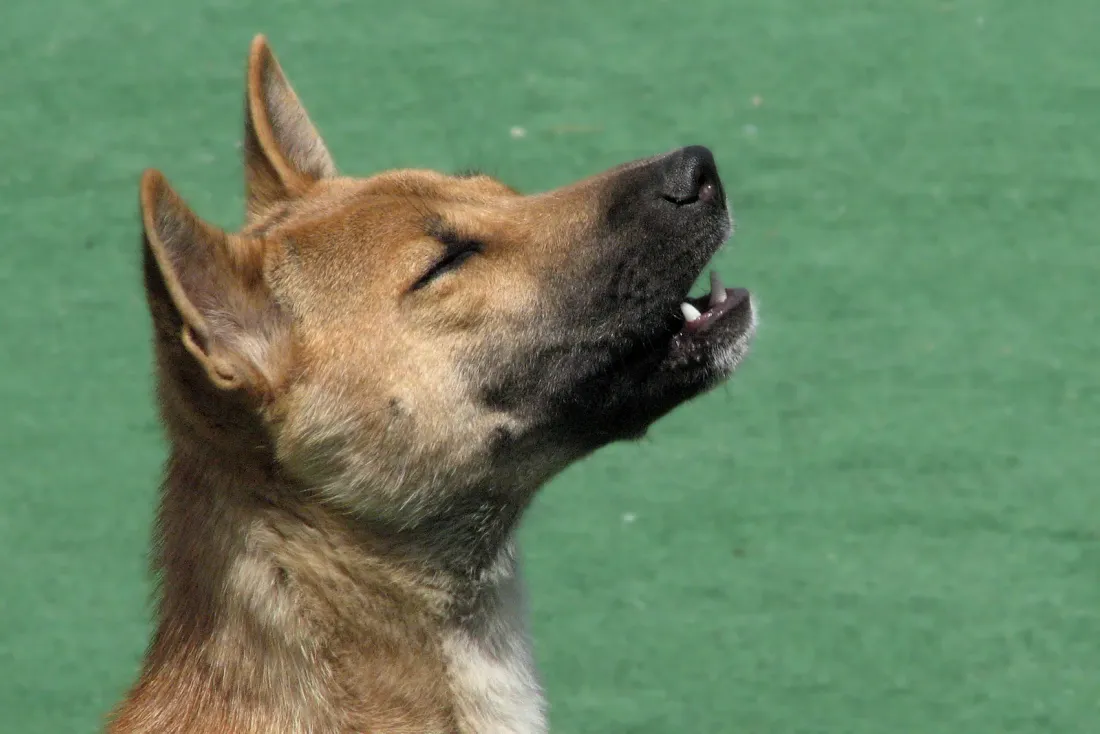
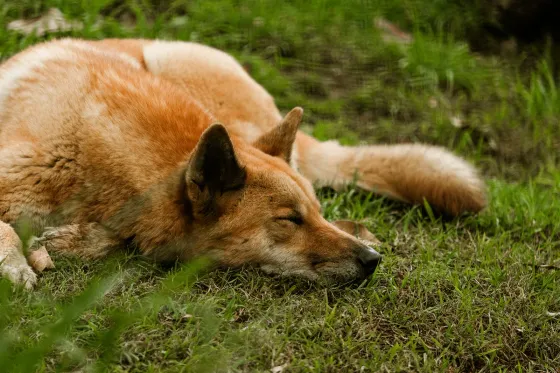 See alsoNew Guinea singing dog8000 BCE to 1957 · Papua New Guinea
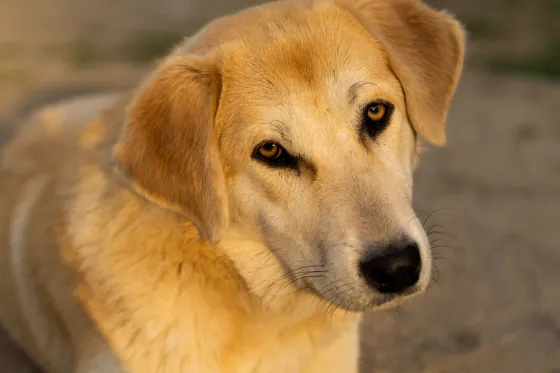
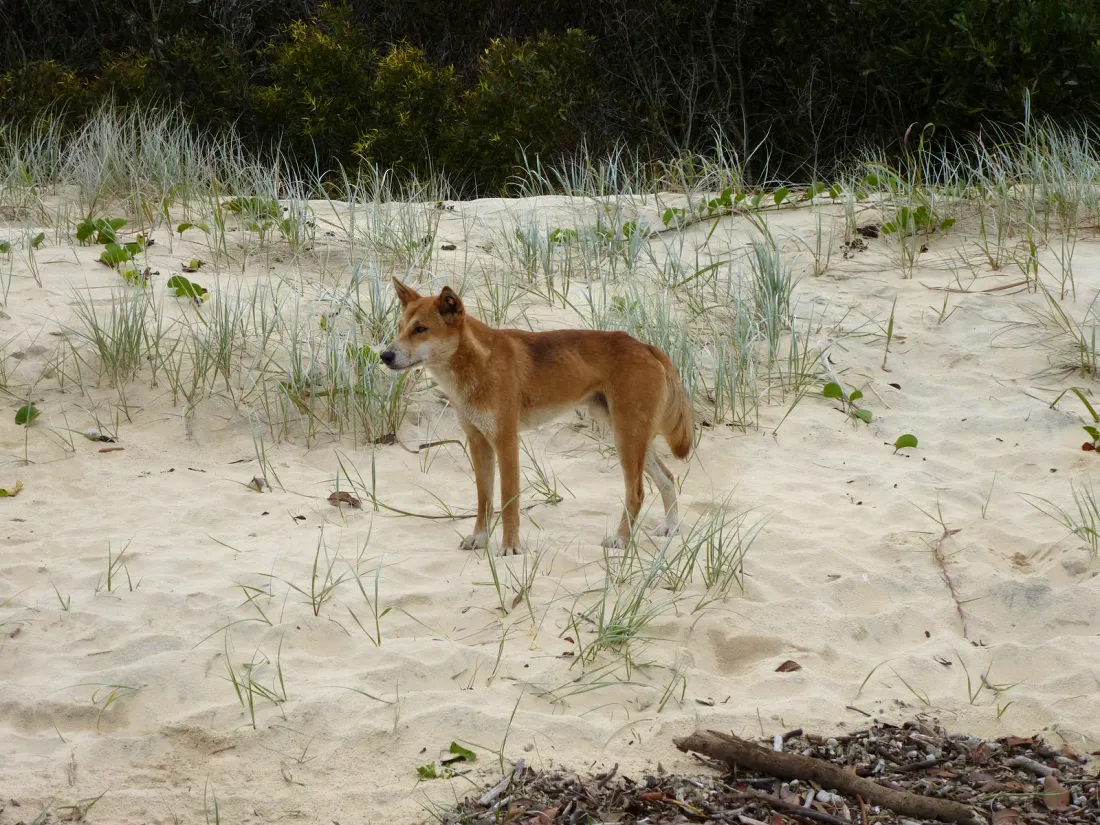
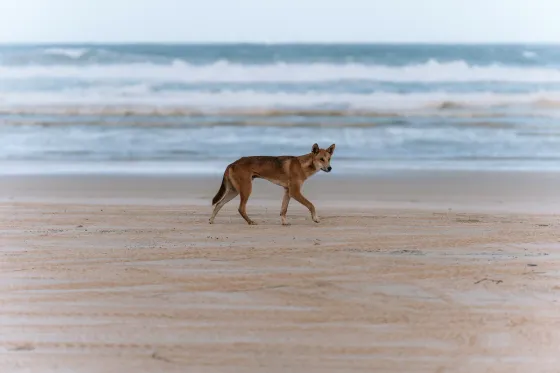
The dingo is the only dog with a firm pre-European Australian record. Balme, O'Connor and Fallon (Scientific Reports, 2018) dated dingo bones from Madura Cave on the Nullarbor Plain directly and found they were in southern Australia by 3,348 to 3,081 years ago. Earlier estimates ran from 5,000 to 4,000 years (archaeological layers) to 18,000 years (DNA clocks), but those did not date the bones themselves.
How did dogs get there? By boat, with people. Savolainen and colleagues (PNAS, 2004) found all dingoes share one mitochondrial type found in East Asian and Arctic American dogs, and suggested a small founding group of East Asian dogs, possibly linked to the Austronesian expansion. Bergström and colleagues (2020) report the New Guinea Singing Dog as an unadmixed East Asian lineage.
What happened to them? Dingoes stayed isolated and spread across mainland Australia. Balme's team suggests they spread very rapidly. Surbakti and colleagues (PNAS, 2020) found wild highland dogs in New Guinea that are close to captive New Guinea Singing Dogs, and part of the same Oceanic canid lineage.
Which families and breeds? Dingo and New Guinea Singing Dog are sister breeds in Dingo and Pacific, under East Eurasian dogs. The extinct Polynesian Dog and Hawaiian Poi Dog are in the same family. Modern Australian breeds such as the Koolie come from dogs brought by settlers, not from the dingo lineage.
Knowledge base note. The project dates the Singing Dog to about 8000 BCE (low confidence). I found no dated bones supporting that. The dingo date (3000 to 1500 BCE, medium confidence) fits the 2018 result.
What about Antarctica?
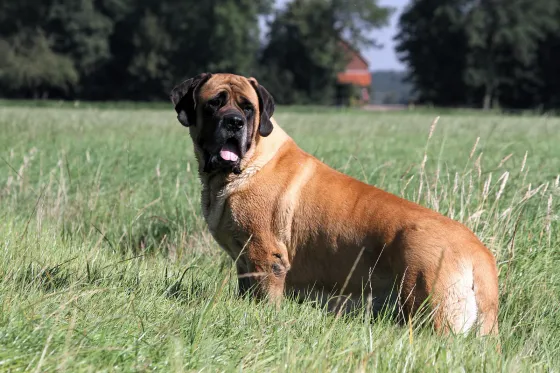 Family storyEuropean MastiffRead the family's story: origins, members, DNA
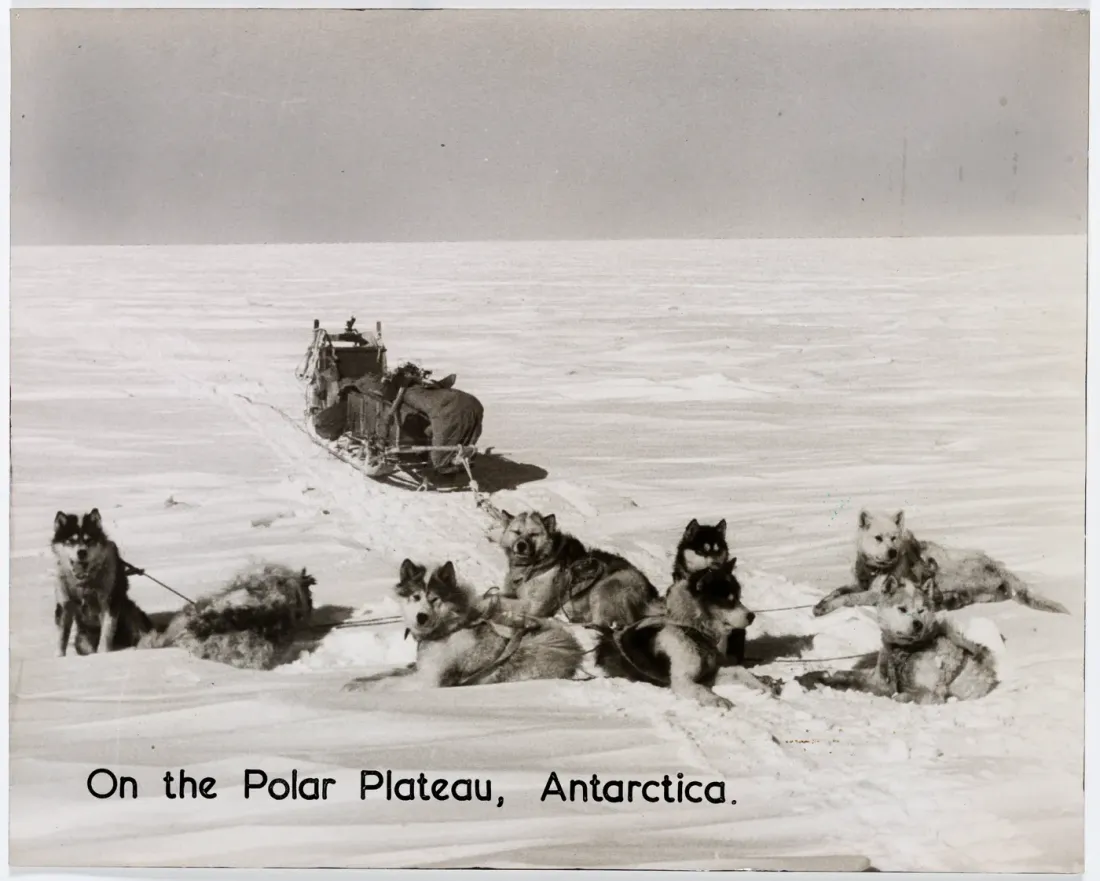
Antarctica has no native dogs and no ancient dog finds. Sled dogs worked with expeditions from the early 20th century. Amundsen's party used dog teams to reach the South Pole in 1911. The huskies were removed under the Antarctic Treaty system's environmental rules, which ban non-native animals: dogs had to be out by 1 April 1994, and Britain's last 14 dogs left Rothera base in February 1994. The stated worries were disease spreading to wildlife and the inconsistency of allowing huskies while banning other non-native species. Australia's last husky run was in 1993.
Which dog families and breeds come from these first dogs?
 See alsoSaluki3000 BCE to 1922 · Iraq
Only some links are supported by DNA. Others are grouping by breed type.
| Family | Linked first dogs | Breeds in the knowledge base |
|---|---|---|
| West Eurasian dogs and European dogs | Europe: Neolithic dogs that replaced older lines | Norwegian Elkhound, Finnish Spitz, Finnish Lapphund |
| Levantine and African dogs | Near East and Africa: Levant-related ancestry | Basenji (via Ancient Basal) |
| Mediterranean | Near East and North Africa sighthounds and guards | Saluki, Sloughi, Azawakh, Pharaoh Hound, Tesem |
| East Eurasian dogs and Asian Spitz | Asia: Siberian and East Asian dogs | Siberian Husky, Akita, Shiba Inu, Chow Chow, Tibetan Mastiff, Samoyed |
| Arctic dogs | Zhokhov-type Siberian sled dogs | Greenland Dog, Canadian Eskimo Dog, Alaskan Malamute |
| Ancient American dogs and New World | Americas: pre-contact dogs (little nuclear legacy) | Xoloitzcuintli, Peruvian Hairless Dog, Chihuahua (family American Toy) |
| Pariah and village dogs | Village dogs of Asia, Africa and the Americas | Africanis, Indian Pariah Dog, Canaan Dog, Carolina Dog |
| Dingo and Pacific | Oceania: dogs from East Asia | Dingo, New Guinea Singing Dog, Polynesian Dog |
The Prehistory and Ancient World periods hold the breeds with the oldest estimated dates. No breed is a proven survivor of the Bonn-Oberkassel or Ain Mallaha dogs. The link is through lineages, not individual breeds.
First dog fun facts
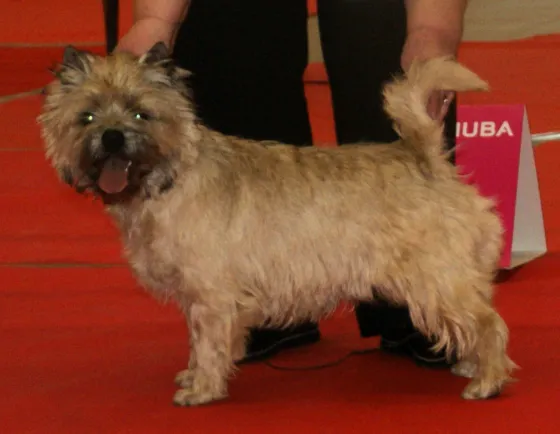 Family storyTerrierRead the family's story: origins, members, DNA
- The Bonn-Oberkassel dog had canine distemper and probably lived because people looked after it.
- A femur from Alaska was labelled as a bear for about 20 years before DNA showed it was a dog.
- The closest living relative of pre-contact American dogs is a contagious cancer, not a breed.
- By 11,000 years ago dogs had already split into at least five major ancestry lineages (Bergström et al. 2020).
Frequently asked questions
Where was the first dog?
Unsettled. Siberia, Europe and the Near East all have claims. The oldest widely accepted dog burial is Bonn-Oberkassel, Germany.
Are the 30,000-year-old dog bones really dogs?
They are contested. Some researchers accept them. Others see Ice Age wolves, since no clear genetic line links them to later dogs.
Did dogs reach the Americas with the first people?
Probably. Perri and colleagues (2021) place both about 15,000 years ago. The oldest confirmed dog bones are about 10,000 years old.
Do any living breeds descend from pre-contact American dogs?
Maternal DNA says yes for some Arctic and American breeds. Nuclear DNA says the legacy is small.
Read next
Sources (18)
- Balme J., O'Connor S., Fallon S., "New dates on dingo bones from Madura Cave provide oldest firm evidence for arrival of the species in Australia", Scientific Reports, 2018.
- Bergström A. et al., "Origins and genetic legacy of prehistoric dogs", Science, 2020.
- Bergström A. et al., "Grey wolf genomic history reveals a dual ancestry of dogs", Nature, 2022.
- Janssens L., Giemsch L., Schmitz R., Street M., Van Dongen S., "A new look at an old dog: Bonn-Oberkassel reconsidered", Journal of Archaeological Science, 2018.
- Ní Leathlobhair M. et al., "The evolutionary history of dogs in the Americas", Science, 2018.
- Ovodov N.D. et al., "A 33,000-year-old incipient dog from the Altai Mountains of Siberia", PLoS ONE, 2011.
- Parker H.G. et al., "Genomic analyses reveal the influence of geographic origin, migration, and hybridization on modern dog breed development", Cell Reports, 2017.
- Perri A.R. et al., "Dog domestication and the dual dispersal of people and dogs into the Americas", Proceedings of the National Academy of Sciences, 2021.
- Savolainen P. et al., "A detailed picture of the origin of the Australian dingo, obtained from the study of mitochondrial DNA", Proceedings of the National Academy of Sciences, 2004.
- Sinding M.-H.S. et al., "Arctic-adapted dogs emerged at the Pleistocene-Holocene transition", Science, 2020.
- Skoglund P., Ersmark E., Palkopoulou E., Dalen L., "Ancient wolf genome reveals an early divergence of domestic dog ancestors and admixture into high-latitude breeds", Current Biology, 2015.
- Surbakti S. et al., "New Guinea highland wild dogs are the original New Guinea singing dogs", Proceedings of the National Academy of Sciences, 2020.
- Thalmann O. et al., "Complete mitochondrial genomes of ancient canids suggest a European origin of domestic dogs", Science, 2013.
- Van Asch B. et al., "Pre-Columbian origins of Native American dog breeds, with only limited replacement by European dogs, confirmed by mtDNA analysis", Proceedings of the Royal Society B, 2013.
- Reports on Lawyer's Cave femur PP-00128 (University of Alaska Museum), press coverage of the genetic study.
- Reviews and summaries of early African and South American dog finds (Wikipedia "African village dog", "Native American dogs"; studies titled "The First Record of a Pre-Columbian Domestic Dog in Brazil" and "The dog of Los Chonos: First pre-Hispanic record in western Patagonia").
- Reports on Ain Mallaha (Eynan), Israel; Kamikuroiwa Rock Shelter, Japan; Antarctic sled dog removal (British Antarctic Survey and Australian Antarctic Division histories).
- Project knowledge base, families, breeds and source registry (this site).