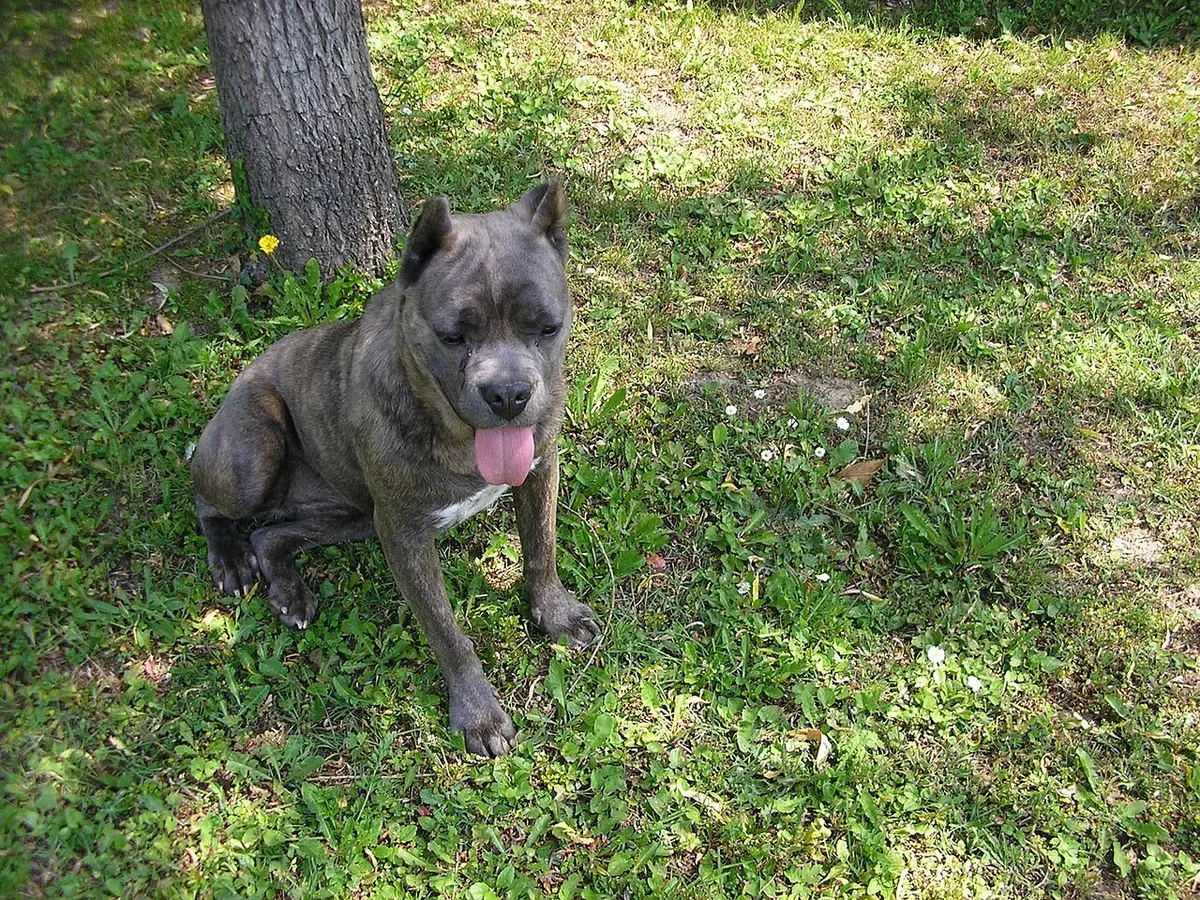
Farmers used it to guard property, drive cattle and help with large game, and the breed almost vanished in the 20th century before a small group of enthusiasts rebuilt it from a few surviving dogs from the 1970s and 1980s. Today it is one of the most searched dog breeds online. It suits experienced, confident owners who can train and socialise a powerful dog, and it is a poor match for first-time owners or anyone who wants a casual pet.
Cane Corso quick facts
 Related breedBulldog1835 to 1875 · United Kingdom
- Closest DNA relatives
- Neapolitan Mastiff, Boxer, Bullmastiff
- Descendant breeds
- None listed
- Other names
- Italian Mastiff, Cane Corso Italiano
- Country of origin
- Italy (project data: Apulia, southern Italy)
- Period of development
- Old rural type; modern breed rebuilt from about 1973 to 1983; recognised by the Italian kennel club in 1994
- Type
- Guard dog, molossoid (FCI Group 2, standard no. 343; AKC Working Group)
- Height
- FCI: males 64 to 68 cm, females 60 to 64 cm, with 2 cm tolerance either way
- Weight
- FCI: males 45 to 50 kg, females 40 to 45 kg
- Coat
- Short, dense, glossy, with a light undercoat
- Colours
- Black, grey shades, fawn shades (including red), brindle; small white patches on chest, chin and feet tolerated
- Life span
- Project data: 9 to 12 years. Studies: median about 9.3 years (2017), about 8.1 years (UK, 2024 report)
- Exercise
- Moderate to high; daily walks, training and a secure garden
- DNA family
- European Mastiff (Parker et al. 2017)
Where does the name "Cane Corso" come from?
 Related breedGreat Dane1600 to 1880 · Germany
"Cane" is Italian for "dog". "Corso" is less certain. The most common explanation links it to the Latin cohors, which meant an enclosure for cattle or poultry and later a guard or guardian. The idea is that these were the dogs of the farmyard. Some writers connect it to the island of Corsica, but that is unproven. The name is pronounced roughly KAH-neh KOR-so, and the plural is Cani Corsi. Outside Italy it is sometimes sold as the Italian Mastiff.
What is the history of the Cane Corso?
 Same eraAfghan Hound1000 to 1800 · Afghanistan
Roman molosser or farm dog?
Many breed pages say the Cane Corso descends from the Roman molossus, the big war and arena dog of the ancient world. Treat that as legend. No DNA study or written record in the sources used here links today's breed to a specific Roman dog. What is documented is a type of heavy farm and guard dog that was common across rural southern Italy for centuries. Farmers kept these dogs to guard houses and livestock, to move cattle and pigs, and to help hold large game such as wild boar. They were working animals, not show animals, and they were bred for ability and nerve rather than looks. The project data dates this old very loosely, from about the year 1000.
Decline in the 20th century
The dogs lived on small farms, and their numbers followed the farms. Mechanisation, the loss of the old sharecropping system (mezzadria) after the 1960s, depopulation of the countryside and two world wars all cut the number of working farm dogs. By the 1970s the type was close to extinct, remembered mostly in isolated areas of the south.
The revival
In 1973 Professor Francesco Ballotta and Dr Antonio Morsiani began looking for surviving dogs and are credited, in breed-club histories, with finding a first group of about 19 and breeding a first litter generation in the late 1970s. Wikipedia dates the start of selective breeding from about 1980. The breed society, the Societa Amatori Cane Corso (SACC), was founded in 1983. These dates come from breed-club and encyclopedia accounts and could not be checked against the original Italian records for this draft.
Recognition
| Year | Event |
|---|---|
| About 1973 | Search for surviving dogs begins |
| 1983 | Societa Amatori Cane Corso founded |
| 1994 | Recognised by the Italian kennel club (ENCI) |
| 1996 | FCI accepts the breed (sources say provisionally; see note) |
| 2007 | Full FCI recognition, according to Wikipedia |
| 2010 | AKC recognises the breed in the Working Group |
The project data lists the FCI status as definitive under standard no. 343 and gives 1996 as the end of the development period. Wikipedia describes 1996 as provisional and 2007 as full recognition. Either way, 1996 is when the FCI first took the breed in. The UK Kennel Club also recognises it.


Which breeds are ancestors, descendants and relatives of the Cane Corso?
 Same familyGreyhound800 CE to 1850 · United Kingdom
The project knowledge base lists no fixed parent or descendant breeds for the Cane Corso. It is a regional landrace revived from local stock. Its one listed sister breed is the Neapolitan Mastiff.
Cane Corso and Neapolitan Mastiff
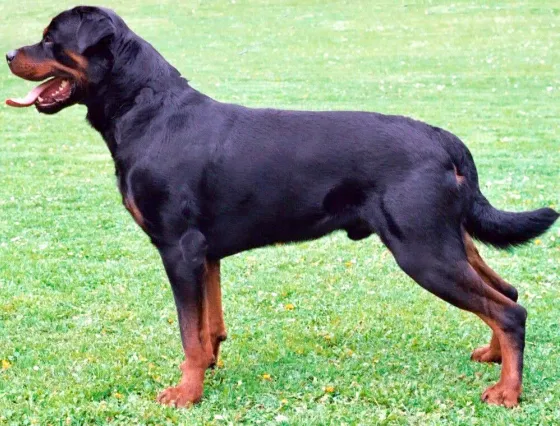
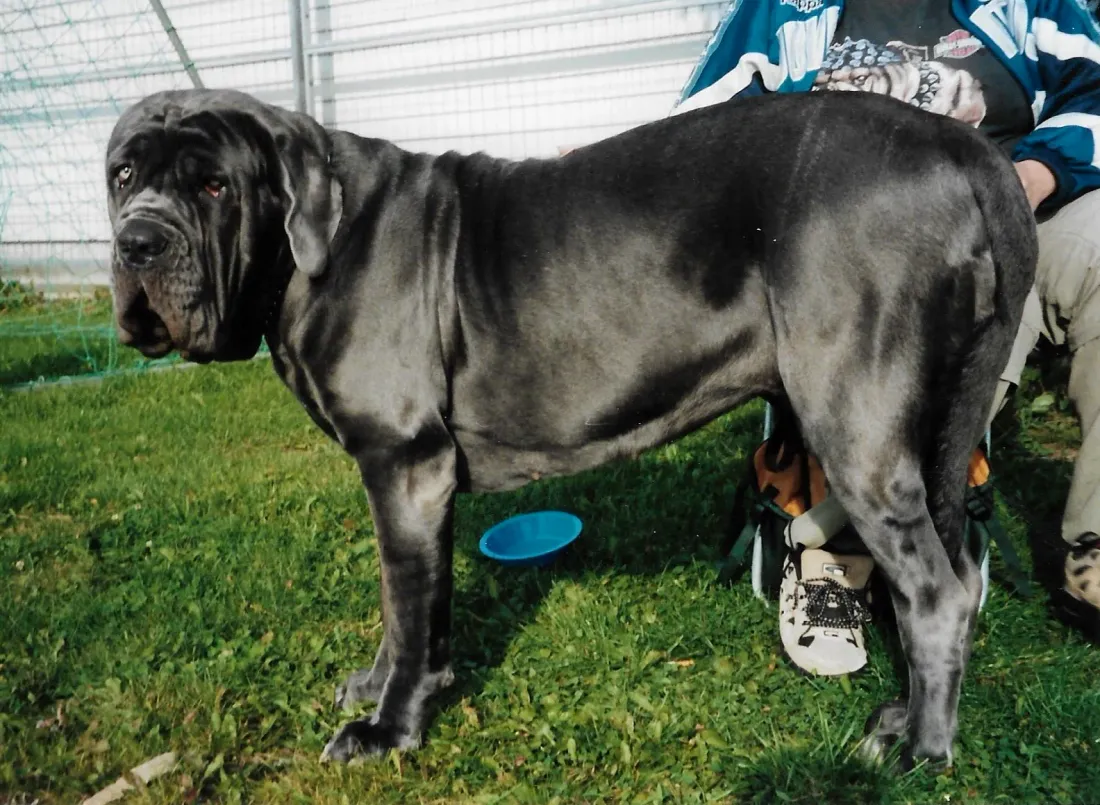
Both breeds come from the traditional guard dogs of Italy and are described as closely related. The Neapolitan Mastiff is the heavier, loose-skinned dog with heavy jowls and wrinkles, kept mainly as a guardian and show dog. The Cane Corso is leaner, taller in the leg, with a tighter, drier skin and a more athletic build. Their DNA overlap in the 2017 Parker study is the highest of any breed in the Cane Corso's table by a wide margin (see below). Both were rebuilt from the Italian farm-dog stock in the 20th century, so their roots overlap.
What does DNA say?
A 2017 study by Parker and colleagues (Cell Reports) analysed 1,346 dogs from 161 breeds and sorted them into 23 supported clades. The Cane Corso sits in the European Mastiff family, which the study supports strongly. It also measured shared , long stretches of identical DNA inherited from common ancestors. The more (Mb) two breeds share, the stronger the sign of shared founders or crossing. The study cannot say which way the genes flowed.
Source: Parker et al. 2017, as recorded in this site's breed database.
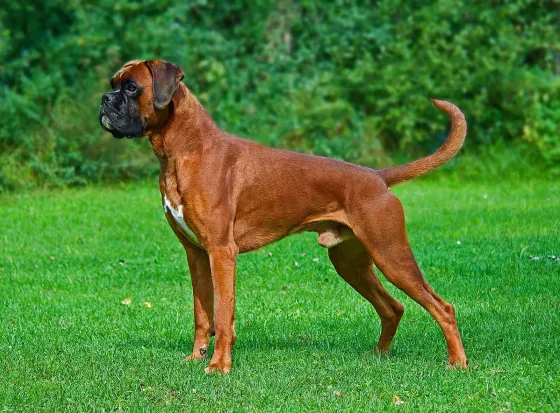
The Neapolitan Mastiff share of 189.8 Mb is about three times that of the next breed, which backs the claim that the two Italian guard dogs share close roots. The Boxer, Bullmastiff and other mastiff types follow, which fits the Cane Corso's place in the European Mastiff family.
Sister breeds · 1
- Neapolitan Mastiff1946 to 1949
- Neapolitan Mastiff189.8 Mb 7.9%
- Boxer63.0 Mb 2.6%
- Bullmastiff44.3 Mb 1.8%
- English Mastiff26.4 Mb 1.1%
- Dogue de Bordeaux17.2 Mb 0.7%
- Boerboel16.7 Mb 0.7%
- Rottweiler15.0 Mb 0.6%
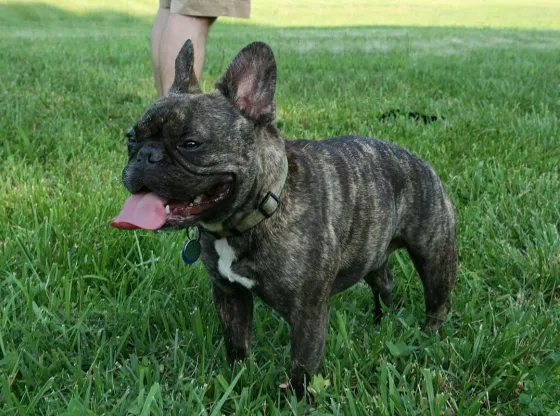
- Bulldog13.3 Mb 0.6%
- St. Bernard13.1 Mb 0.5%
Source: Parker et al. 2017. Percent of the whole genome.
| Cane Corso | Neapolitan Mastiff | |
|---|---|---|
| Build | Athletic, lean, square-ish | Massive, heavy, rectangular |
| Skin | Tight, minimal wrinkles | Loose, wrinkled, heavy dewlap |
| Typical weight | 40 to 50 kg | Heavier (see the Neapolitan Mastiff page) |
| Role today | Guard, companion, sport | Guard, companion, show |
| Breedwith Cane Corso | Shared DNA with Cane Corso (Mb)Shared DNA (Mb) |
|---|---|
| Neapolitan Mastiff | 189.8 |
| Boxer | 63.0 |
| Bullmastiff | 44.3 |
| English Mastiff | 26.4 |
| Dogue de Bordeaux | 17.2 |
| Boerboel | 16.7 |
| Rottweiler | 15.0 |
| Bulldog | 13.3 |
| St. Bernard | 13.1 |

How big is a Cane Corso and what does it look like?
 Looks relatedIcelandic Sheepdog874 CE to 1969 · Iceland
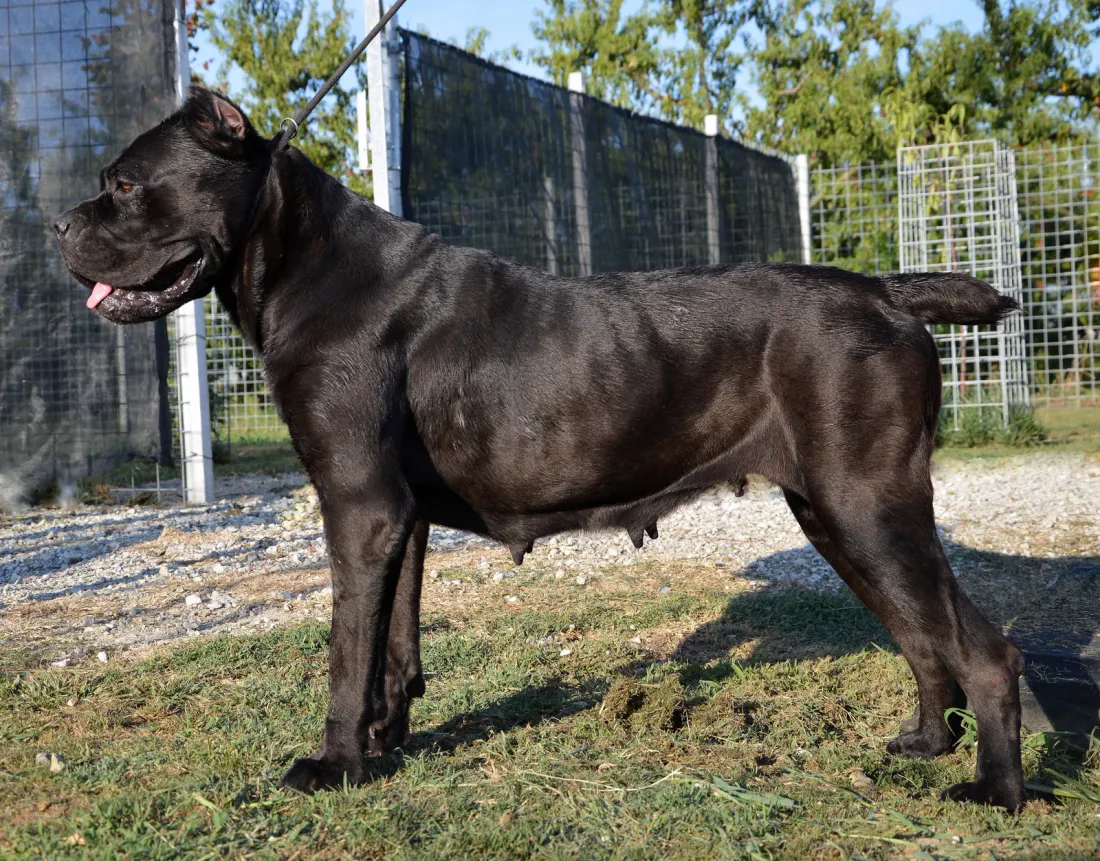
The FCI standard describes a medium to large, sturdy, muscular dog with an athletic, elegant build. It is slightly longer than tall and powerful without being heavy.
- Height. Males 64 to 68 cm, females 60 to 64 cm, with a tolerance of 2 cm either way. Other references give 62 to 70 cm for males and about 4 cm less for females.
- Weight. Males 45 to 50 kg, females 40 to 45 kg. Many pet dogs are heavier, and overweight dogs have more joint problems.
- Head. Large, with a broad skull and a short, square muzzle.
- Ears. Triangular, drooping, medium-sized and set wide and high. The FCI standard describes them uncropped.
- Coat. Short, stiff and glossy, with a light undercoat. It sheds moderately and needs weekly brushing, more in the spring and autumn.
- Colours. Black, lead grey, slate grey, light grey, light fawn, deer fawn, dark fawn and red, all with or without brindling. Fawn and red dogs usually carry a black or grey mask. A small white patch on the chest, chin or feet is tolerated.

What is the Cane Corso's temperament like?
 Related breedLhasa Apso800 CE to 1934 · China
The FCI standard calls for a dog that is attached to its family, protective, and calm with people it knows. In the Italian working trials, a dog is expected to stay calm near harmless strangers, ignore gunfire, and defend its owner if attacked. In daily life that means a dog that is watchful, serious and devoted to its household, usually reserved with strangers, and often not friendly toward unfamiliar dogs.
Temperament depends heavily on breeding, early socialisation and handling. A Cane Corso that meets many people, places and dogs as a puppy tends to grow into a steadier adult. One that is isolated, tied up or trained with harsh methods can become fearful or reactive, and a frightened 45 kg dog is a safety risk. Ask any breeder about both parents' behaviour, not only their looks, and meet the adults.
Common issues reported by owners and trainers include:
- Guarding. The breed was made to guard. Visitors, delivery people and other dogs can trigger it.
- Strength. Even a young dog can pull a person over. Lead and recall training early matters.
- Size around children. A friendly adult can still knock a small child down. Always supervise.
- Dominance myths. Modern trainers favour reward-based training over confrontation, which usually makes strong guarding breeds worse.
Is the Cane Corso a good family dog?
 Related breedPekingese700 CE to 1860 · China
It can be, in the right home. A well-bred, well-socialised Cane Corso is often gentle and loyal with its own family, including children. It is not a dog for a household that is away all day, has frequent unfamiliar visitors without a plan, or has no experience with large guarding breeds. It needs a secure fence, daily exercise and consistent training from the first week.
Cane Corso ear cropping and breed restrictions
 Related breedPembroke Welsh Corgi1100 to 1934 · United Kingdom
Ear cropping. Traditionally Cane Corso ears were cropped into a short triangle, which is why many photos show pointed ears. Cropping is a surgical procedure with no health benefit for the dog. The FCI standard describes uncropped ears, and cropping is illegal in the UK and in many European countries. In the UK, importing a dog that has already been cropped abroad is not an offence, and a University of Liverpool SAVSNET study of UK veterinary records (2023 news release) found cropped-ear dogs were mostly imported. The British Veterinary Association opposes cropping. In the US, cropping remains legal in most states and the AKC standard accepts it, though many vets decline to perform it. If you see an advert for a UK-born puppy with cropped ears, treat it as a red flag.
Breed restrictions. Rules differ by country, state and city.
- UK. The Cane Corso is not on the list of breeds banned under the Dangerous Dogs Act (those are the Pit Bull Terrier type, Japanese Tosa, Dogo Argentino and Fila Brasileiro, plus the XL Bully type since 2024). Owners remain legally responsible for their dog's behaviour.
- US. No state bans the breed, but some cities, counties, housing providers and military housing restrict it, and some home insurers exclude it or charge more.
- Elsewhere. Several countries and regions list the breed or require muzzles, licences or tests. Rules change, so check local law before buying or travelling with one.
Why is the Cane Corso the most searched dog breed?
 Related breedPuli900 CE to 1924 · Hungary
Search studies from 2022 and 2023 reported that the Cane Corso was the most Googled dog breed in the United States, with about 1.3 million searches a month, and the top breed in 46 of 50 states. Later reports say it is also the most searched breed in a dozen European countries and has high search volume in the UK. These figures come from news summaries of search-data studies, not from registrations, and popularity in searches does not match registrations. The AKC ranking, which counts registrations, is a separate measure. Likely reasons for the interest are the breed's striking looks, appearances on social media and its guarding reputation. For the dog, popularity is not good news: fashion drives careless breeding and many unprepared owners.
What health problems affect Cane Corsos?
 Related breedSiberian Husky1000 to 1930 · Russia
The breed is among the shorter-lived of large dogs. A 2017 study in the Open Veterinary Journal (Korec and colleagues) examined 232 dogs from 73 kennels in 25 countries and found a median lifespan of 9.29 years. Black brindle dogs lived longest (10.30 years) and dogs of other colours shortest (8.09 years). A UK report published in 2024 gives an average of about 8.1 years. The breeder-run sample in the 2017 study may skew toward well-cared-for dogs. The information here is general. Talk to a vet about your own dog.
| Condition | What it is | Evidence |
|---|---|---|
| Malformed hip joint causing pain and arthritis | Baldinger et al., PLoS ONE 2020: French screening 1997 to 2017, Cane Corso had the highest prevalence of 10 breeds at 51.9 percent, falling from 72.7 to 49.9 percent over the period | |
| Elbow dysplasia | Developmental elbow joint disease | Listed as a breed predisposition (Wikipedia, breed club health pages) |
| Gastric dilatation and volvulus (bloat) | Stomach swells and twists, an emergency | Deep-chested large breeds are at risk; vets advise smaller meals and urgent care at first signs |
| Eyelid problems (entropion, ectropion) and cherry eye | Eyelid rolling in or out; prolapsed third-eyelid gland | Listed as breed predispositions |
| Demodicosis | Skin disease from Demodex mites, often in young dogs | Listed as breed predisposition |
| Idiopathic epilepsy | Seizures with no identified cause | Listed as breed predisposition |
| Hypothyroidism | Underactive thyroid gland | Listed as breed predisposition |
Hip scoring is the main screening tool. Breeders in many countries use radiographic schemes with grades from A (normal) to E (severe), and many breed clubs require results before breeding. Ask for the parents' hip and elbow results in writing. French results improved over 20 years of screening, which shows careful selection works.
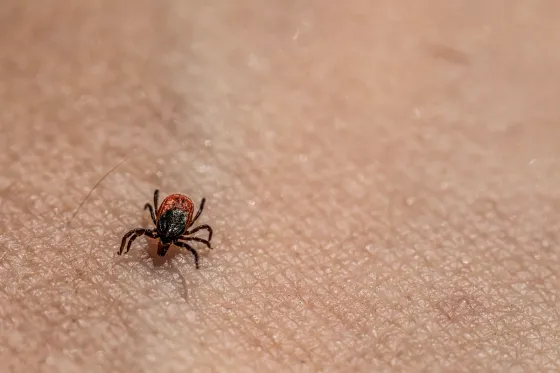 Ticks and fleasTicks and fleas on dogs: how to check, remove and prevent themTicks and fleas on dogs: how to tell them apart, check your dog, remove a tick safely, break the flea life cycle and prevent both.
 GuidesPractical guidesBehaviour, training, health and adoptionRelated breedSiberian Husky1000 to 1930 · Russia
Research and science
Beyond health surveys, a 2022 paper in BMC Veterinary Research reported four genes associated with longevity in Cane Corsos (TDRP, MC2R, FBXO25 and FBXL21), based on a comparison of long-lived dogs and others. It is an early finding, not a screening test. The Parker 2017 study placed the breed within the European Mastiff with strong support.
Is a Cane Corso right for you?
It suits you if you have experience with large or guarding dogs, can spend months on early socialisation and ongoing training, have a secure fenced property, accept 8 to 10 years as a realistic lifespan, and can budget for joint care and large-dog veterinary bills.
It does not suit you if this is your first dog, you want a dog that greets everyone, you are away most of the day, rent in a place with breed restrictions, or live with frail adults or small children who cannot be supervised. Check insurance and housing rules first.
Cane Corso fun facts
- Modern breed histories say the first Cane Corso litters of the revival came in the late 1970s from about 19 dogs found by two enthusiasts.
- The Italian working trial asks for a calm dog that ignores gunfire.
- The Cane Corso's DNA overlap with the Neapolitan Mastiff (189.8 Mb) is the largest among its relatives in the 2017 study.
- Black brindle Cane Corsos lived about a year longer than the overall median in the 2017 longevity study.
- The breed took the AKC Working Group in 2010, only a few years after full FCI recognition in 2007.
Frequently asked questions
How big does a Cane Corso get?
Males 64 to 68 cm and 45 to 50 kg, females 60 to 64 cm and 40 to 45 kg under the FCI standard.
How long do Cane Corsos live?
Project data gives 9 to 12 years. A 2017 study found a median of 9.29 years, and a UK report gives about 8.1 years.
Is the Cane Corso aggressive?
It is a guarding breed with strong protective instincts. Breeding, early socialisation and training decide whether it is steady or reactive. It is not a beginner's breed.
What is the difference between a Cane Corso and a Neapolitan Mastiff?
The Neapolitan Mastiff is heavier with loose, wrinkled skin. The Cane Corso is leaner and more athletic. They are close DNA relatives.
Are Cane Corsos banned?
Not in the UK or any US state, but some cities, housing providers and insurers restrict them, and rules vary by country.
Why are Cane Corso ears cropped?
Tradition and appearance. It has no health benefit, the FCI standard describes uncropped ears, and it is illegal in the UK and many European countries.
What health problems do Cane Corsos have?
Hip and , bloat, eyelid problems, demodicosis, epilepsy and hypothyroidism are the main ones listed.
Do Cane Corsos shed?
Yes, moderately, with heavier shedding in spring and autumn.
Read next
Sources (12)
- Baldinger L. et al., "Prevalence of canine hip dysplasia in 10 breeds in France, a retrospective study of the 1997-2017 radiographic screening period", PLoS ONE, 2020.
- Korec E., Chalupa P., Hancl J., Korcova J., Bydzovska M., "Longevity of Cane Corso Italiano dog breed and its relationship with hair colour", Open Veterinary Journal, 2017.
- "Four novel genes associated with longevity found in Cane corso purebred dogs", BMC Veterinary Research, 2022.
- Fédération Cynologique Internationale, Cane Corso Italiano, standard no. 343.
- American Kennel Club, Cane Corso breed information and history pages.
- The Kennel Club (UK), Cane Corso breed information.
- Wikipedia, "Cane Corso" and "Neapolitan Mastiff" (used for dates and summaries, checked against the other sources listed).
- University of Liverpool SAVSNET, "Dogs with cropped ears in the UK: a population-based study using electronic health records" and 2023 news release.
- British Veterinary Association, position on ear cropping.
- Parker H.G. et al., "Genomic analyses reveal the influence of geographic origin, migration, and hybridization on modern dog breed development", Cell Reports, 2017.
- News reports of 2022 to 2023 Google search studies on the most searched dog breeds (reported by US and UK news outlets).
- Project knowledge base, breed records and Parker 2017 shared-haplotype table (this site).