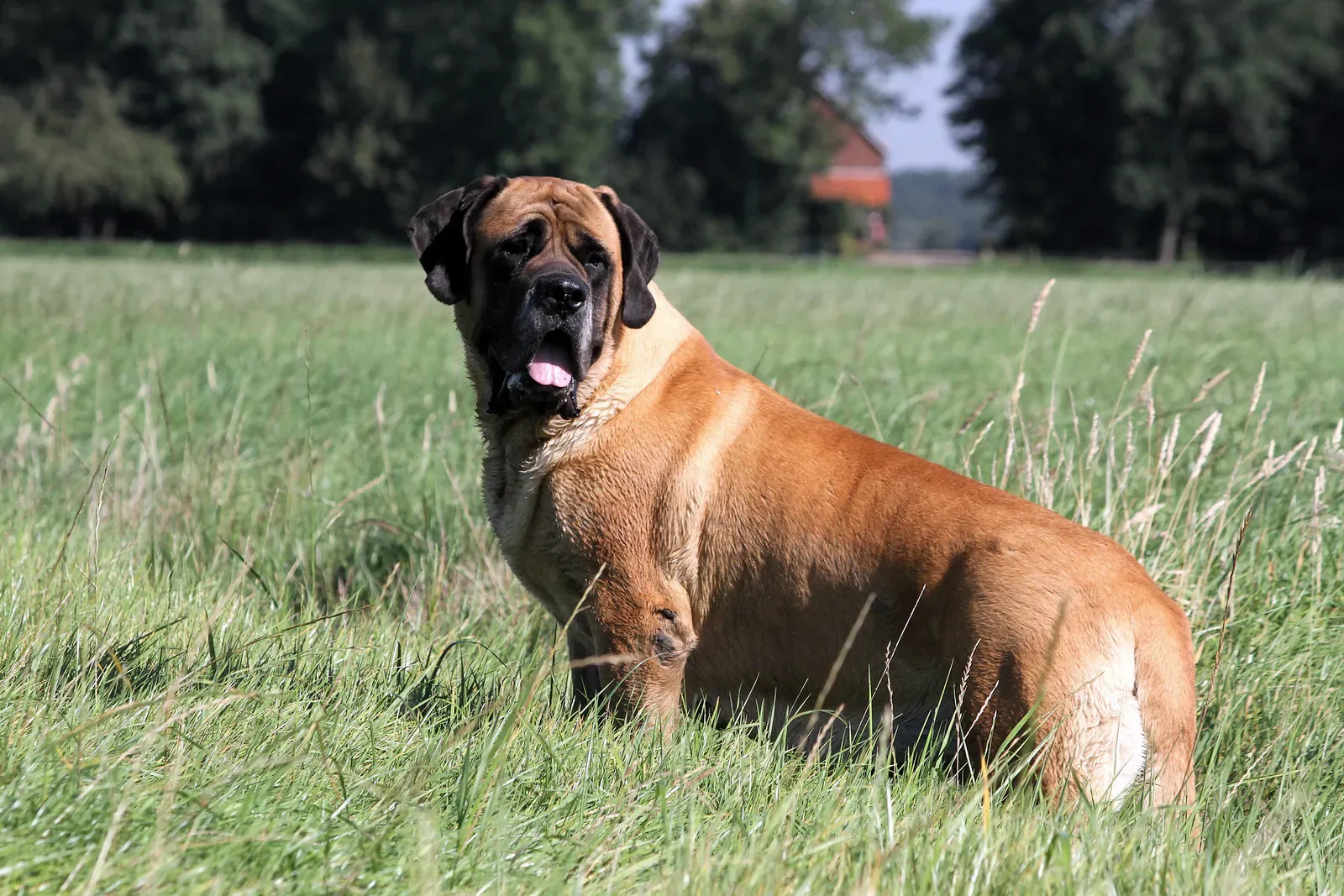
It also holds the bull terriers and the "bully" dogs that came from bulldogs. The family is a DNA grouping from a 2017 study, not a kennel club grouping, which is why a giant Neapolitan Mastiff and a small French Bulldog both belong to it. This page is for anyone who wants to know which mastiff breeds are really related, where they came from and what they share.
European Mastiff quick facts
 Family storyTerrierRead the family's story: origins, members, DNA
| Fact | Detail |
|---|---|
| Family name | European Mastiff (this site's label) |
| DNA basis | "European Mastiff" , Parker et al. 2017 (Cell Reports) |
| Members | 54 breeds: 42 living, 12 extinct |
| DNA-tested members | 16 carry the clade label in this site's data; the rest are placed here by documented descent or type |
| Sizes | 13 giant, 27 large, 10 medium, 3 small, 1 toy |
| Home continents | Europe 30, North America 8, South America 7, Asia 6, Africa 2, Oceania 1 |
| Parent family | European dogs |
| Oldest members | Assyrian Mastiff (legend, about 1200 BCE) and Molossus (about 600 BCE), both extinct |
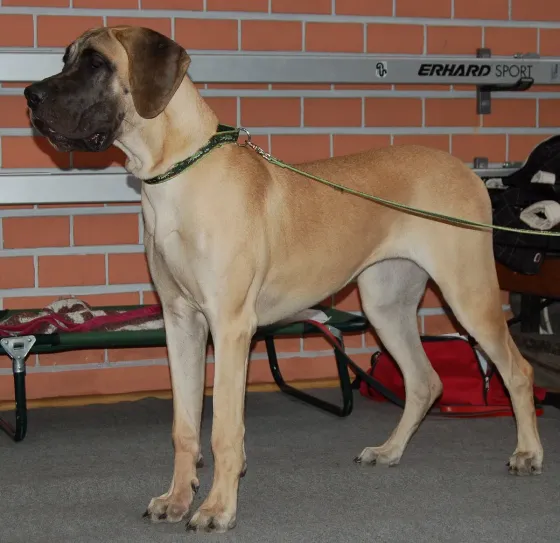
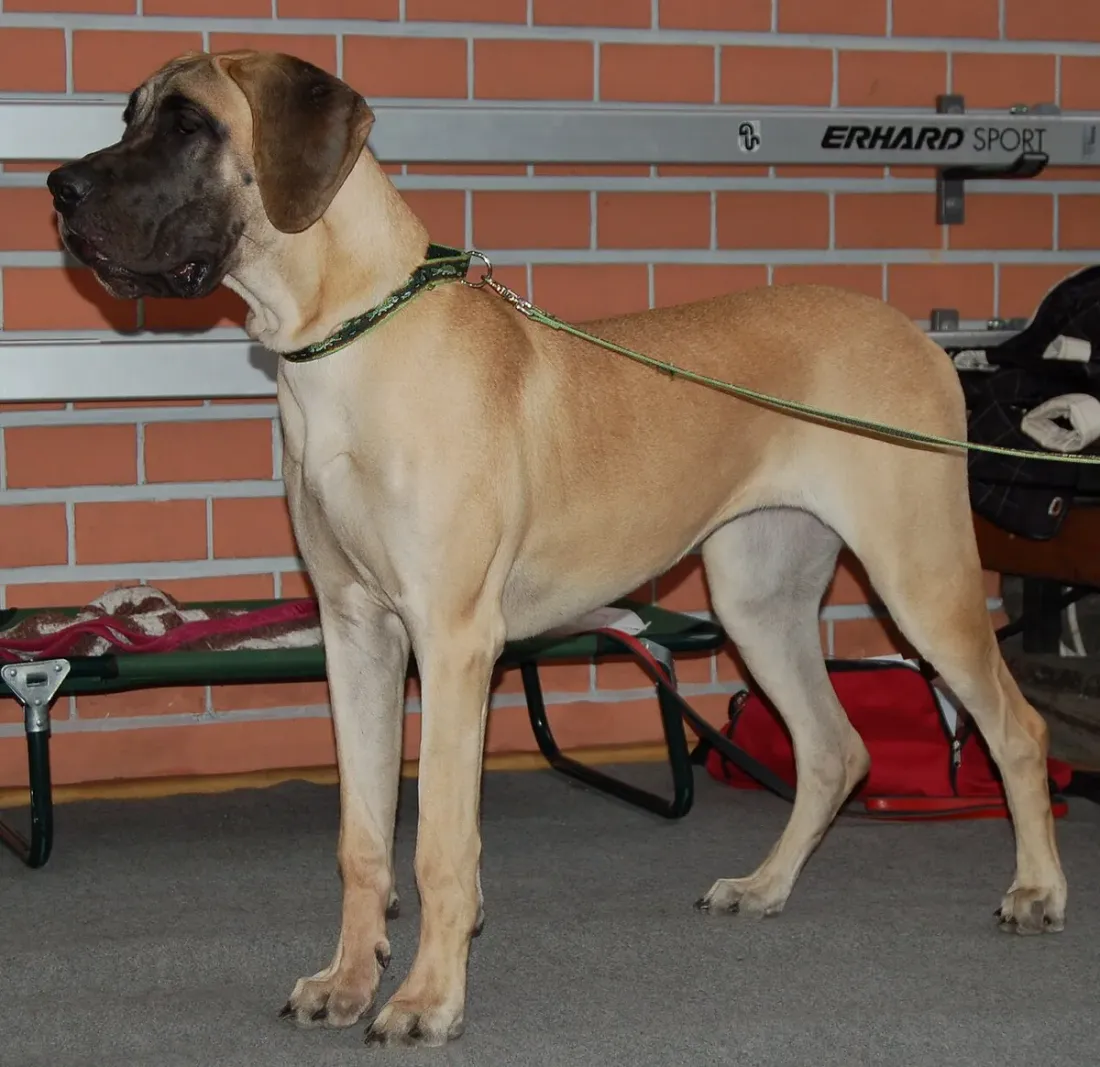
| Largest living members | English Mastiff, Neapolitan Mastiff, Great Dane, Dogue de Bordeaux, Boerboel and others in the giant size class |
| Typical lifespan | 5 to 10 years for most giants, 8 to 16 for the medium and small members (this site's data) |
What is the European Mastiff family?
 See alsoRottweiler100 CE to 1901 · Germany
It is the branch of the dog family tree that holds the mastiffs, the bulldogs, the bull terriers and a few look-alikes that DNA places beside them. The 2017 study by Heidi Parker and colleagues compared the genomes of 161 modern breeds and sorted them into 23 clades. A clade is a set of breeds that share one common ancestral branch, like cousins who share grandparents. One of those clades was named European Mastiff. This site calls such a clade a "family".
How is a family different from a kennel club group, and from a "molosser"?
A family is about descent, measured in DNA. A group is a kennel club shelf, such as FCI Group 2 or the AKC Working Group, where breeds are filed by the job they do or once did. A molosser (or molossoid) is a body type: a heavy head, a short or medium muzzle, a thick body and a guarding past. Molosser is a description of looks and work, not a family tree.
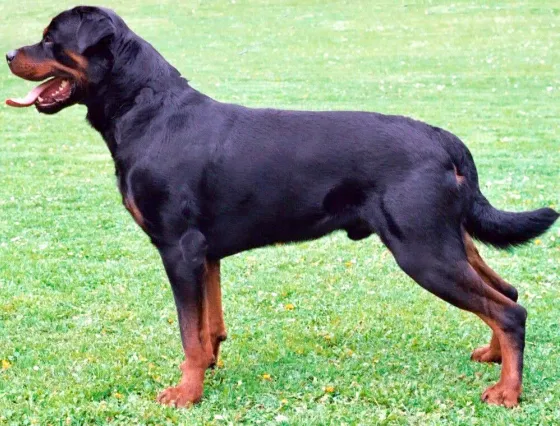
The three do not line up. In this site's data, 20 of the 54 family members sit in FCI Group 2, the "Pinscher and Schnauzer, Molossoid and Swiss Mountain and Cattledogs" shelf, and that is the closest match. But the Bull Terrier sits in FCI Group 3 (terriers), the French Bulldog and Boston Terrier in Group 9 (companion dogs), and the Rhodesian Ridgeback in Group 6 (scent hounds). In the other direction, the Rottweiler and the Saint Bernard are Group 2 molossers that DNA places in the Drover and Alpine families, and the Tibetan Mastiff, despite its name, sits in the Asian Spitz family.
How do "mastiff", "bulldog" and "bull breeds" relate to the family?
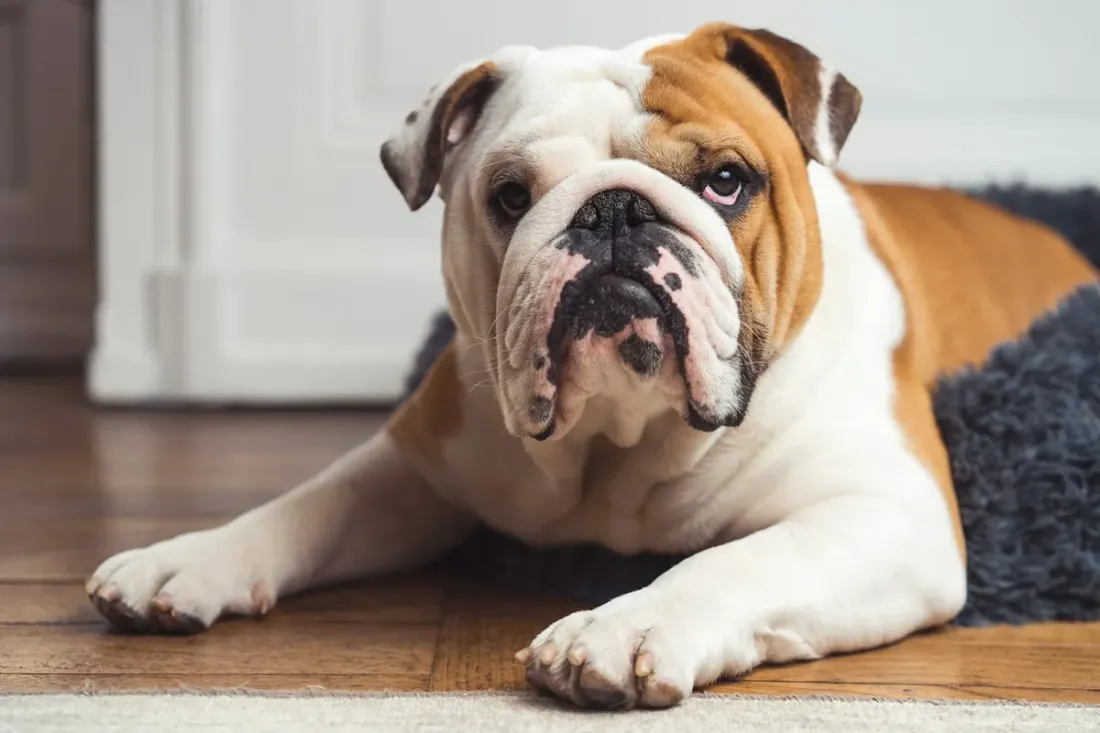
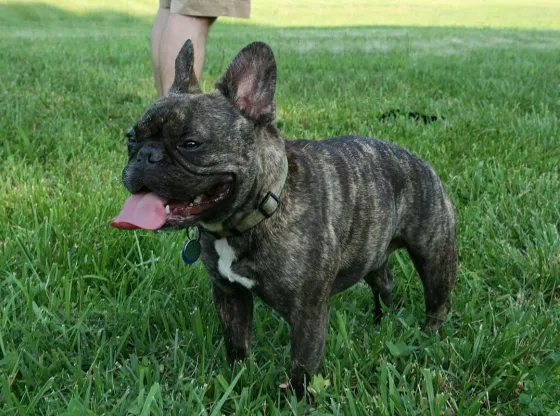
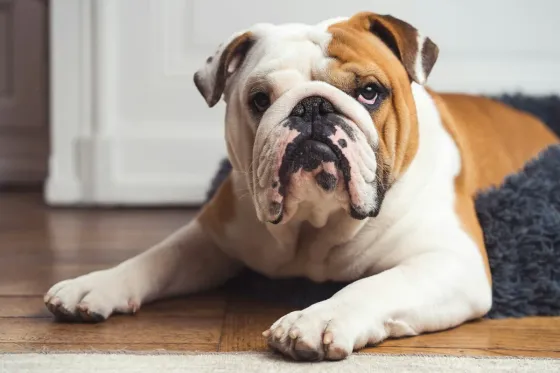
"Mastiff" is a loose label for big, heavy guard dogs. Only some mastiffs are in this family. "Bulldog" and "bull breeds" cover dogs that came from the old English baiting dogs, and nearly all of them land here: Bulldog, French Bulldog, Bull Terrier, Staffordshire Bull Terrier, American Staffordshire Terrier and Boston Terrier. So, to the common question "are bulldogs mastiffs?": by DNA, yes, they are cousins in the same family. By size and job, they are a different story.
Where does the family sit in the dog family tree?
 Related familyPinscher14 breeds in this family
The parent is European dogs, which in turn sits under West Eurasian dogs. Its sibling families under European dogs include Terrier, Pinscher, Schnauzer, Alpine, Drover, Continental Herder, Hungarian, UK Rural, Scent Hound, Pointer Setter, Retriever and Spaniel.
Several of these are close in looks or history. The Terrier family is the one that feels closest to the bull terriers, because bulldogs were crossed with terriers in the 1800s. The Alpine and Drover families are home to the big Swiss and German guarding dogs that look like mastiffs but belong elsewhere on the tree.
Where does the word "mastiff" come from?
 Family storyUK RuralRead the family's story: origins, members, DNA
Dictionaries trace "mastiff" to the Old French mastin (modern French matin), which comes from a Vulgar Latin form of Latin mansuetus, meaning "tame". The sense is a dog that lives with people, a house guard. The word is Latin in origin, not Greek.
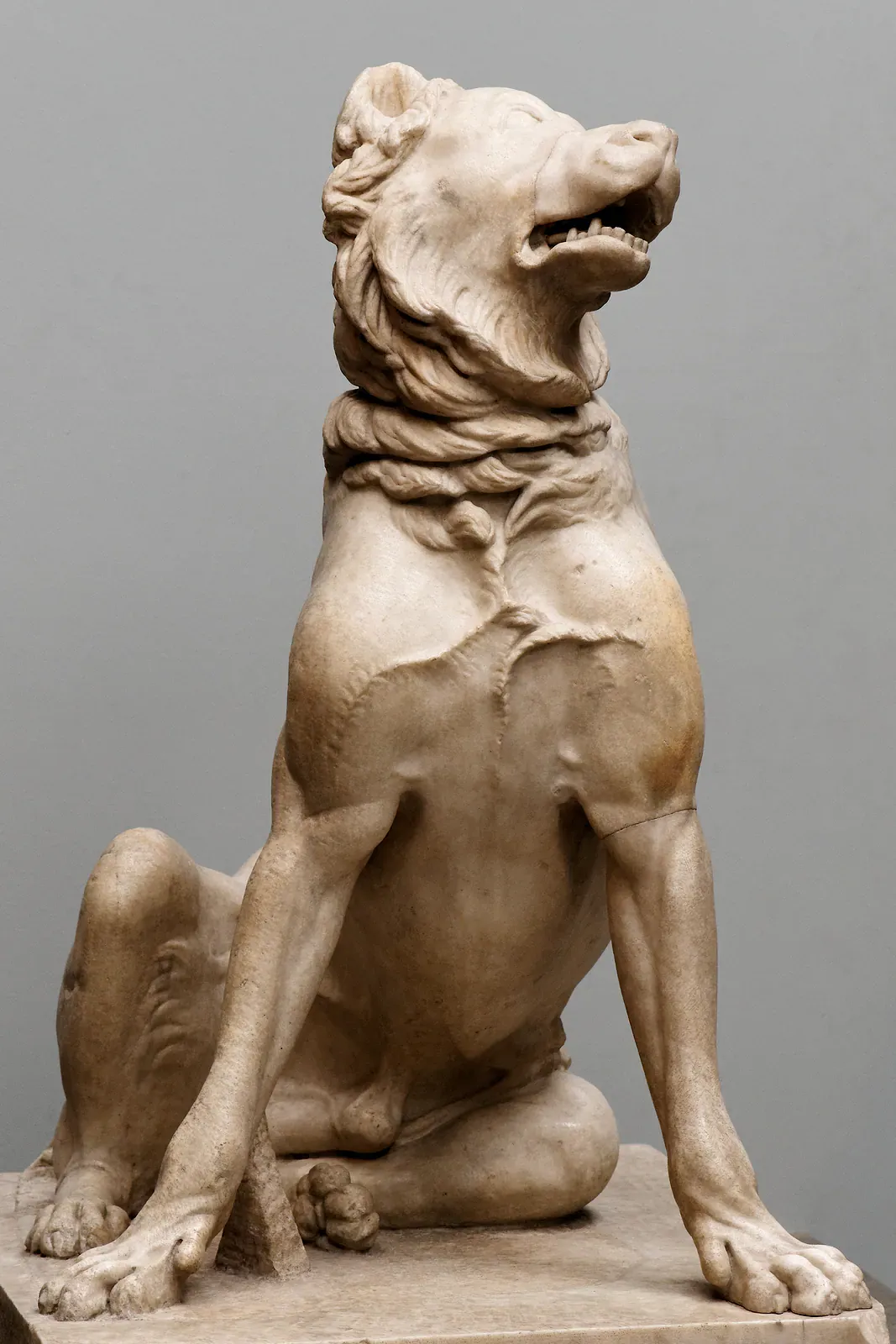
"Molosser" is different. It comes from the Molossians, an ancient Greek tribe and kingdom in Epirus, whose dogs were praised by Aristotle, Virgil and many other Greek and Roman writers. English naturalist Christopher Merret listed "Molossus" and "Mastif" together as one British dog in 1666, perhaps the first time the two names were blended. That blend is why people still use mastiff and molosser as if they were the same word.
Where did these dogs come from?
Family storyTerrierRead the family's story: origins, members, DNAWhat do we know about the ancient "war dogs"?
Less than most books claim. Ancient writers described Molossian dogs by region, size and job. Aristotle wrote that Molossian hunting dogs differed from the larger, fiercer Molossian dogs that followed sheep. Some scholars think the hunting type looked more like a heavy coursing dog than a modern mastiff. Claims that Assyrian kings used "mastiffs" in war, and that Alexander the Great fought with giant dogs, are mostly legend. This site lists the Assyrian Mastiff and the Molossus as extinct members because they are traditional ancestors in breed lore, not because bones or DNA tie them to living dogs. The Alaunt, a dog of the Alans of the early centuries CE, is in the same position. The Alans were a nomadic Sarmatian people of the Pontic-Caspian Steppe, in what is now Ukraine and southern Russia, and the dog spread west with them and the Vandals in the 400s. The data marks the Assyrian Mastiff, Molossus and Canis Pugnax as legend-level types, at low confidence.
How did Roman and medieval guard dogs shape the family?
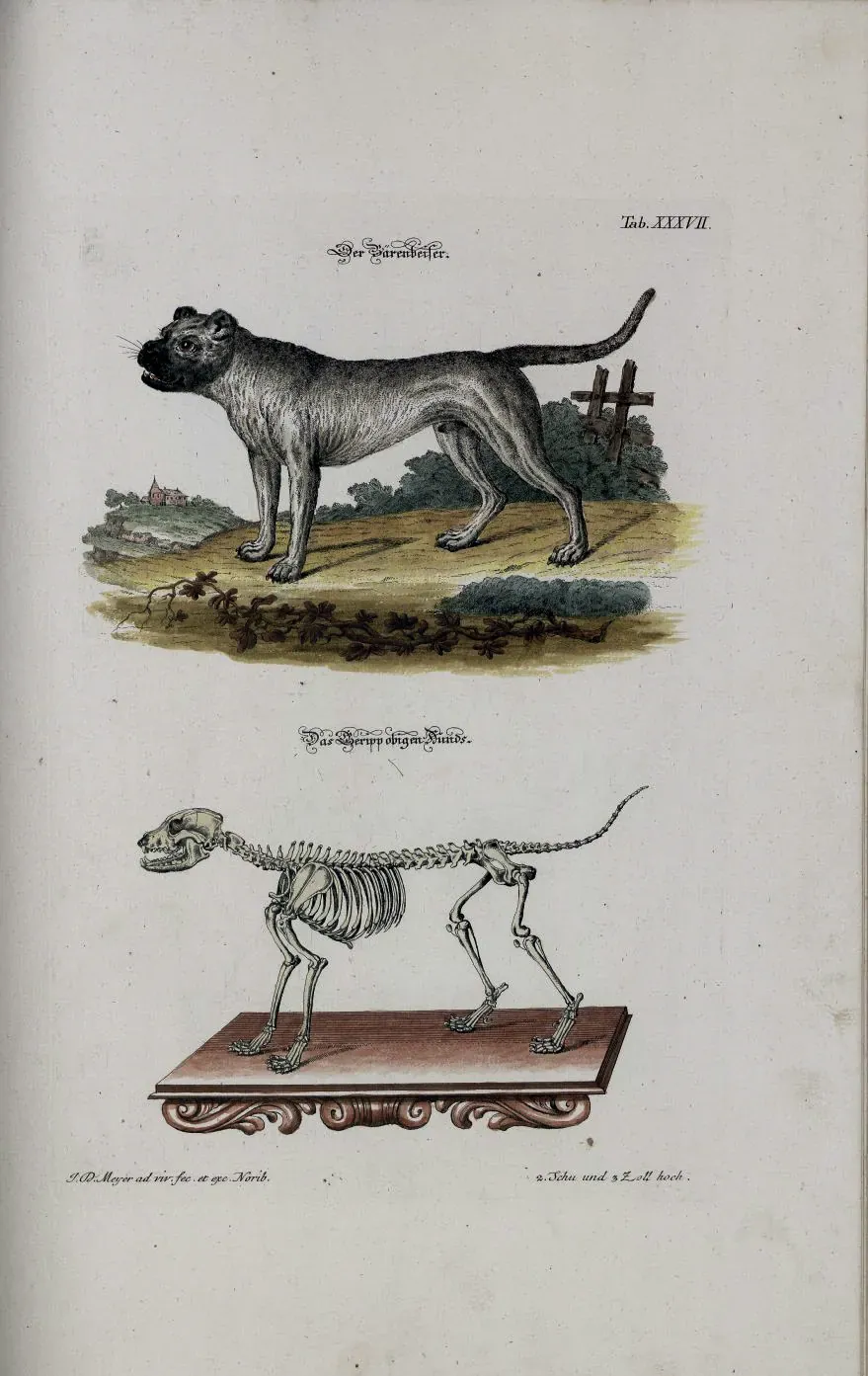
Roman writers mention fighting dogs of Britain, called pugnaces, and Roman sources use words such as molossus for guards. Some breed historians link the Roman British dogs to the English Mastiff, and this site's data lists Canis Pugnax and the Alaunt as medium and low confidence ancestors. That is a theory, not proof. What is certain is that heavy guard dogs, boar hounds and bear dogs were kept across Europe in the Middle Ages, which is where the Spanish Mastiff, the Bullenbeisser of Germany, the Alano Español and the Dogue de Bordeaux first show up in the data (between about 800 and 1300).
A well-known story says a mastiff of Sir Piers Legh survived a battle and had pups at Lyme Hall in England, founding the oldest line of English Mastiffs. This is a tale, not a documented pedigree.
What was bull-baiting, and why did it end?
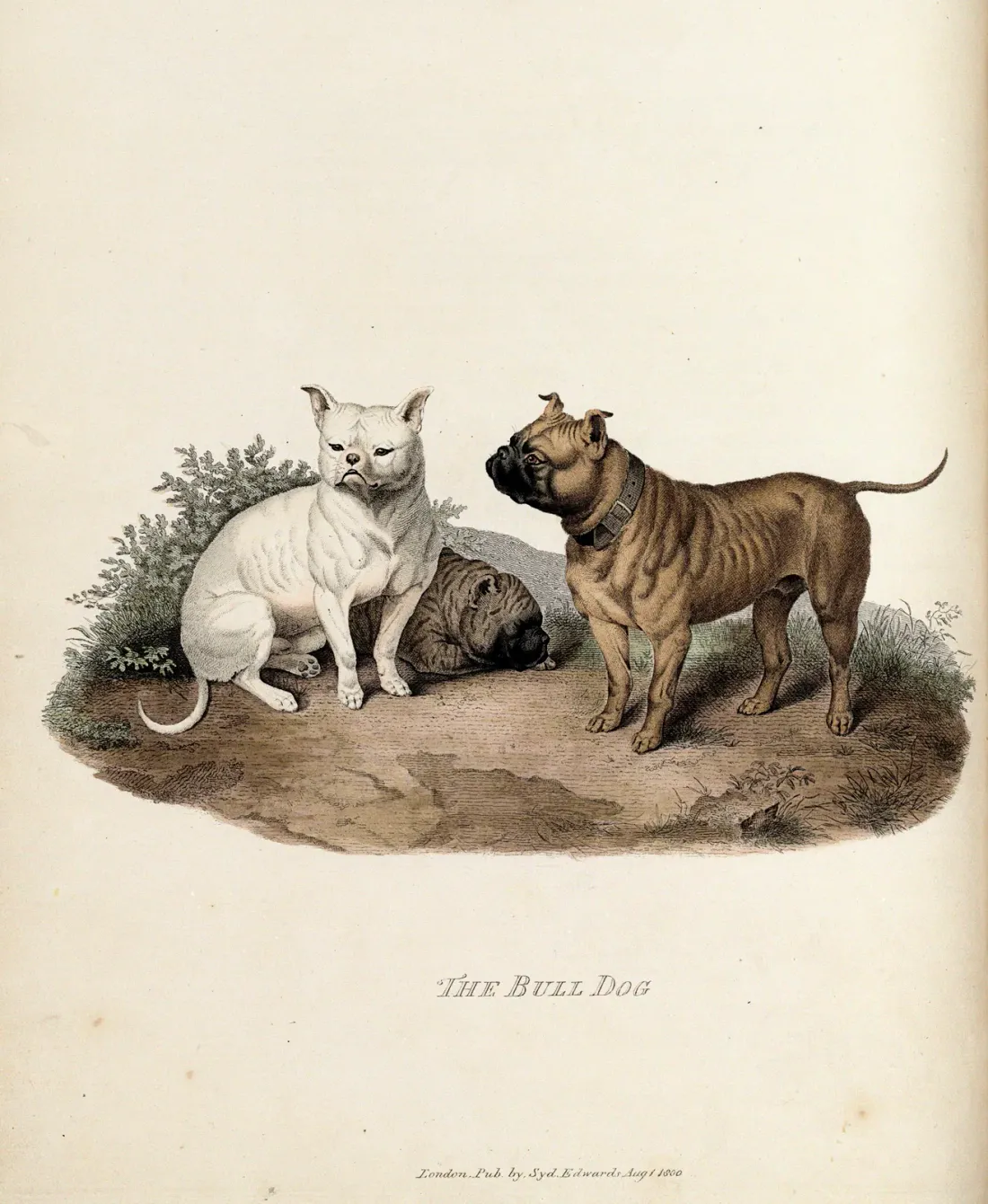
Bull-baiting set dogs against a tethered bull, for sport and a belief that baited meat was better. It created the Old English Bulldog, a medium, muscular dog bred to grab and hold. In the United Kingdom, the Cruelty to Animals Act 1835 received royal assent on 9 September 1835 and made it illegal to keep premises for baiting bulls, dogs, bears, badgers or other animals. It did not end dog fighting overnight, but it removed the main job of the Old English Bulldog. The old dog is now extinct. Its place was taken by the modern Bulldog, kept as a companion, and by crosses with terriers that produced the bull terrier line.
How did the Victorian era remake the family?
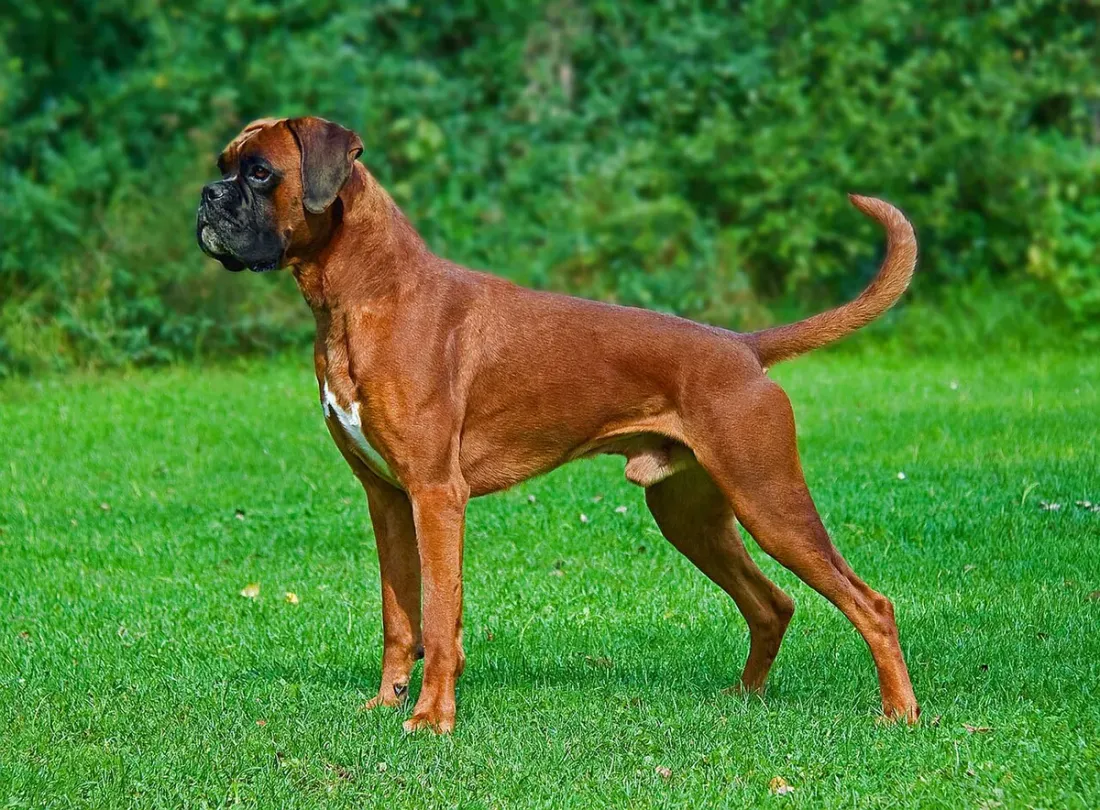
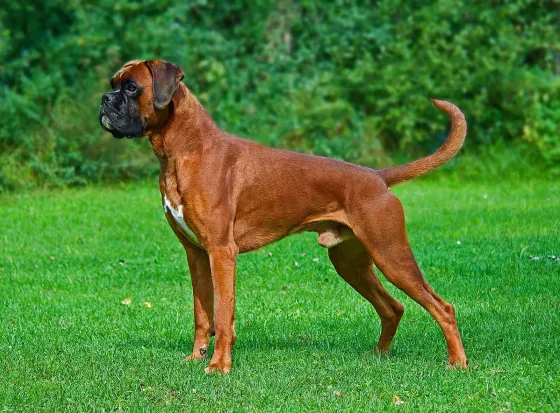
The 1800s were the busy century. The English Mastiff nearly died out in the world wars of the 1900s and recovered from imports bred in Canada and North America. The Bullmastiff was made by English gamekeepers who crossed Mastiffs and Bulldogs, in a story usually given as about 60 percent Mastiff and 40 percent Bulldog, to stop poachers without killing them. The Kennel Club in the UK recognised the Bullmastiff on 24 December 1924. The Boxer came from the extinct German Bullenbeisser plus English bulldogs, and was shown at Munich in 1895, with the first Boxer club following in 1896. The Dogue de Bordeaux was entered at the first French dog show, Paris 1863. The Neapolitan Mastiff was rediscovered by Piero Scanziani, who saw one at a show in Naples in 1946, and its first standard was accepted in 1949, with FCI recognition in 1956.
How did the family spread abroad?
Mastiff-type dogs travelled with settlers and soldiers. The Boerboel of South Africa and the Rhodesian Ridgeback grew from European dogs brought by colonists. In South America the Fila Brasileiro, Dogo Argentino (begun in the 1920s from the extinct Cordoba Fighting Dog), Dogue Brasileiro and Cimarron Uruguayo developed. In Japan, the Tosa was built from native dogs crossed with English Mastiffs, Bulldogs, Saint Bernards, Great Danes and Bull Terriers in this site's data. In the United States, the American Bulldog, Alapaha Blue Blood Bulldog and American Bully all trace back to the Old English Bulldog.
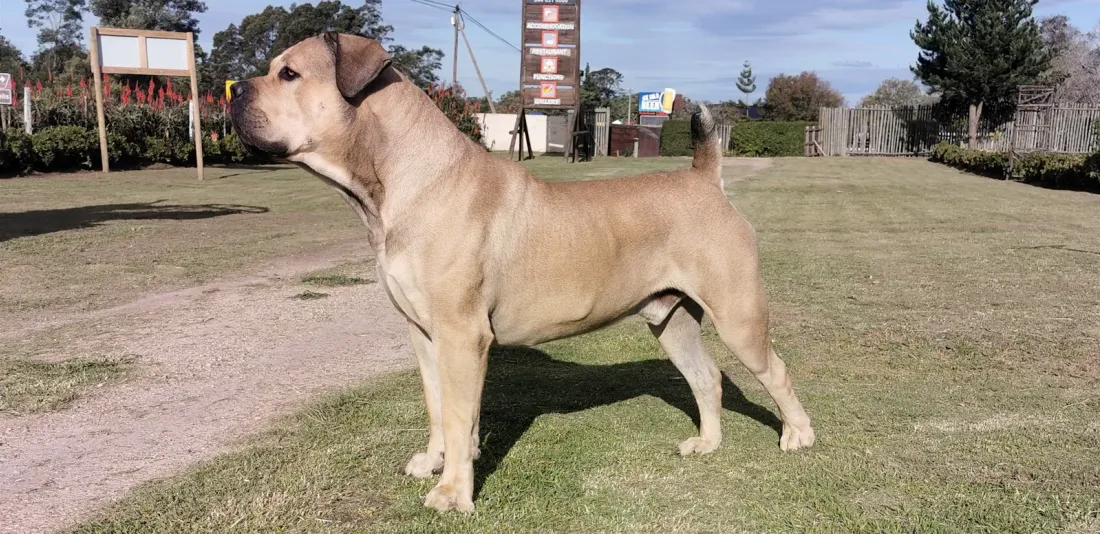
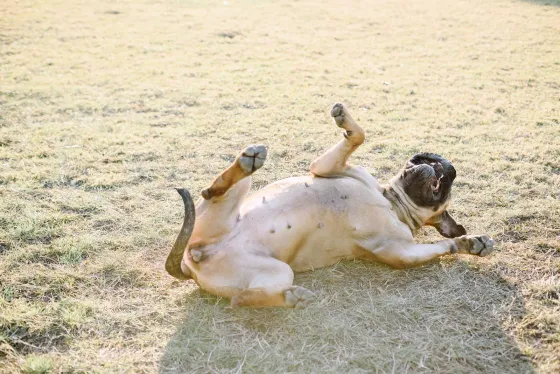
Which breeds are in the European Mastiff family?
Family storyUK RuralRead the family's story: origins, members, DNAAll 54 members, in order of first appearance, with the 16 DNA-tested breeds first. The other 38 are placed here by history and are hidden until you choose to show all 54. "Appeared" is the period when the type first shows up, as given in this site's data.
| Breed | Country | Status | Size | Appeared | DNA-tested |
|---|---|---|---|---|---|
| Cane Corso | Italy | living | giant | 1000 to 1996 | Yes (Parker 2017) |
| Dogue de Bordeaux | France | living | giant | 1300 to 1896 | Yes (Parker 2017) |
| English Mastiff | United Kingdom | living | giant | 1300 to 1880 | Yes (Parker 2017) |
| Great Dane | Germany | living | giant | 1600 to 1880 | Yes (Parker 2017) |
| Rhodesian Ridgeback | South Africa | living | large | 1600 to 1922 | Yes (Parker 2017) |
| Boerboel | South Africa | living | giant | 1650 to 1983 | Yes (Parker 2017) |
| Staffordshire Bull Terrier | United Kingdom | living | medium | 1800 to 1935 | Yes (Parker 2017) |
| Bulldog | United Kingdom | living | medium | 1835 to 1875 | Yes (Parker 2017) |
| American Staffordshire Terrier | United States | living | medium | 1850 to 1936 | Yes (Parker 2017) |
| Bull Terrier | United Kingdom | living | medium | 1850 to 1888 | Yes (Parker 2017) |
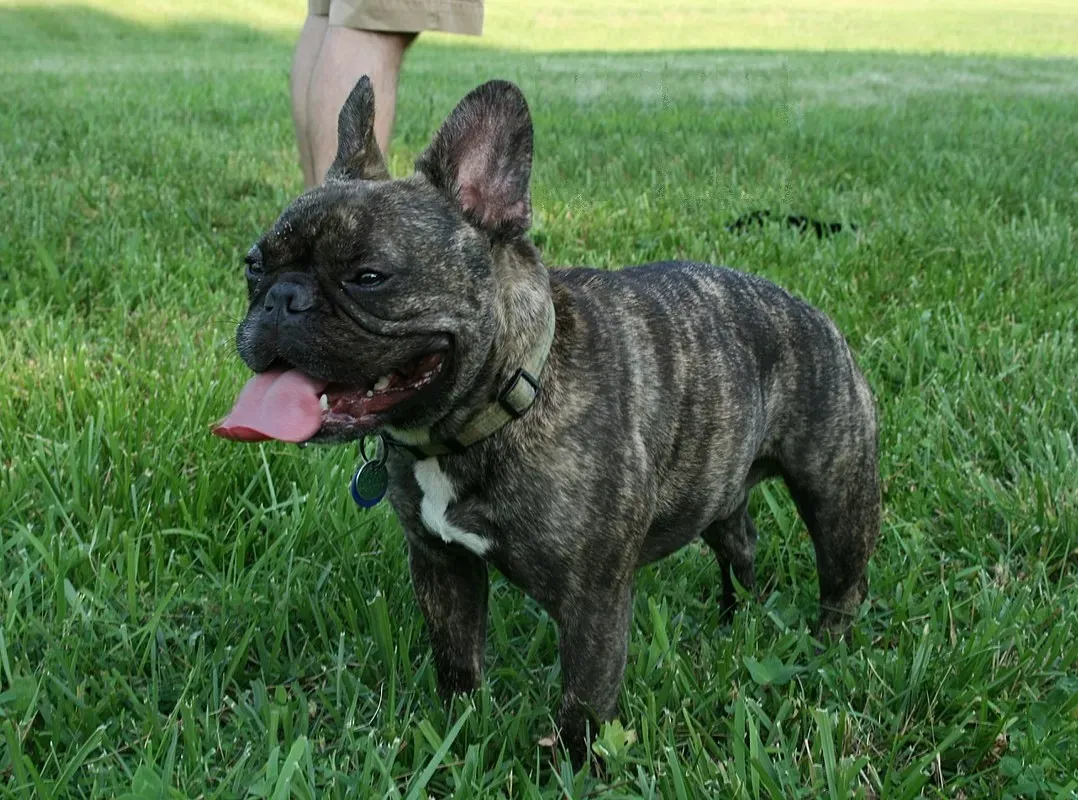
| French Bulldog | France | living | small | 1850 to 1898 | Yes (Parker 2017) |
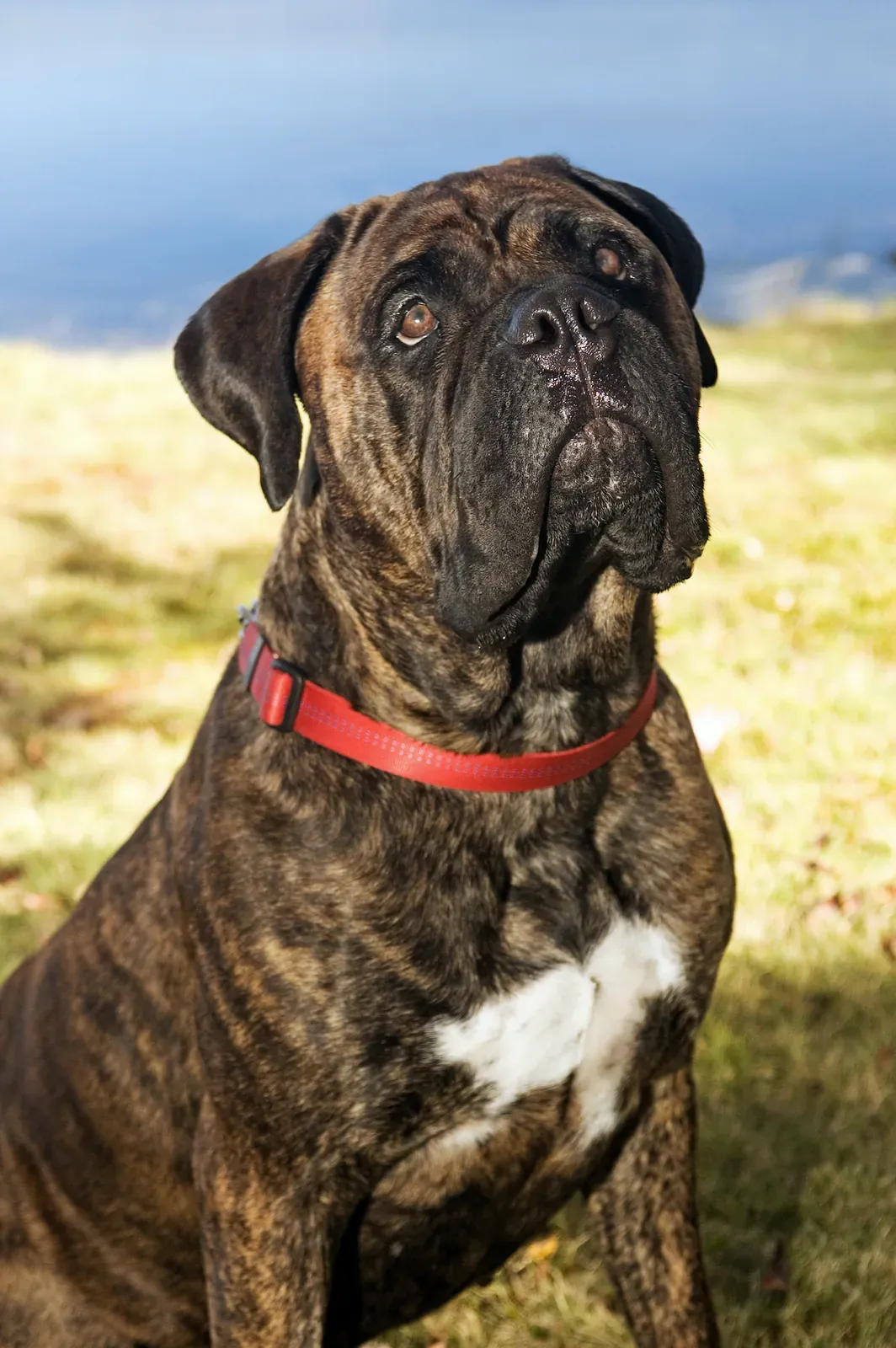
| Bullmastiff | United Kingdom | living | giant | 1860 to 1924 | Yes (Parker 2017) |
| Boston Terrier | United States | living | small | 1870 to 1893 | Yes (Parker 2017) |
| Miniature Bull Terrier | United Kingdom | living | small | 1870 to 1939 | Yes (Parker 2017) |
| Boxer | Germany | living | large | 1880 to 1904 | Yes (Parker 2017) |
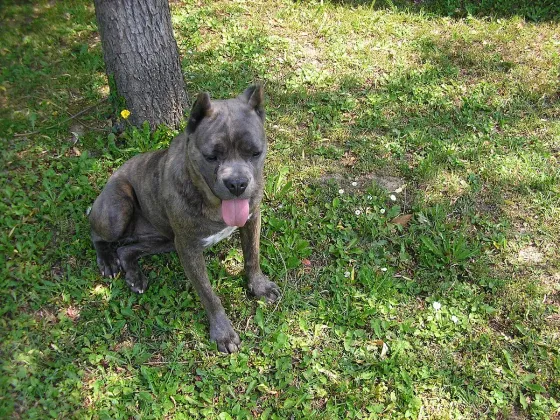
| Neapolitan Mastiff | Italy | living | giant | 1946 to 1949 | Yes (Parker 2017) |
| Assyrian Mastiff | Iraq | extinct | large | 1200 BCE to 600 BCE | By history |
| Molossus | Greece | extinct | large | 600 BCE to 400 BCE | By history |
| Canis Pugnax | Italy | extinct | large | 50 BCE to 400 CE | By history |
| Alaunt | Ukraine | extinct | large | 100 CE to 500 CE | By history |
| Spanish Mastiff | Spain | living | giant | 800 CE to 1946 | By history |
| Alano Español | Spain | living | large | 1300 to 1500 | By history |
| Bullenbeisser | Germany | extinct | large | 1300 to 1800 | By history |
| Terceira Mastiff | Portugal | extinct | large | 1450 to 1800 | By history |
| Broholmer | Denmark | living | giant | 1500 to 1974 | By history |
| Bully Kutta | Pakistan, India | living | giant | 1500 to 1900 | By history |
| Dogo Cubano | Cuba | extinct | large | 1500 to 1850 | By history |
| Dogo Sardesco | Italy | living | large | 1500 to 1900 | By history |
| Kombai | India | living | large | 1500 to 1900 | By history |
| Old English Bulldog | United Kingdom | extinct | medium | 1500 to 1835 | By history |
| Presa Canario | Spain | living | giant | 1500 to 1990 | By history |
| Pyrenean Mastiff | Spain | living | giant | 1500 to 1977 | By history |
| Belgian Mastiff | Belgium | extinct | large | 1600 to 1800 | By history |
| Cimarrón Uruguayo | Uruguay | living | large | 1600 to 1989 | By history |
| Fila Brasileiro | Brazil | living | giant | 1600 to 1946 | By history |
| Saint Miguel Cattle Dog | Portugal | living | large | 1600 to 1980 | By history |
| American Bulldog | United States | living | large | 1700 to 1980 | By history |
| Ca de Bou | Spain | living | large | 1700 to 1964 | By history |
| Alapaha Blue Blood Bulldog | United States | living | large | 1800 to 1979 | By history |
| Bull and Terrier | United Kingdom | extinct | medium | 1800 to 1860 | By history |
| Campeiro Bulldog | Brazil | living | large | 1800 to 2001 | By history |
| Córdoba Fighting Dog | Argentina | extinct | large | 1800 to 1900 | By history |
| Gull Dong | Pakistan, India | living | large | 1800 to 1900 | By history |
| Gull Terrier | Pakistan, India | living | large | 1800 to 1900 | By history |
| American Pit Bull Terrier | United States | living | medium | 1850 to 1898 | By history |
| Toy Bulldog | United Kingdom | extinct | toy | 1850 to 1890 | By history |
| Tosa | Japan | living | large | 1868 to 1924 | By history |
| Serrano Bulldog | Brazil | living | medium | 1900 to 2000 | By history |
| Dogo Argentino | Argentina | living | large | 1928 to 1973 | By history |
| Bull Arab | Australia | living | large | 1970 to 1990 | By history |
| Olde English Bulldogge | United States | living | large | 1970 to 2014 | By history |
| Dogue Brasileiro | Brazil | living | large | 1978 to 2001 | By history |
| American Bully | United States | living | medium | 1980 to 2004 | By history |
| Continental Bulldog | Switzerland | living | medium | 2004 to 2022 | By history |

Which members descend from which?
Family storyTerrierRead the family's story: origins, members, DNAThe main lines in this site's data are these. The confidence is mostly medium, because pedigrees from before the 1800s were rarely written down.
- Mastiff line. Alaunt and Canis Pugnax lead to the English Mastiff, which leads to the Old English Bulldog and, by crossing, to the Bullmastiff, Boerboel and Tosa.
- Bulldog line. The Old English Bulldog leads to the Bulldog, American Bulldog, Alapaha Blue Blood Bulldog and Toy Bulldog. The Toy Bulldog leads to the French Bulldog. The Bulldog leads to the Continental Bulldog and Olde English Bulldogge.
- Bull and terrier line. Bulldogs crossed with terriers made the "bull and terrier" dog, the base of the Bull Terrier, Staffordshire Bull Terrier, American Pit Bull Terrier and Boston Terrier. The Miniature Bull Terrier is a smaller variety of the Bull Terrier, the American Staffordshire Terrier is a variety of the American Pit Bull Terrier, and the Gull Terrier of Pakistan and India descends from the Bull Terrier. The American Pit Bull Terrier, the Bull and Terrier and the Gull Terrier were never DNA-tested. They sit here because their tested relatives, the Bull Terrier, Staffordshire Bull Terrier, American Staffordshire Terrier and Boston Terrier, all carry the European Mastiff label.
- German line. The Bullenbeisser leads to the Boxer.
- South American line. The Córdoba Fighting Dog leads to the Dogo Argentino. The Alano Español leads to the Cimarrón Uruguayo.
- Asian line. The Assyrian Mastiff is listed as the legendary ancestor of the Kurdish Mastiff, which this site places in a different family.
How much DNA do the tested members share?
Parker et al. 2017 measured shared , long stretches of DNA that two breeds carry in the same order. The unit is Mb, , or millions of DNA letters. More Mb means closer relatives. The strongest ties inside the family are:
| Pair | Shared DNA (Mb) |
|---|---|
| Bull Terrier and Miniature Bull Terrier | 412.1 |
| Cane Corso and Neapolitan Mastiff | 189.8 |
| Bullmastiff and English Mastiff | 143.9 |
| Boerboel and Bullmastiff | 83.4 |
| Boxer and Cane Corso | 63.0 |
| Boxer and Dogue de Bordeaux | 50.5 |
| Miniature Bull Terrier and Staffordshire Bull Terrier | 46.2 |
| Boerboel and Bulldog | 44.7 |
Three things stand out. The two bull terriers are close, as expected, since one is a smaller version of the other. The Cane Corso and Neapolitan Mastiff, both Italian, are each other's nearest relatives. And the Bullmastiff and English Mastiff share a lot, which matches the gamekeeper story.
What do the members have in common?
Family storyUK RuralRead the family's story: origins, members, DNAMost members have a broad, heavy head, a strong neck and a muscular body built for gripping and holding. Many have loose skin around the face and a short muzzle. Coats are mostly short and easy to keep. Most were bred to guard a home, a farm or an estate, or to hold large animals such as bulls and boar, so many are alert and loyal to their families but wary of strangers.
Size is not a shared trait. This is the most mixed family on the tree: from the toy-size Toy Bulldog to the giant Mastiff. The Boston Terrier, French Bulldog and the Miniature Bull Terrier prove that the family look can fit in a small dog.
What health problems run through the family?
Family storyTerrierRead the family's story: origins, members, DNAThree themes are well documented.
Short faces. Dogs with extremely flat faces, such as the Bulldog and French Bulldog, often have narrow airways. A 2015 study by Dan O'Neill and colleagues at the Royal Veterinary College, using records from vet practices in England, found that extreme flat-faced dogs (Bulldog, French Bulldog and Pug) were about 3.5 times more likely to have at least one upper airway disorder than moderate and long-faced dogs. Among French Bulldogs, 20 percent had at least one such disorder.
Bloat. Gastric dilatation and volvulus, usually called bloat, is when the stomach swells and twists. In a study led by Lawrence Glickman and published in the Journal of the American Veterinary Medical Association in 2000, the Great Dane had the highest risk of 11 large and giant breeds studied, with a lifetime risk of about 42 percent. Deep, narrow chests were one of the risk factors.
Short lives in giants. Cornelia Kraus and colleagues, using data on about 56,000 dogs of 74 breeds (American Naturalist, 2013), found that for every 2.2 kg of extra adult body weight, a dog loses roughly one month of expected lifespan. That fits this family's own numbers: the Dogue de Bordeaux is listed at 5 to 8 years, the English Mastiff at 6 to 10, and the Bullmastiff and Neapolitan Mastiff at 7 to 9. The medium Staffordshire Bull Terrier is listed at 12 to 14 years.
Health varies by breed, by line and by breeder. A vet, a breed club health programme and the parents' health tests are better guides than any family average.
Which members are extinct?
Family storyUK RuralRead the family's story: origins, members, DNATwelve: Assyrian Mastiff, Molossus, Canis Pugnax, Alaunt, Bullenbeisser, Terceira Mastiff, Old English Bulldog, Bull and Terrier, Belgian Mastiff, Córdoba Fighting Dog, Dogo Cubano and Toy Bulldog. The first four are partly legend and may be descriptions of a type more than a breed. The rest are real breeds or crosses lost in the last 300 years, mostly after their jobs vanished. The Bull and Terrier, the 1800s cross of bulldog and terrier, is the base of the living bull terriers. The Bullenbeisser's best parts live on in the Boxer, and the Old English Bulldog's in the Bulldog and in several American bulldogs.

What surprises does the family hold?
Family storyTerrierRead the family's story: origins, members, DNA- The Rhodesian Ridgeback, a lion-hunting hound that kennel clubs file with the scent hounds, shares a branch of this clade with the Great Dane. The two share 20.7 Mb.
- The Tibetan Mastiff, named for the mastiff, falls in the Asian Spitz family. The Rottweiler and Saint Bernard fall in the Drover and Alpine families, yet each still shares DNA with this family: the Saint Bernard shares 37.1 Mb with the English Mastiff.
- Parker et al. 2017 found no recent haplotype sharing between giant flock guards of the Mediterranean and the European mastiffs. Giant size seems to have arisen more than once.
- The Hovawart and the Moscow Watchdog, once filed with the mastiffs for their size, now sit elsewhere: the Hovawart is a German guard and herding dog placed with the Continental Herders, and the Moscow Watchdog is a Saint Bernard and Caucasian Shepherd cross placed with the Mediterranean livestock guardians.
- The French Bulldog and the Bulldog are close, but the Boston Terrier also sits near them (24.1 Mb with the French Bulldog), showing how many small dogs come from big ones.

What does research say about the family?
Family storyUK RuralRead the family's story: origins, members, DNAThe key study is Parker et al. 2017, "Genomic Analyses Reveal the Influence of Geographic Origin, Migration, and Hybridization on Modern Dog Breed Development" (Cell Reports). It tested 161 breeds, built a tree and found 23 clades. The European Mastiff clade joins the Mastiff, Bullmastiff, Dogue de Bordeaux, Neapolitan Mastiff, Boerboel, Cane Corso, Bulldog, Boxer, Great Dane, Bull Terrier, Staffordshire Bull Terrier, American Staffordshire Terrier, Boston Terrier and French Bulldog, with the Rhodesian Ridgeback near the Great Dane. It supports the idea that "molosser" is a body shape that appeared in several places, not a single ancient family.
Two cautions. Only breeds the study tested carry a clade label here, and the rest of the placements rest on history and type, so some may move if they are ever tested. And shared DNA shows relatedness, not who bred whom.
Which member suits which owner?
Family storyTerrierRead the family's story: origins, members, DNAThis is general guidance, not a promise about any one dog.
- Flat in a flat. The Boston Terrier and French Bulldog are small and fit city homes, but flat faces need heat care and vet attention to breathing.
- Active and medium. The Boxer, Staffordshire Bull Terrier, Bull Terrier and Dogo Argentino need exercise, firm and kind training and early socialising.
- Steady, big and calm indoors. The English Mastiff, Bullmastiff, Neapolitan Mastiff and Dogue de Bordeaux are giant dogs that need space, strong handling and an owner ready for high vet bills and a shorter life together.
- Working guards. The Boerboel, Cane Corso, Fila Brasileiro and Presa Canario are strong guarding breeds. They suit experienced owners who can train and manage them.
- Rare breeds. Check local rules and talk to breed clubs first, as some breeds are restricted in some countries.
European Mastiff fun facts
Family storyUK RuralRead the family's story: origins, members, DNA- The Great Dane's German name, Deutsche Dogge, means "German mastiff". Its English name comes from a French phrase for "great Danish dog".
- The Bullmastiff gained Kennel Club recognition on Christmas Eve 1924.
- The Dogue de Bordeaux was shown under its present name at the first French dog show, in Paris in 1863.
- The Boxer may be named for its habit of "boxing" with its front paws, or from a German word for the Bullenbeisser.
- The Tosa was made in Japan in the late 1800s from native dogs crossed with at least five European breeds.
- The word "molosser" and the word "mastiff" were joined by name in English in the 1600s.
Related families
 Related familyAlpine6 breeds in this family
- European dogs, the parent family
- Terrier, close in history to the bull terriers
- Alpine, home of the Saint Bernard
- Drover, home of the Rottweiler
- Asian Spitz, home of the Tibetan Mastiff
- Pinscher and Schnauzer, German-bred guard dogs filed beside many mastiffs by the FCI
Frequently asked questions
What are the main types of mastiffs?
Dog lovers talk about English Mastiff, Neapolitan Mastiff, Spanish Mastiff, Pyrenean Mastiff, Tibetan Mastiff and Bullmastiff. By DNA, the English, Neapolitan and Bullmastiff are in this family. The Tibetan Mastiff is in the Asian Spitz family, and the Spanish and Pyrenean mastiffs have not been DNA-tested and are placed here by history.
Are bulldogs mastiffs?
They are relatives. Bulldogs and mastiffs share a family in the 2017 DNA study, and the Old English Bulldog was likely descended from mastiff-type dogs. They differ in size, build and job.
What is the difference between a mastiff and a molosser?
Mastiff is a name given to some big guard dogs. Molosser is a body type found in many breeds across several families.
What are the biggest dog breeds in this family?
The English Mastiff, Neapolitan Mastiff, Great Dane, Dogue de Bordeaux, Bullmastiff, Boerboel and Fila Brasileiro are all in the giant size class in this site's data.
How long do mastiffs live?
Usually 5 to 10 years for giant types in this site's data. Smaller members like the Staffordshire Bull Terrier live 12 to 14 years.
Which mastiff-type dogs are extinct?
Twelve in this family, including the Old English Bulldog, Bullenbeisser and Alaunt. See the extinct members section above.
Where did the mastiff come from?
Probably from heavy guard and hunting dogs in Europe, with the English Mastiff taking its modern form in Britain. Claims about ancient war dogs are mostly legend.
Read next
Sources (11)
- Parker, H. G. et al. Genomic Analyses Reveal the Influence of Geographic Origin, Migration, and Hybridization on Modern Dog Breed Development. Cell Reports, 2017.
- Glickman, L. T. et al. Analysis of risk factors for gastric dilatation and dilatation-volvulus in dogs. Journal of the American Veterinary Medical Association, 2000.
- Kraus, C. et al. Dogs show size-related ageing rates. The American Naturalist, 2013.
- O'Neill, D. G. et al. Epidemiological associations between brachycephaly and upper respiratory tract disorders in dogs attending veterinary practices in England. Canine Genetics and Epidemiology, 2015.
- Cruelty to Animals Act 1835, United Kingdom Parliament.
- Merret, C. Pinax Rerum Naturalium Britannicarum, 1666.
- Aristotle, History of Animals; Virgil, Georgics (Molossian dogs).
- Oxford English Dictionary and Online Etymology Dictionary, entry "mastiff".
- The Kennel Club (UK), breed records for the Bullmastiff, 1924.
- Fédération Cynologique Internationale, breed standards and group listings (Dogue de Bordeaux, Neapolitan Mastiff, Boxer, Bull Terrier).
- American Kennel Club, breed histories (Boxer, Mastiff, Neapolitan Mastiff).