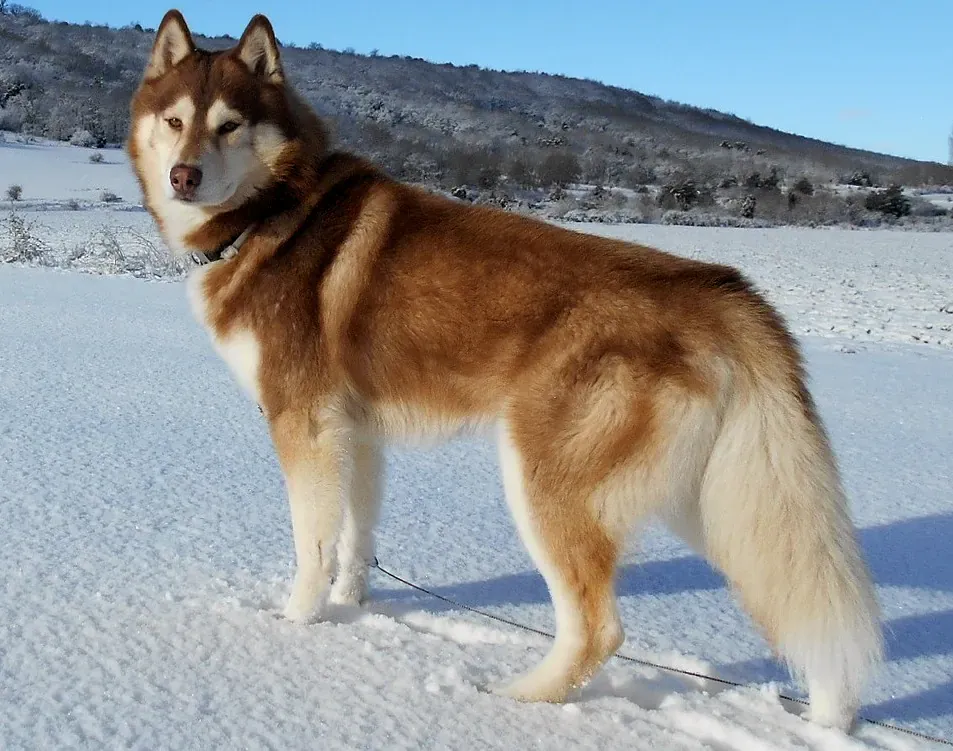
Imported to Alaska from 1908 and 1909, it became a racing star and later a household name through the 1925 serum run to Nome. It is known for a thick double coat, pale and sometimes blue eyes, a friendly but independent nature and a very high need for exercise. It suits active, patient owners with a secure garden and tends to struggle in homes that cannot give it space, work and company.
Siberian Husky quick facts
 Related breedBloodhound1000 to 1100 · Belgium, France
- Closest DNA relatives
- Greenland Dog, Alaskan Malamute
- Descendant breeds
- Alaskan Husky (a working type), Alaskan Klee Kai, Argentine Polar Dog, Northern Inuit Dog, Tamaskan Dog, Pomsky
- Country of origin
- Russia (Chukchi Peninsula); the FCI lists the United States as the country of origin because the breed was developed there
- Period of development
- Project data: about 1000 to 1930; breed standard formed in North America in the 1920s
- Type
- Sled dog (FCI Group 5, Spitz and primitive types, standard no. 270; AKC Working Group; UK Kennel Club Working Group)
- Height
- Males 53 to 60 cm, females 51 to 56 cm (Kennel Club, AKC)
- Weight
- Males 20 to 27 kg, females 16 to 23 kg (Kennel Club, AKC)
- Coat
- Dense double coat of medium length
- Colours
- All colours and markings, including white; merle is not allowed (Kennel Club)
- Life span
- Project data: 12 to 14 years
- DNA family
- Asian Spitz (Parker et al. 2017)
- Parent breed
- Chukotka Sled Dog


Name and origin
 Related breedCane Corso1000 to 1996 · Italy
"Siberian" names the land the dogs came from. "Husky" is thought to be a shortened, altered form of "Esky", itself short for "Eskimo", a word once used for northern peoples and their dogs. Early English-speaking traders and miners called all northern sled dogs "huskies". The project data also lists "Chukchi Sled Dog" as another name, after the Chukchi people.
The Chukchi and their dogs. The Chukchi are a people of Chukotka, at the far north-east tip of Siberia. Their dogs had to be economical to feed, fast enough to cover long distances and tough enough for Arctic winters. A Chukchi team was not built to haul heavy freight. It was built to trot for a long time with a modest load, and to live on little food. Chukchi families lived closely with their dogs, and traditional accounts describe dogs, including puppies, sleeping inside the home. These accounts come from breed histories, not from research checked for this draft.
Where the breed really begins. The dog the Chukchi kept is the ancestor, not the Siberian Husky itself. Our knowledge base treats the Siberian Husky as a descendant of the Chukotka Sled Dog (medium confidence). Modern Siberian Huskies come from a small number of dogs exported to Alaska from 1908 and bred in North America. That is why the FCI names the United States as country of origin even though the dogs came from Siberia.
History
 Same eraGreyhound800 CE to 1850 · United Kingdom
Before the export
The Chukchi dogs lived for centuries in a region with little contact with outside breeders. That isolation is one reason the type stayed so consistent. A 2020 study in Science (Sinding and colleagues) sequenced the genome of a dog about 9,500 years old from Zhokhov Island in the Siberian Arctic, found with sled-related artefacts, and compared it with modern sled dogs. It found that the major ancestry of modern sled dogs traces back to Siberia. See the DNA section below.
Alaska, 1908 to 1910
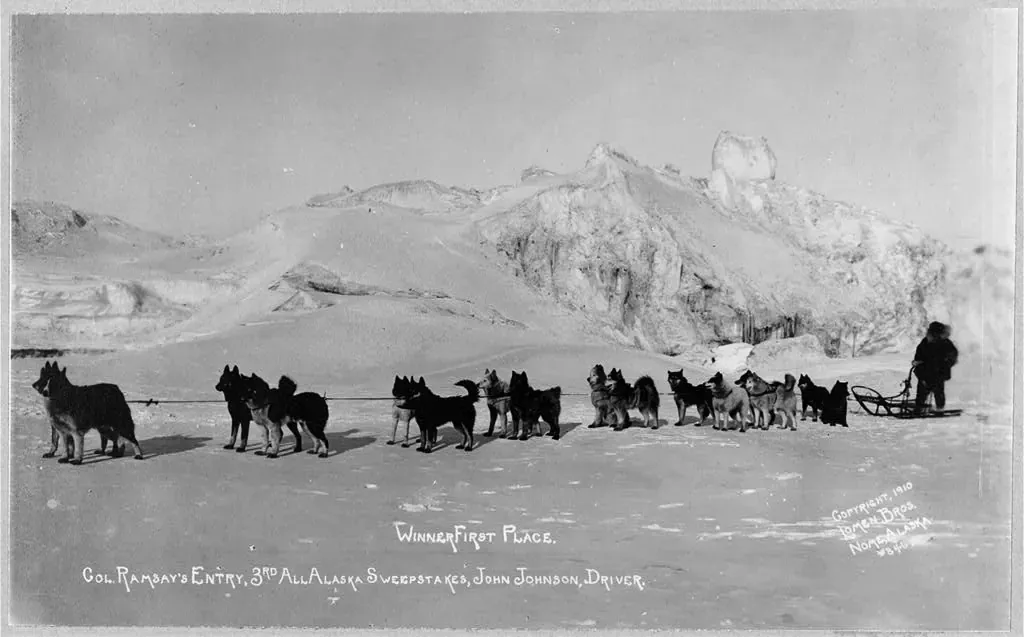
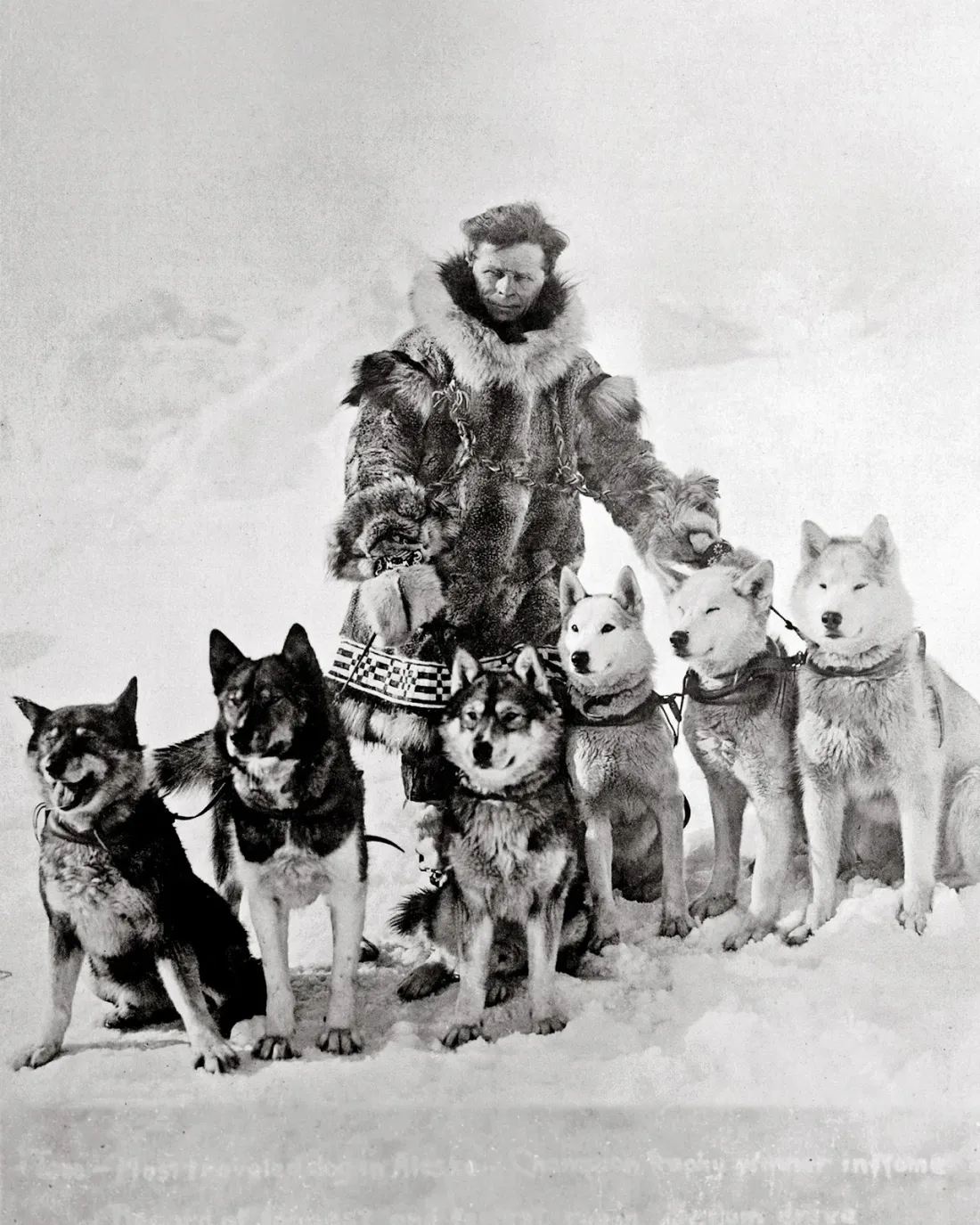
According to the Siberian Husky Club of America and the AKC, the first Siberian team reached Nome, Alaska, in the autumn of 1908. They were brought by a Russian fur trader, William Goosak, to enter the 1909 All Alaska Sweepstakes, a 408-mile race from Nome to Candle and back. Nome's mushers were unimpressed. The dogs weighed only about 18 to 24 kg, far less than the big freight dogs of the gold rush, and locals called them "Siberian rats". Betting put the team at 100 to 1. Goosak's team finished third.
A young Scottish racer in Nome, Fox Maule Ramsay, then travelled to Siberia in 1909 and brought back about 60 dogs. In the 1910 race, teams of Siberians took first, second and third. The Chukchi dogs proved fast over distance and economical to feed, and the breed took hold as a racing dog.
Leonhard Seppala
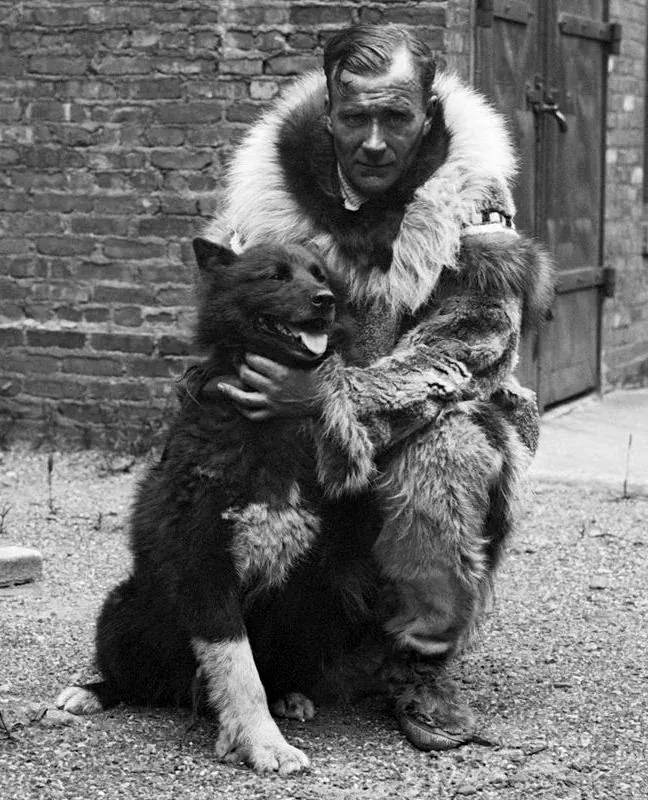
The best-known name in the breed's early years is Leonhard Seppala, a Norwegian-born musher in Nome. He raced Siberians, bred them and won races with them through the 1910s and 1920s. His lead dog Togo was a Siberian Husky. Seppala's line, together with other kennels, is behind many of the foundation dogs of the breed in North America.
The 1925 serum run to Nome
In January 1925, diphtheria threatened Nome. The only antitoxin was in Anchorage, and ships could not reach the town in winter. The serum went by train to Nenana, then by relay of sled teams across about 674 miles of Alaska. Around 20 mushers and about 150 dogs took part, and the serum reached Nome in about 127.5 hours, roughly five days, in blizzard conditions.
Two dogs became famous.
- Togo led Seppala's team over the longest and hardest section. The team ran about 170 miles out from Nome to meet the serum, then carried it about 91 miles back towards the town, covering around 261 miles in total.
- Balto led Gunnar Kaasen's team on the final leg into Nome, which is why he received the public credit. A statue of Balto stands in Central Park, New York.
Balto's breed is described differently by different sources. Seppala's kennel owned him, and some histories call him a Siberian Husky, while Wikipedia describes him as an Alaskan husky. Togo is usually presented as the dog that did the most work, and many Siberian Husky fans regard him as the true hero of the run.
Recognition
| Year | Event |
|---|---|
| 1908 | First Siberian team reaches Nome |
| 1909 | Goosak's team places third in the All Alaska Sweepstakes; Ramsay imports about 60 dogs |
| 1910 | Siberian teams take first, second and third in the Sweepstakes |
| 1925 | Serum run to Nome |
| 1930 | AKC recognises the Siberian Husky and places it in the Working Group |
The FCI lists the breed as standard no. 270 (definitive). The UK Kennel Club also recognises it; sources I found give 1966 or 1968 for UK recognition, so the exact year is left out here.
Ancestors, relatives and descendants
 Same familyIcelandic Sheepdog874 CE to 1969 · Iceland
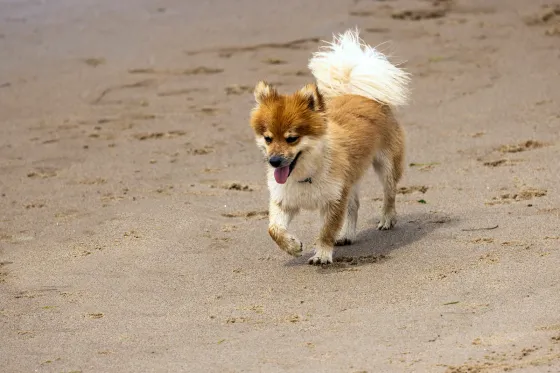
Parent breed. The Chukotka Sled Dog, the Chukchi working dog, is the one listed parent in the project data.
Descendant breeds. The project data lists six.
- Alaskan Husky. A working type, not a breed. See "Siberian Husky vs Alaskan Husky" below.
- Alaskan Klee Kai. A small Husky-like companion developed in Alaska.
- Argentine Polar Dog. A working dog developed in Argentina for use on Antarctic expeditions.
- Northern Inuit Dog. A wolf-like British companion breed with Siberian Husky among its roots.
- Tamaskan Dog. A wolf-like companion breed with northern-breed ancestry.
- Pomsky. A designer cross between the Pomeranian and the Siberian Husky.
See Alaskan Husky, Alaskan Klee Kai, Argentine Polar Dog, Northern Inuit Dog, Tamaskan Dog and Pomsky.
What DNA says
A 2017 study by Parker and colleagues (Cell Reports) analysed 1,346 dogs from 161 breeds and sorted them into 23 clades. The Siberian Husky belongs to the Asian Spitz family, with strong support. The study also measured shared : long stretches of identical DNA inherited from common ancestors. The more (Mb) two breeds share, the stronger the sign of shared founders or crossing. The study cannot say which way genes flowed.
Source: Parker et al. 2017, as recorded in this site's breed database.
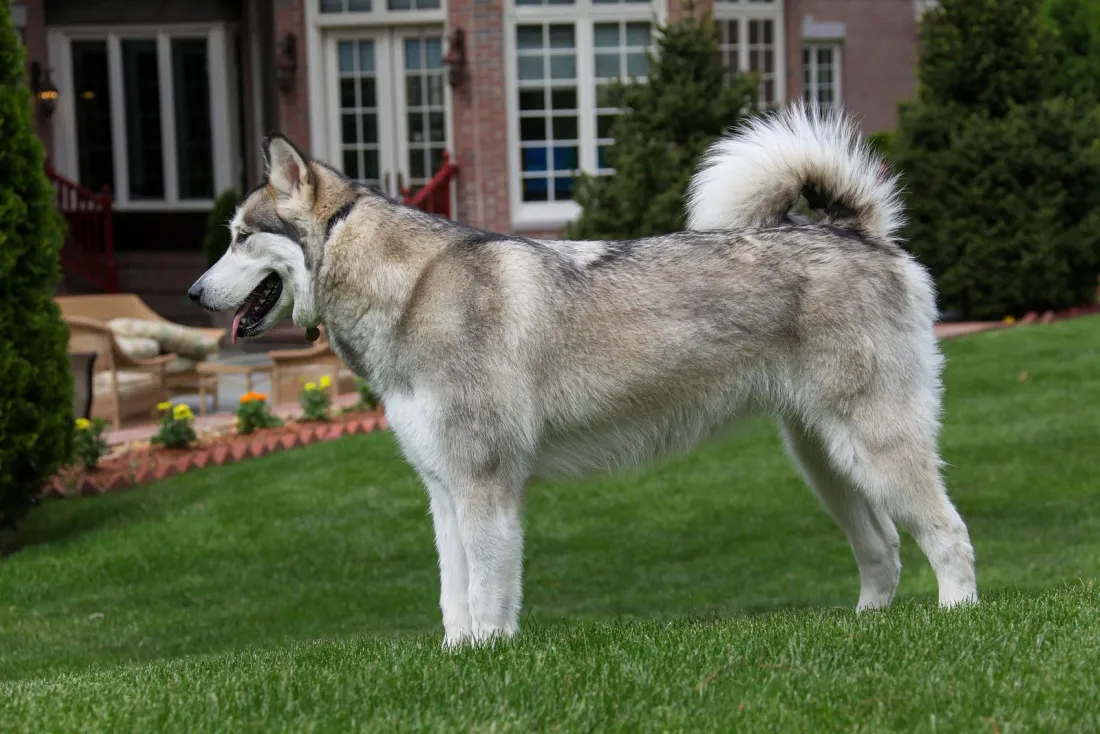
The Greenland Dog and the Alaskan Malamute stand far above the rest. Both are Arctic working breeds, so the figures fit the picture of one northern sled-dog stock. The Chinook, an American sled breed, shares a small amount, and the Samoyed, another Siberian dog, shares a similar small amount.
Arctic and ancient DNA
Two studies add to the picture.
- Taimyr wolf (Skoglund et al., Current Biology, 2015). The team sequenced a draft genome from a wolf about 35,000 years old from the Taimyr Peninsula in northern Siberia. They found that this ancient wolf lineage contributed to modern dog breeds from north-east Siberia and Greenland, between about 1.4 and 27.3 percent of their ancestry. They reported that the Siberian Husky and the Greenland sled dog share an unusually large number of genes with it. A later study in this field used the same idea to propose that modern Arctic breeds carry gene flow from wolves of that region.
- Arctic-adapted dogs (Sinding et al., Science, 2020). The team sequenced 10 modern Greenland sled dogs, a dog about 9,500 years old from Zhokhov Island in the Siberian Arctic, and a wolf about 33,000 years old. They found strong genetic similarity between the ancient dog and modern sled dogs. They also found gene flow from Pleistocene Siberian wolves, but not from modern American wolves, into present-day sled dogs. The authors concluded that the major ancestry of modern sled dogs traces to Siberia, with sled-dog-specific gene variants of potential Arctic relevance already in place by 9,500 years ago.
Both studies used Greenland dogs and Siberian Huskies as examples of high-latitude dogs. That does not make the Siberian Husky a wolf hybrid. These breeds are domestic dogs that carry some wolf ancestry from the distant past.
Descend from it · 6
- Alaskan HuskyUnited States
- Argentine Polar DogArgentina
- Alaskan Klee KaiUnited States
- Northern Inuit DogUnited Kingdom
- Tamaskan DogFinland
- PomskyUnited States
- Greenland Dog116.3 Mb 4.8%
- Alaskan Malamute99.3 Mb 4.1%
- Chinook13.8 Mb 0.6%
- Samoyed12.3 Mb 0.5%
Source: Parker et al. 2017. Percent of the whole genome.
| Breedwith Siberian Husky | Shared DNA with Siberian Husky (Mb)Shared DNA (Mb) |
|---|---|
| Greenland Dog | 116.3 |
| Alaskan Malamute | 99.3 |
| Chinook | 13.8 |
| Samoyed | 12.3 |
Siberian Husky vs Alaskan Husky
 Related breedLhasa Apso800 CE to 1934 · China
People often mix these up.
- Siberian Husky is a recognised, registered breed with a written standard. Dogs look alike and come from the lineage described above.
- Alaskan Husky is a working type, not a recognised breed. It is bred for racing performance, not appearance, and its lineage is mixed. Reported crosses include Siberian Husky, Alaskan Malamute, Border Collie, German Shepherd and others. Alaskan Huskies vary widely in look.
Both are used for sled work. If you want a particular size, coat and temperament, the Siberian Husky is the more predictable choice; the Alaskan Husky is selected for speed and endurance, and it is rarely a house pet. Our project data lists the Alaskan Husky as a descendant of the Siberian Husky (see Alaskan Husky).
The breed standard
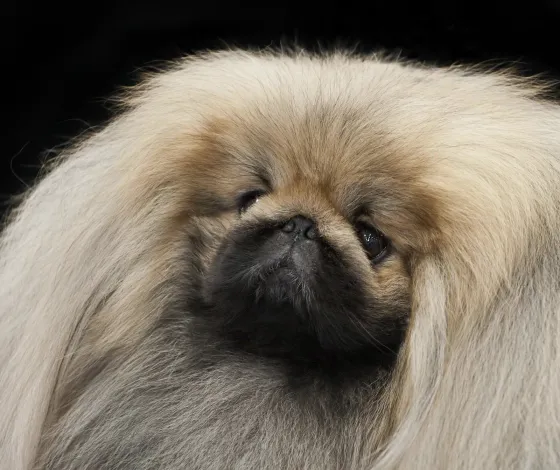 Looks relatedPekingese700 CE to 1860 · China
A breed standard is the written ideal that kennel clubs judge dogs against. It describes how the breed should look and move. The clubs agree on the main points; the table notes where verified data was found.
| Trait | FCI (no. 270) | AKC | UK Kennel Club |
|---|---|---|---|
| Height, males | Not verified for this draft | 21 to 23.5 in (53 to 60 cm) | 53 to 60 cm |
| Height, females | Not verified for this draft | 20 to 22 in (51 to 56 cm) | 51 to 56 cm |
| Weight, males | Not verified for this draft | 45 to 60 lb (20 to 27 kg) | 20 to 27 kg |
| Weight, females | Not verified for this draft | 35 to 50 lb (16 to 23 kg) | 16 to 23 kg |
| Eyes | Not verified for this draft | Almond-shaped, brown or blue; one of each or parti-coloured acceptable | Not verified for this draft |
| Colours | Not verified for this draft | Not verified for this draft | All colours and markings, including white; merle excluded |
The standards describe a medium-sized, compact, athletic dog with a dense double coat, erect triangular ears, a brush tail and a free, efficient trot, built for endurance, not for heavy loads. The breed is not divided into sizes; it has a single variety.
Common colours include black and white, grey and white, red and white, and pure white. Eye colour ranges from brown through blue to one of each (see the next section).
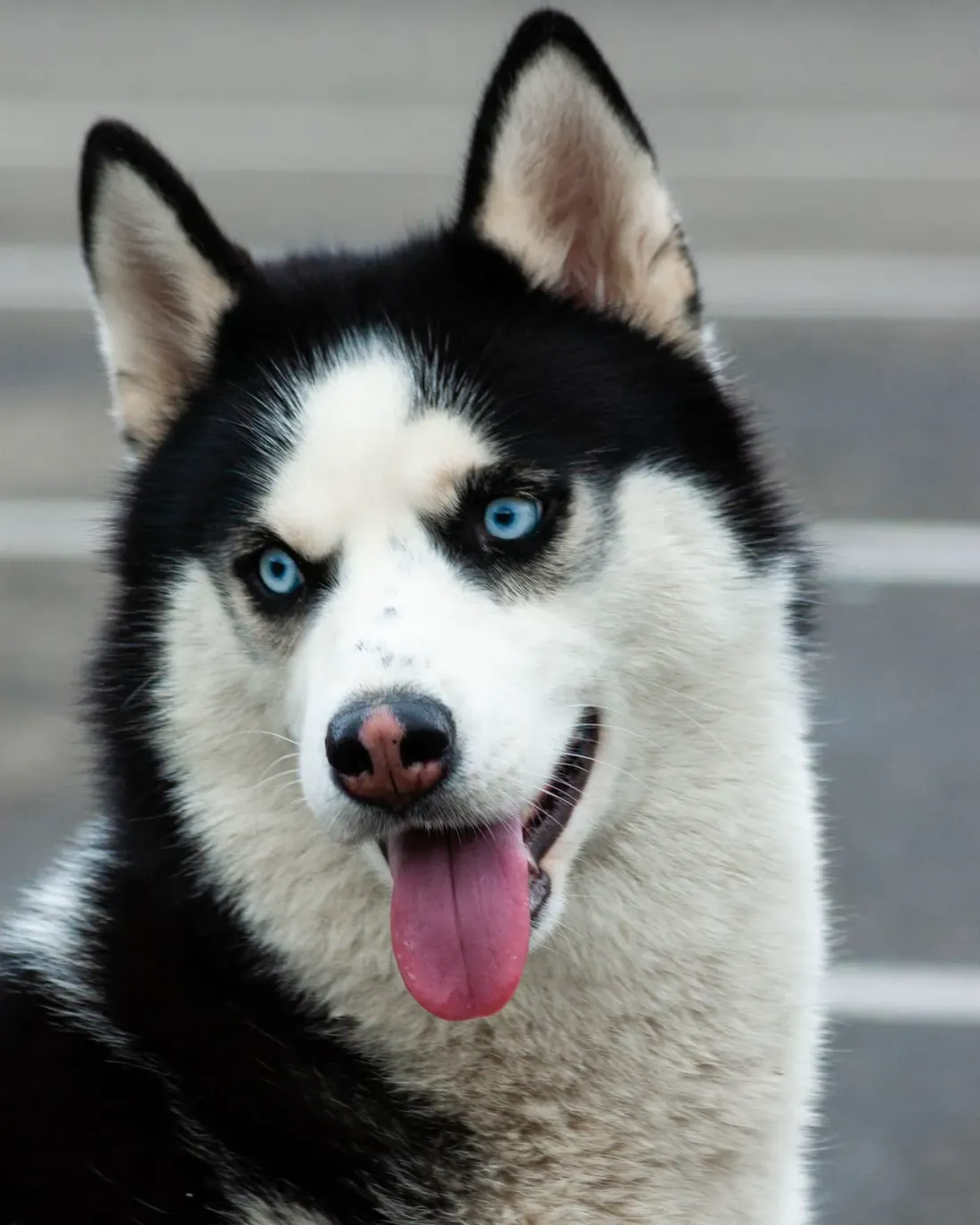
Why some Huskies have blue eyes
Blue eyes are one of the breed's best-known features, and they are allowed in the AKC standard. A study by Deane-Coe and colleagues (PLOS Genetics, 2018) used direct-to-consumer DNA test data from about 6,000 dogs plus owner-reported photos. It found a 98.6 kb duplication on chromosome 18, near the ALX4 gene, strongly associated with blue eyes and with having one blue and one brown eye (heterochromia). ALX4 is a gene known to play a part in mammalian eye development.
Key points from the study:
- The duplication was found mainly in Siberian Huskies, and also in non-merle Australian Shepherds.
- One copy was enough to produce blue eyes or heterochromia in most dogs.
- It is "highly, but not completely" penetrant: some dogs with the duplication did not have blue eyes, so other genes or factors are involved.
- Blue eyes in this breed are not linked to the merle gene, which is not allowed in the Siberian Husky.
The study does not report that these blue eyes are linked to hearing loss or eye disease in the way merle double-dilutes are. Owners with concerns should ask their vet.
Temperament
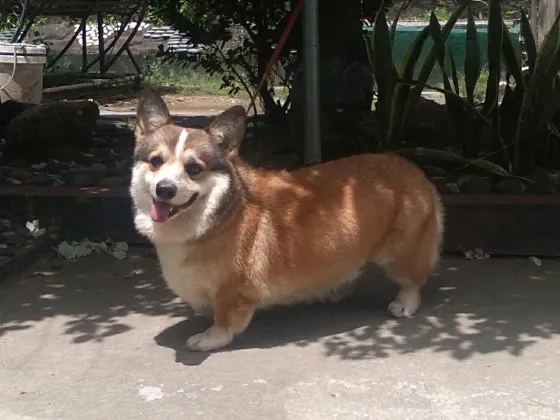 Related breedPembroke Welsh Corgi1100 to 1934 · United Kingdom
Siberian Huskies are generally friendly, outgoing and gentle. The AKC standard describes the temperament as friendly and gentle, alert and outgoing, and says the breed does not show the possessiveness of a guard dog or excessive suspicion of strangers. That makes them poor guard dogs and good with visitors, but it does not make them easy.
Typical traits, from breed club and kennel club descriptions:
- Independent. Bred to work in a team with a driver who was often far behind. Many Huskies decide for themselves whether to follow a command.
- Social. Many dislike being alone and do best with people or other dogs around.
- Strong prey drive. Many chase small animals and can be unsafe off-lead around cats, rabbits and poultry.
- Escape artists. Huskies dig, climb and jump. A secure, high fence is a common recommendation from breed clubs.
- Vocal. Rather than barking much, many howl, "talk" and sing.
Temperament varies by line and individual. Show lines and racing or working lines can differ in energy and drive, so ask a breeder about the parents' behaviour as well as their looks.
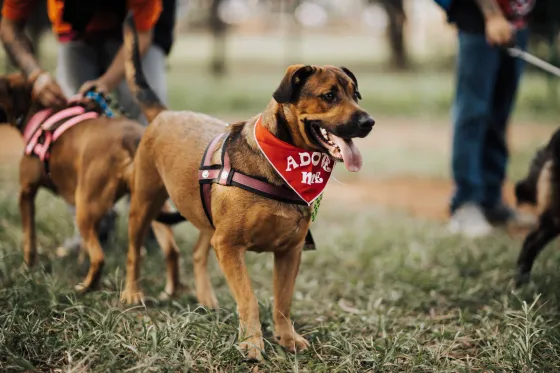
Behaviour and daily needs
 Related breedPuli900 CE to 1924 · Hungary
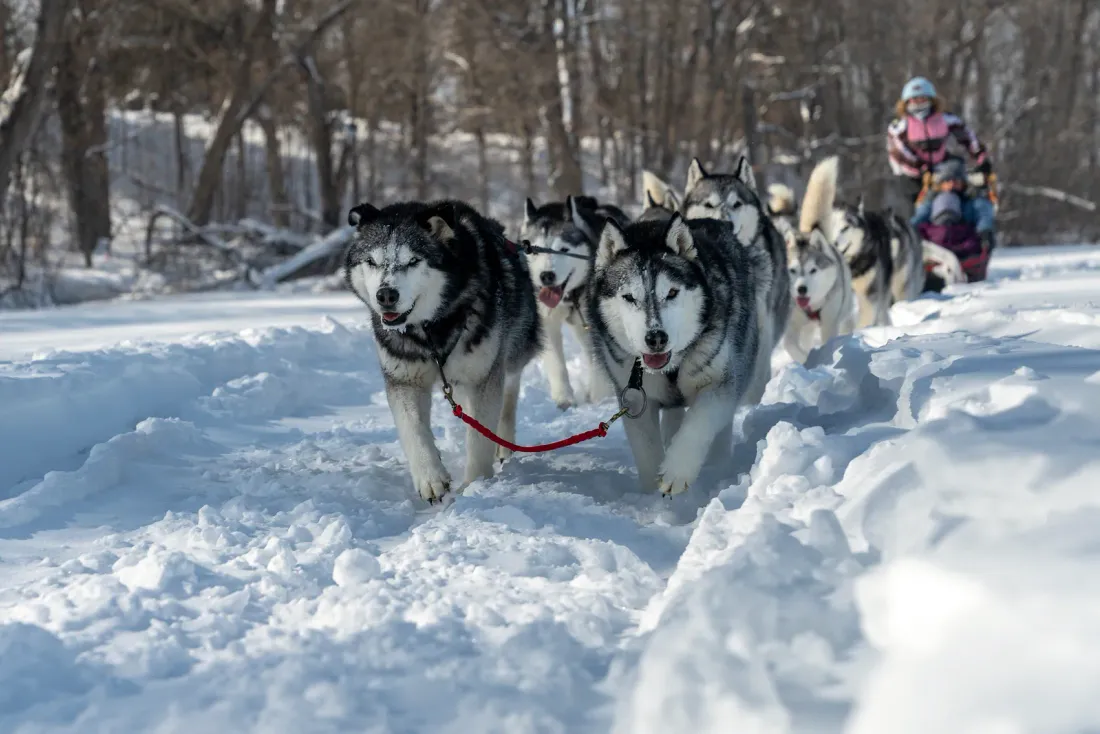
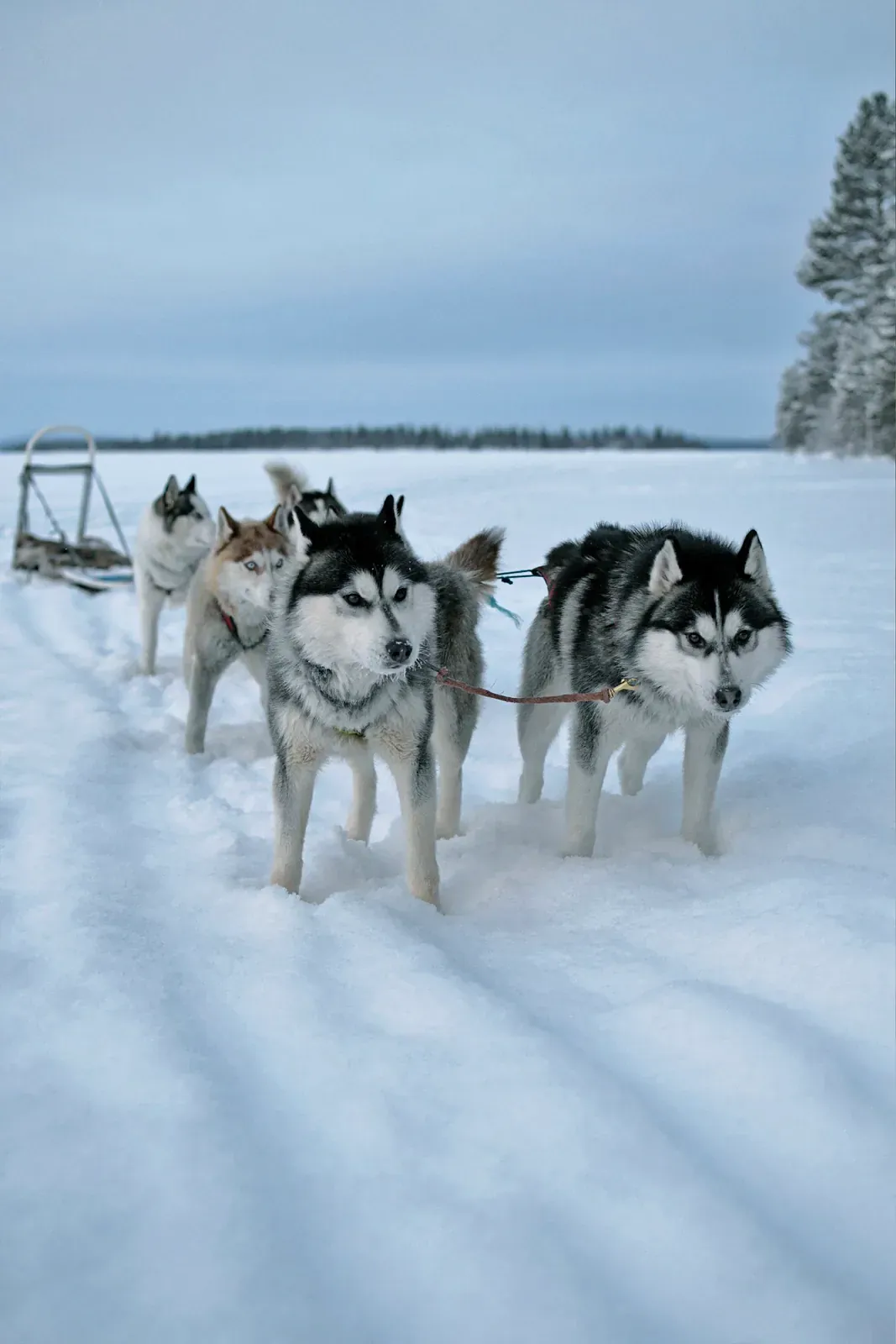
Exercise. The breed was built to run all day. The Kennel Club's breed information lists a high exercise need, and breed clubs say an adult Husky needs well over an hour of vigorous activity daily. I did not verify an exact club figure. Walking alone often does not tire a young adult.
Running off-lead. Because of strong prey drive and a tendency to follow a scent or movement, many owners keep Huskies on a lead or in secure areas. Recall is difficult for most of the breed.
Sports. Sled work, canicross, bikejoring, skijoring and hiking suit the breed. Many enjoy pulling.
Heat and cold. The double coat insulates in cold weather. The same coat makes hot climates hard, so exercise in the cool hours and provide shade and water.
Shedding. The coat sheds lightly through the year and heavily, in "blowing coat", about twice a year. Expect to brush daily during those periods.
Common problems. Boredom leads to chewing, digging and howling. Most of these problems come from unmet needs, not stubbornness alone.
Health
Most Siberian Huskies live healthy lives, and the breed is regarded by breed clubs and several studies as one of the sturdier medium-sized breeds. Responsible breeders screen for a short list of conditions. Owners can watch for the same ones.
Lifespan. The project data gives 12 to 14 years. A longevity study quoted in the sources I found puts the median at about 12.6 years; I did not verify the original paper. The 2004 UK Kennel Club health survey collected 13,741 questionnaires on 15,881 deaths across breeds, with a median age at death of 11 years and 3 months for all breeds combined.
| Condition | What it is | How common | What helps |
|---|---|---|---|
| The hip joint does not fit snugly, which can lead to stiffness or arthritis | Low. A French screening study of 10 breeds (1997 to 2017) found about 5 percent, or about 1 in 20 Siberian Huskies. Older OFA data on 12,087 dogs (1994 to 1998) found 2.2 percent dysplastic, about 1 in 45 | Hip scoring of breeding dogs, healthy weight, vet checks | |
| Juvenile (hereditary) cataracts | Cloudiness in the lens that can start in young dogs | Listed by the Siberian Husky Club of America as one of three eye conditions of concern; I found no prevalence figure | Annual eye exam of breeding dogs, vet checks |
| Corneal dystrophy | A clouding or deposit in the clear front part of the eye | Listed as an eye concern by the breed club; no prevalence found | Eye exam of breeding dogs |
| Progressive retinal atrophy (PRA) | Slow loss of the light-sensing cells at the back of the eye | Listed as an eye concern by the breed club, which describes the Siberian Husky form as unique to the breed; no prevalence found | Eye exam, DNA test where available, breeding choices |
| Other conditions | Some owners and clubs mention zinc-responsive skin problems and thyroid disease | Seen in the breed; not verified with figures here | Vet checks |
Information here is general. Talk to a vet about your own dog. For puppy buyers, the Siberian Husky Club of America and the UK breed clubs recommend hip scoring and annual eye examinations for the parents.
Living with a Siberian Husky
| Area | Rating | Why |
|---|---|---|
| Exercise per day | High | Bred for long-distance running; well over an hour of vigorous activity daily |
| Training needs | High | Independent; learns fast but chooses when to obey |
| Grooming time | Medium | Brush a few times a week, daily when the coat blows |
| Shedding | High | Heavy twice-yearly shed, lighter year-round |
| Barking | Low to Medium | Howling and "talking" are more common than barking |
| Time alone | Poor | Social dogs; boredom leads to digging and chewing |
| Children | Good | Friendly and gentle by standard; supervise because of size and energy |
| Other dogs | Good | Pack-bred and usually social |
| Cats and small pets | Poor | Strong prey drive; varies by dog |
| Flat living | Poor | High energy and howling; works only with a very active owner |
| Heat tolerance | Poor | Thick double coat |
| Cold tolerance | Good | Built for the Arctic |
| First-time owner fit | Fair | Friendly, but independent and escape-prone |
These ratings come from the breed standards and breed club descriptions cited above and from typical owner reports; individual dogs vary.
A great fit if you:
- Run, hike or cycle regularly and want a canine partner.
- Have a tall, secure fence and the patience to supervise.
- Are home for much of the day, or can arrange company for the dog.
- Accept that the dog may never reliably come when called off-lead.
Think twice if you:
- Are out of the house for long hours.
- Want a dog that obeys quickly or guards the home.
- Live in a hot climate without air conditioning.
- Keep cats, rabbits or poultry and cannot keep them separate.
Before you get one. Ask a breeder for the parents' hip scores and recent eye examination certificates. Consider an adult from a breed rescue: Husky rescues exist in many countries and can match an adult's real temperament to your home. Expect the first year to bring chewing, digging and a lot of exercise. Training classes are useful from puppyhood.
Similar breeds to consider.
- Alaskan Malamute: larger and stronger, a similar northern working dog with similar needs.
- Samoyed: another Siberian spitz, with a white coat that needs more grooming.
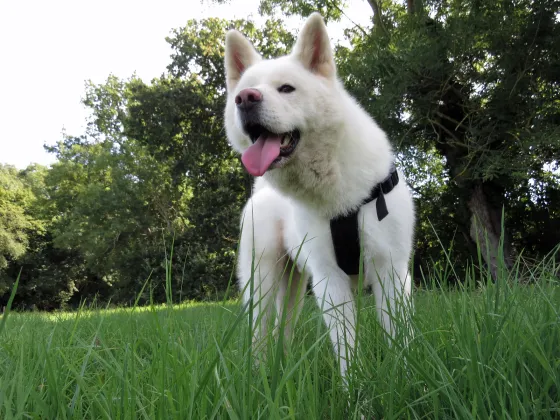
- Akita: a spitz that is more reserved and more guard-minded.
Siberian Husky fun facts
- The first Siberians in Nome were nicknamed "Siberian rats" by locals who thought them too small to race.
- Togo ran about 261 miles in the 1925 serum run, but Balto got the statue.
- A 9,500-year-old dog from a Siberian Arctic island is a close genetic match to modern sled dogs, according to a 2020 study.
- One copy of a 98.6 kb DNA duplication is enough for most Huskies to have blue eyes.
Frequently asked questions
Are Siberian Huskies good family dogs?
They can be, in active families with a secure garden. They are friendly with children but need exercise and supervision.
How long do Siberian Huskies live?
Project data gives 12 to 14 years.
How much exercise does a Siberian Husky need?
Well over an hour of vigorous activity a day for most adults.
Why do Siberian Huskies have blue eyes?
A DNA duplication near the ALX4 gene is strongly linked to blue eyes in the breed (Deane-Coe et al. 2018).
What is the difference between a Siberian Husky and an Alaskan Husky?
The Siberian Husky is a recognised breed. The Alaskan Husky is a working type bred for racing, with mixed ancestry.
Do Siberian Huskies shed a lot?
Yes. They shed lightly all year and heavily about twice a year.
Are Siberian Huskies related to wolves?
They are domestic dogs. Studies found ancient wolf ancestry in Arctic breeds, from a wolf population that lived over 30,000 years ago.
What colours can a Siberian Husky be?
All colours and markings, including white; is not allowed (UK Kennel Club).
Read next
Sources (12)
- American Kennel Club, Siberian Husky breed standard and breed information.
- Deane-Coe P.E. et al., "Direct-to-consumer DNA testing of 6,000 dogs reveals 98.6-kb duplication associated with blue eyes and heterochromia in Siberian Huskies", PLOS Genetics, 2018.
- Fédération Cynologique Internationale, Siberian Husky, standard no. 270.
- Parker H.G. et al., "Genomic analyses reveal the influence of geographic origin, migration, and hybridization on modern dog breed development", Cell Reports, 2017.
- Sinding M.-H.S. et al., "Arctic-adapted dogs emerged at the Pleistocene-Holocene transition", Science, 2020.
- Siberian Husky Club of America, breed history, hip screening and eye testing pages.
- Skoglund P. et al., "Ancient wolf genome reveals an early divergence of domestic dog ancestors and admixture into high-latitude breeds", Current Biology, 2015.
- The Kennel Club (UK), Siberian Husky breed standard and breed information; Kennel Club health survey (Methods and mortality results of a health survey of purebred dogs in the UK, 2004).
- Study of canine hip dysplasia prevalence in 10 breeds in France, 1997 to 2017, published 2020.
- OFA hip dysplasia statistics for Siberian Huskies, 1994 to 1998, as cited by the Siberian Husky Club of America.
- Wikipedia, "Siberian Husky", "Balto" and "1925 serum run to Nome" (dates and summaries, checked against the sources above).
- Project knowledge base, breed records and Parker 2017 shared-haplotype table (this site).