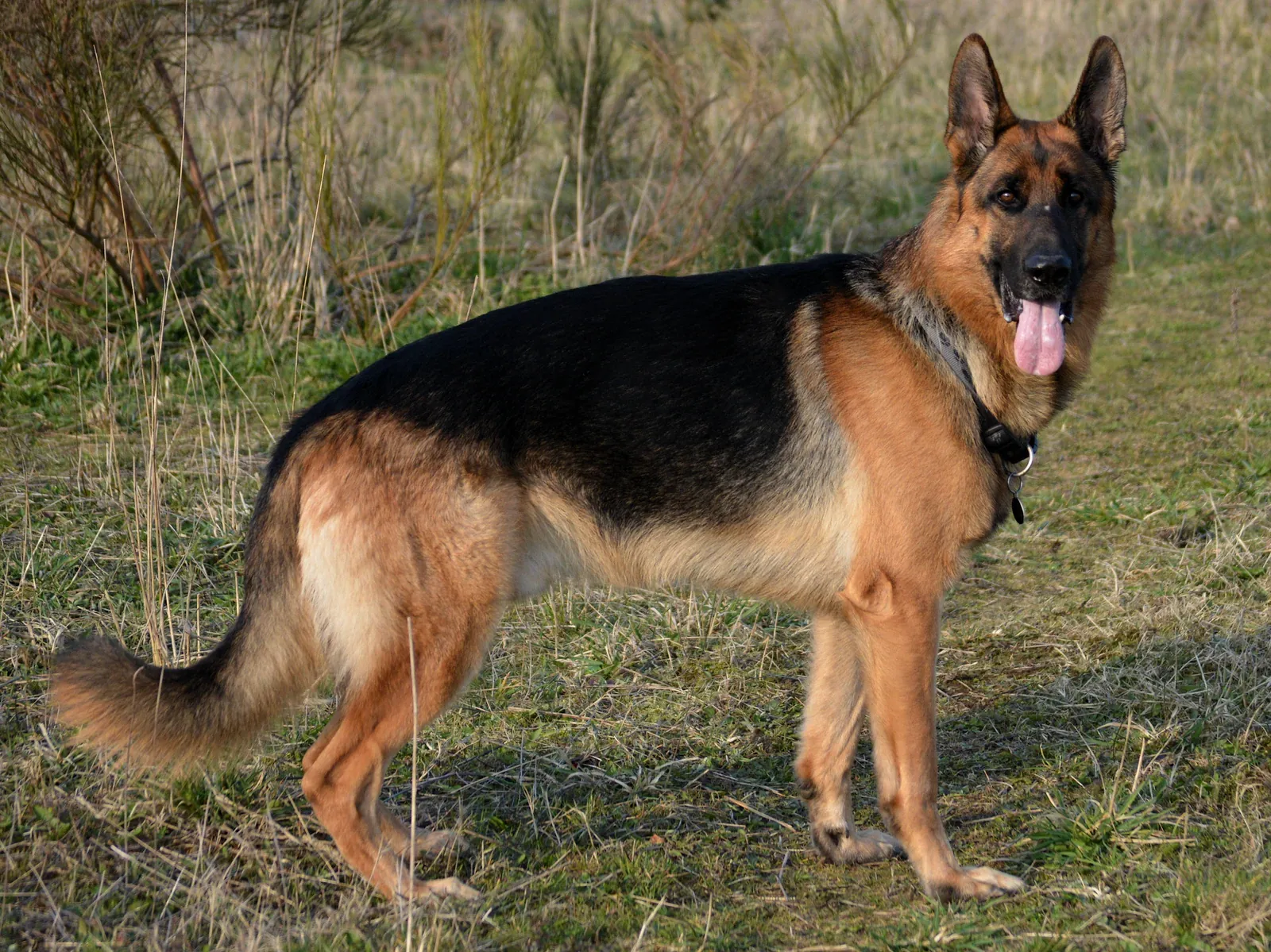
He wanted a working dog first and a show dog second. The breed went on to become the classic police, military, search and guide dog, and two early film stars, Strongheart and Rin Tin Tin, made it famous worldwide. It suits active owners who can give it training, a job and more than two hours of daily activity, and it is a poor fit for homes that leave a clever, sensitive dog idle.
German Shepherd quick facts
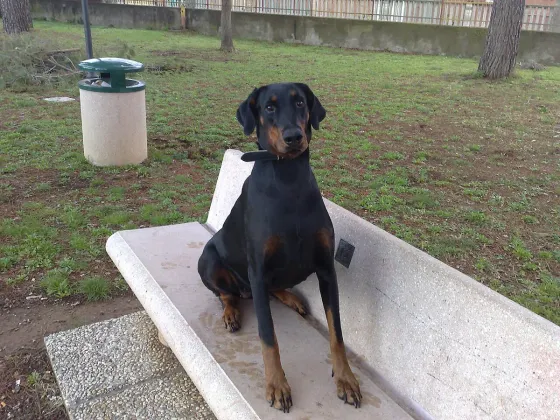 Related breedDobermann1880 to 1900 · Germany
- Closest DNA relatives
- Cane Paratore, Berger Picard, Chinook, Xoloitzcuintle, Belgian Malinois
- Sister breeds
- Belgian Shepherd, Dutch Shepherd
- Descendant and offshoot breeds
- White Shepherd, White Swiss Shepherd Dog, King Shepherd, Shiloh Shepherd, East European Shepherd, Saarloos Wolfdog, Czechoslovakian Wolfdog and others (see below)
- Country of origin
- Germany
- Period of development
- 1899 (project data: first breed registry and standard)
- Foundation sire
- Horand von Grafrath (born Hektor Linksrhein, 1895), number SZ 1
- Founder
- Max von Stephanitz (1864 to 1936)
- Type
- Herding dog (FCI Group 1, Sheepdogs and Cattledogs; FCI standard no. 166; AKC Herding Group; UK Kennel Club Pastoral Group)
- Height
- FCI standard: dogs 60 to 65 cm, bitches 55 to 60 cm. UK Kennel Club: ideal 63 cm and 58 cm, 2.5 cm either way allowed
- Weight
- FCI standard: dogs 30 to 40 kg, bitches 22 to 32 kg. UK VetCompass adult median: 40.1 kg males, 34.8 kg females
- Coat
- Two varieties: double coat (standard) and long and harsh outer coat (long coat). Dense undercoat in both
- Colours
- Black with tan, red-brown or light markings (saddle), (grey), solid black, bi-colour. White is not allowed under the FCI standard
- Life span
- Project data: 9 to 13 years. UK VetCompass median: 10.3 years. SV: 10 to 12 years
- Exercise
- More than 2 hours a day (UK Kennel Club breed information)
- DNA group
- "New World" (Parker et al. 2017)

Where does the name "German Shepherd" come from?
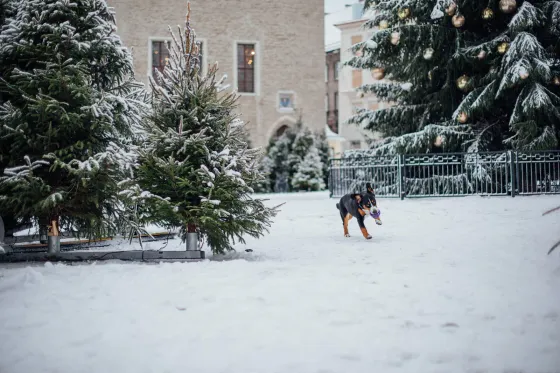 Related breedGreater Swiss Mountain Dog1700 to 1909 · Switzerland
The German name is Deutscher Schäferhund: Schäfer means shepherd and Hund means dog. "German Shepherd" is a direct translation, and "German Shepherd Dog" is the official name used by the FCI, the AKC and the UK Kennel Club.
The breed was also called the "Alsatian" in Britain for about six decades. After the First World War, the name "German" was seen as a handicap. British breeders and the Kennel Club adopted "Alsatian Wolf Dog", after Alsace, a border region that had been German from 1871 and returned to France after the war. "Wolf Dog" was later dropped because it frightened people and raised hybrid concerns, leaving "Alsatian". The Kennel Club allowed the original name back in 1977, and Wikipedia reports that "Alsatian" stayed in brackets in the official UK name until 2010.
Sources disagree on dates. The German Shepherd Dog Club of America says the British change came in 1917, in the same wave as the American one. Other histories place the UK change at the end of the war, with British registrations starting in 1919. In the United States, the American Kennel Club dropped "German" in 1917 (breed name "Shepherd Dog") and restored "German Shepherd Dog" in 1931.
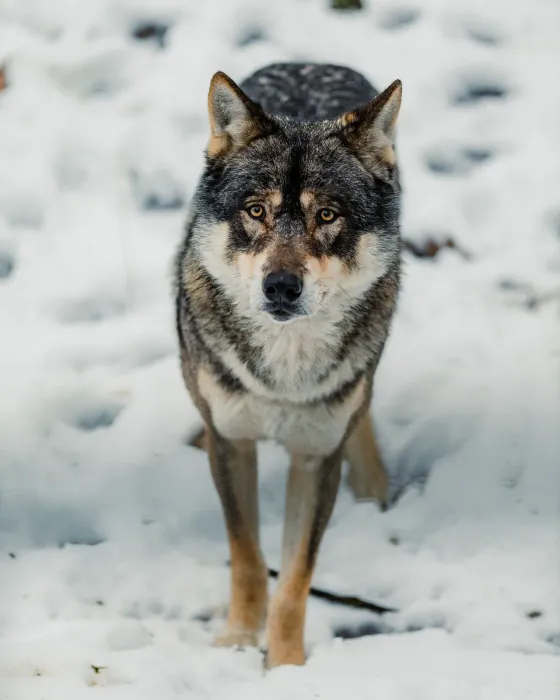
What is the history of the German Shepherd?
 Same eraPumi1700 to 1923 · Hungary
Before 1899
Herding dogs were common across central Europe for centuries, and they differed by region. Stephanitz worked with dogs from Thuringia in the north, Franconia and Württemberg in the south. He was a former cavalry officer (captain from 1898) who had studied at the Veterinary College in Berlin, and he wanted to combine the best working traits of these regional types into one standardised dog.
Stephanitz and Horand
In April 1899, at a dog show in Karlsruhe, Stephanitz saw a dog called Hektor Linksrhein, born on 1 January 1895 and bred by Friedrich Sparwasser. He bought him for a reported 200 marks, renamed him Horand von Grafrath and registered him as number 1 in the new stud book (SZ 1). Horand is treated as the first German Shepherd.
The same month, Stephanitz and his friend Artur Meyer founded the Verein für Deutsche Schäferhunde (SV, Society for German Shepherd Dogs). The SV and Wikipedia agree on 22 April 1899. They differ on the place: the SV names Karlsruhe, while Wikipedia says the club was formally set up with headquarters in Stuttgart after the decision was made at Karlsruhe. Stephanitz led the SV as president until 1935.
Horand's best-known son was Hektor von Schwaben. Breeding Hektor with Horand's other offspring produced Heinz von Starkenburg, Beowulf and Pilot, and this heavy was used to fix the traits Stephanitz wanted. The SV's founding standard put work before looks: a pleasing appearance is desirable, but it must not put working ability in question. Shepherd breeding, in the SV's own words, is working-dog breeding, and the FCI still requires a working trial for the breed.
Two world wars
Stephanitz promoted the dog as a service animal, and the First World War gave him the proof. The SV reports that about 7,000 German Shepherds were lost serving as messengers, cable layers and medical dogs. Membership grew fast afterwards: Wikipedia quotes 50,000 dues-paying members in more than 500 branches in 1923, and the SV gives about 57,000 members in the early 1920s. Stephanitz left the SV in 1935 during the Nazi period and died on 22 April 1936 in Dresden.
The Second World War hit the breed hard. The SV lists thousands of German Shepherds used as messengers, gas detectors and ammunition , and membership stood at about 40,000 in 1949. A 2026 genome study (Scarsbrook et al., see the research section) traces later bottlenecks to this post-war period.
Police, military and guide dogs
- Police. Ghent, Belgium, ran the first organised police dog service in 1899. The German police then chose the German Shepherd as the preferred breed, and the Prussian state opened a police dog training school at Grünheide in 1920.
- Military. Shepherds served as messenger, sentry, scout and rescue dogs in both world wars and have stayed in military work since.
- Guide dogs. Germany set up the first guide dog schools during the First World War for soldiers blinded in the war. In 1927 the American breeder Dorothy Harrison Eustis, then living in Switzerland, wrote "The Seeing Eye" in The Saturday Evening Post about the school at Potsdam. Morris Frank, a blind 19-year-old from Nashville, read it and wrote to her. In April 1928 he received a German Shepherd female named Kiss, renamed Buddy. The Seeing Eye was founded in Nashville on 29 January 1929, and its early dogs were German Shepherds. Labradors and Golden Retrievers now dominate guide dog work.
Kennel club recognition
| Year | Event |
|---|---|
| 1899 | SV founded (22 April) and Horand entered as SZ 1 |
| 1908 | First German Shepherd registered with the AKC (GSDCA history) |
| 1913 | German Shepherd Dog Club of America founded, 26 charter members |
| 1917 | AKC drops "German": breed listed as "Shepherd Dog" |
| 1919 | UK registrations begin under the name Alsatian Wolf Dog: 54 dogs, rising to over 8,000 by 1926 (Wikipedia) |
| 1931 | AKC restores the name "German Shepherd Dog" |
| 1977 | UK Kennel Club allows "German Shepherd Dog" again |
| 2010 | Current FCI standard no. 166 (German original 23 March 2010; English version 23 December 2010) |
The FCI lists the breed as definitive, standard no. 166, country of origin Germany. The SV says its stud book now holds more than 2 million dogs, and it calls itself the world's largest breed club with over 50,000 members.

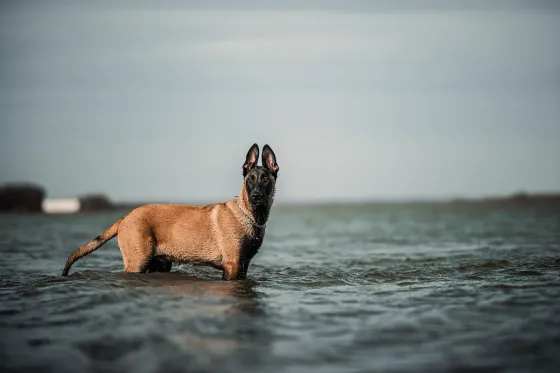
Which breeds are ancestors, descendants and relatives of the German Shepherd?
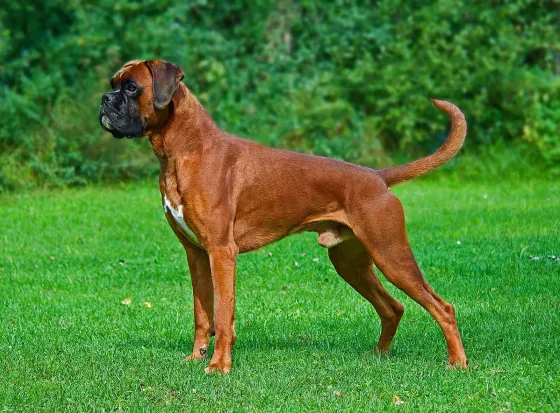 Same familyBoxer1880 to 1904 · Germany
Ancestors. The German Shepherd has no documented parent breed. It was assembled from the regional shepherd dogs of Thuringia, Franconia and Württemberg in the late 1890s, and the project knowledge base therefore treats it as a foundation breed.
Sister breeds. The Belgian Shepherd and the Dutch Shepherd come from the same Western European herding type and diverged into separate breeds in the same period, so they are siblings rather than parent and child. The Belgian Malinois, a coat variety of the Belgian Shepherd, often works alongside the German Shepherd in police and military units.
Varieties and offshoots
- White Shepherd. North American variety bred from white-coated German Shepherds. White dogs existed in Europe from 1882, and the German standard was amended in 1933 to ban them from registration. North American and Canadian enthusiasts set up their own club in 1969.
- White Swiss Shepherd Dog. Descends from White Shepherds imported from North America from the early 1970s and is now a separate breed in Switzerland.
- King Shepherd and Shiloh Shepherd. US varieties developed from German Shepherds in the 1970s to 1990s, with Alaskan Malamute and other crosses reported.
- East European Shepherd. Bred in the Soviet Union from German Shepherds imported to Ukraine in the 1920s. It in turn helped build the Moscow Water Dog, which was later used to develop the Black Russian Terrier.
Wolfdog crosses
- Saarloos Wolfdog (Netherlands). Leendert Saarloos crossed a German Shepherd with a Siberian wolf in 1935.
- Czechoslovakian Wolfdog. Colonel Karel Hartl began the programme in 1955 using German Shepherds and Carpathian wolves. The first hybrids were born on 26 May 1958. It became a national breed in 1982 and the FCI accepted it definitively in 1999. A 2015 DNA study found a largely dog-dominant genome.
- Lupo Italiano, Kunming Wolfdog, Mojee, Calupoh. Other German Shepherd and wolf or wolfdog projects, from Italy, China and Mexico. Wolf content and dates are disputed or unclear for several of them.
Breeds that used German Shepherd blood
- Chinook. Arthur Walden bred his sled lead dog to German Shepherds, Belgian Shepherds and others.
- Hovawart. Kurt Friedrich Koenig revived it from 1915 using German Shepherds, Kuvasz, Newfoundlands, Leonbergers and a Bernese Mountain Dog.
- Akita. Akitas were crossed with German Shepherds during the Second World War to avoid culling of the breed. The American Akita was split from the Japanese type after the war.
- Northern Inuit Dog and Tamaskan Dog. Founding stock included German Shepherds, Huskies and Malamutes.
- Laizhou Hong (China) and Gaucho Sheepdog (Brazil). German Shepherds are listed among several breeds that contributed.
The project database counts 22 descendant breeds in total. Many are outcross contributions, not direct descendants, so the lists above separate the two.
What does DNA say?
A 2017 study by Parker and colleagues (Cell Reports) analysed 1,346 dogs from 161 breeds and sorted them into 23 supported clades. The German Shepherd falls in the "New World" clade. As summarised from the paper, the signal in that clade centres on the German Shepherd. The project data places the Berger Picard, Cane Paratore, Chinook, Xoloitzcuintle and Peruvian Hairless Dog in the same clade. The study also measured shared : long stretches of identical DNA from common ancestors. The more (Mb) two breeds share, the stronger the sign of crossing or shared founders. The study cannot say which way the genes flowed.
Source: Parker et al. 2017, as recorded in this site's breed database.
Three results stand out. The Chinook's 122 Mb fits its documented crossing with German Shepherds. The Berger Picard and the rare Italian Cane Paratore share just as much, and the project data has no documented crossing for either, so this is a signal for researchers to explain, not a proven pedigree. The Belgian Malinois shares 42.6 Mb, which matches the history of the two breeds working side by side.
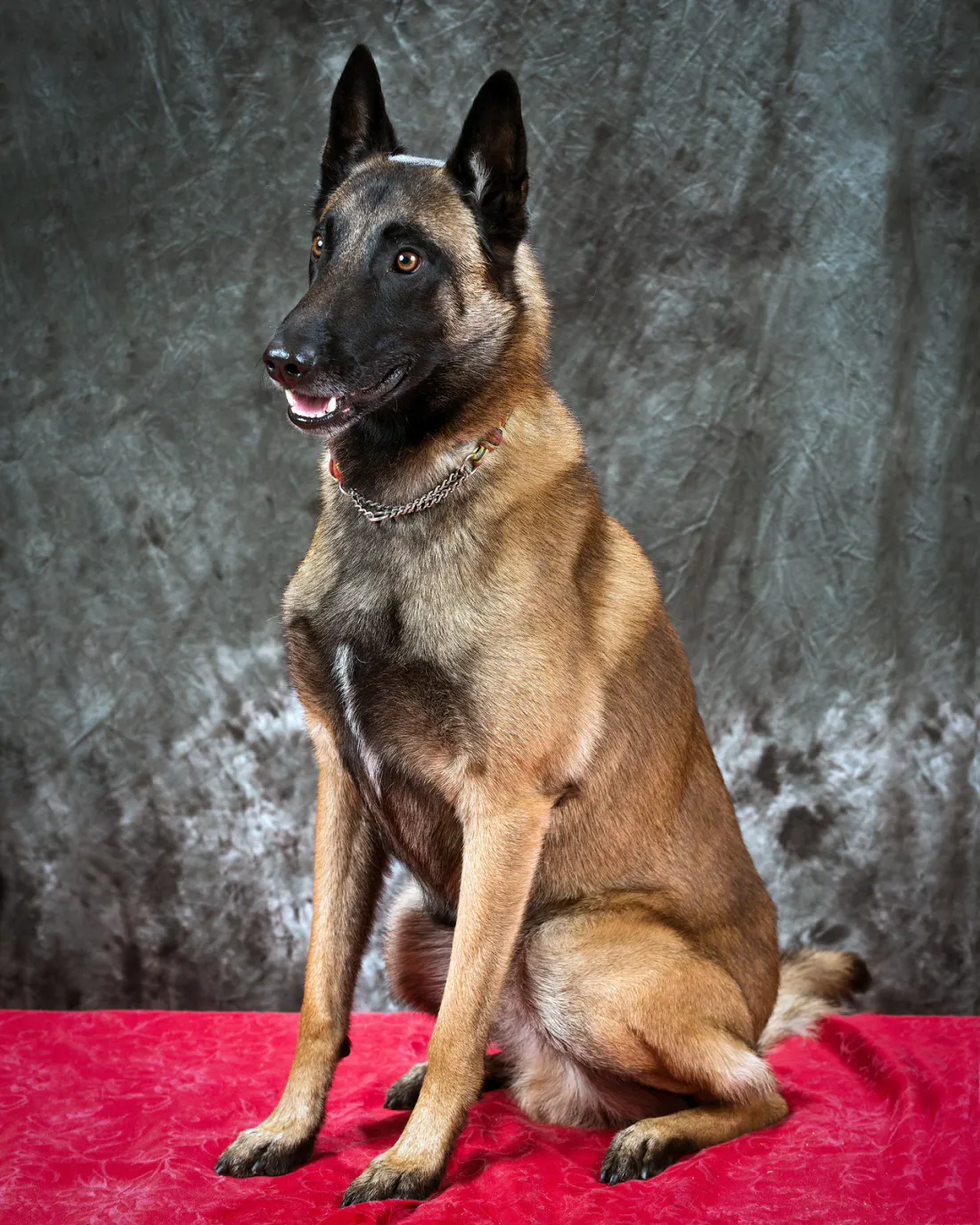
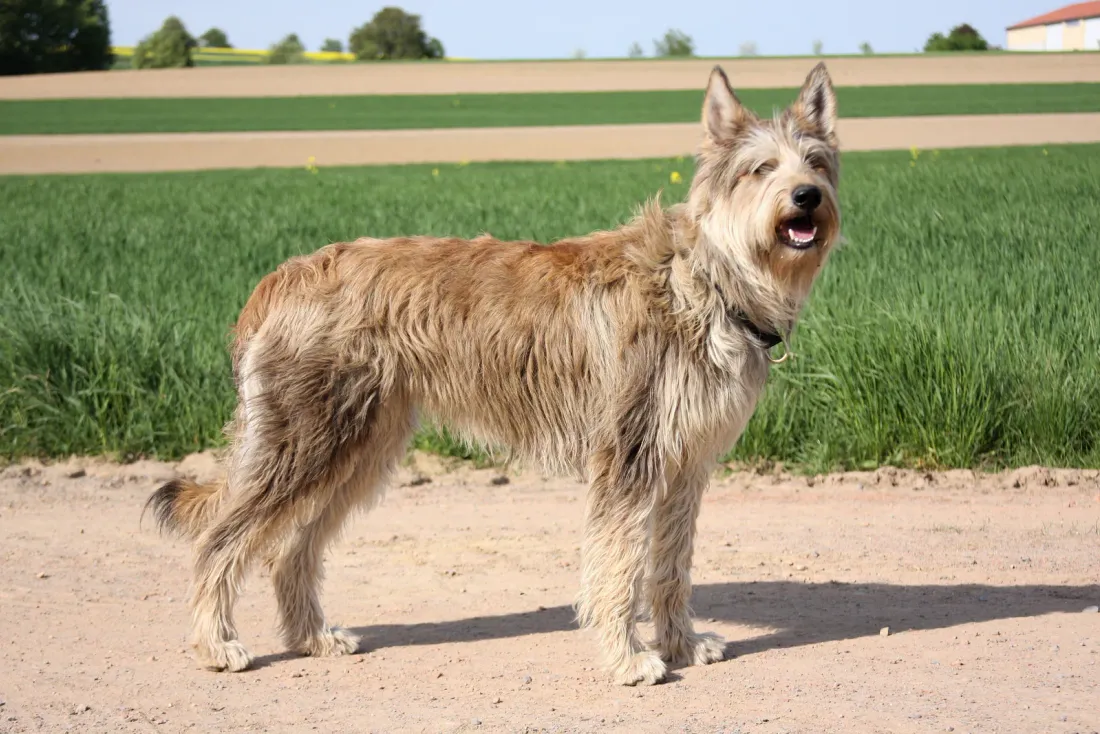
Sister breeds · 2
- Dutch Shepherd1850 to 1898
- Belgian Shepherd1891 to 1901
Descend from it · 17
- HovawartGermany
- AkitaJapan
- Gaucho SheepdogBrazil
- Laizhou HongChina
- ChinookUnited States
- East European ShepherdRussia, Belarus
- White ShepherdUnited States
- Saarloos WolfdogNetherlands
- MojeeChina
- Kunming WolfdogChina
- Czechoslovakian WolfdogSlovakia, Czech Republic
- Lupo ItalianoItaly
- Shiloh ShepherdUnited States
- Northern Inuit DogUnited Kingdom
- Tamaskan DogFinland
- King ShepherdUnited States
- CalupohMexico
- Cane Paratore124.2 Mb 5.2%
- Berger Picard123.9 Mb 5.2%
- Chinook122.2 Mb 5.1%
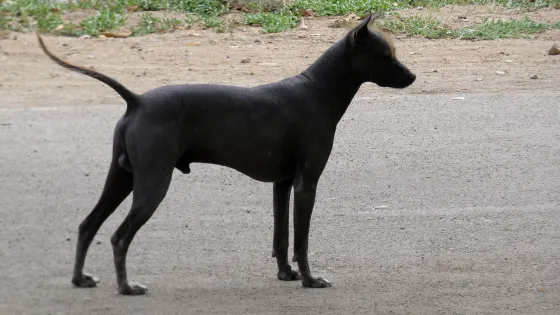
- Xoloitzcuintle64.2 Mb 2.7%
- Belgian Malinois42.6 Mb 1.8%
- Peruvian Hairless Dog35.6 Mb 1.5%
- Portuguese Water Dog28.7 Mb 1.2%
- Leonberger26.4 Mb 1.1%
- Maremmano-Abruzzese Sheepdog18.9 Mb 0.8%
- Australian Shepherd14.8 Mb 0.6%
- Dobermann14.8 Mb 0.6%
- Greater Swiss Mountain Dog13.5 Mb 0.6%
- Pumi10.6 Mb 0.4%
Source: Parker et al. 2017. Percent of the whole genome.
| Breedwith German Shepherd | Shared DNA with German Shepherd (Mb)Shared DNA (Mb) |
|---|---|
| Cane Paratore | 124.2 |
| Berger Picard | 123.9 |
| Chinook | 122.2 |
| Xoloitzcuintle | 64.2 |
| Belgian Malinois | 42.6 |
| Peruvian Hairless Dog | 35.6 |
| Portuguese Water Dog | 28.7 |
| Leonberger | 26.4 |
| Maremmano-Abruzzese Sheepdog | 18.9 |
| Australian Shepherd | 14.8 |
| Dobermann | 14.8 |
| Greater Swiss Mountain Dog | 13.5 |
| Pumi | 10.6 |
How big is a German Shepherd and what does it look like?
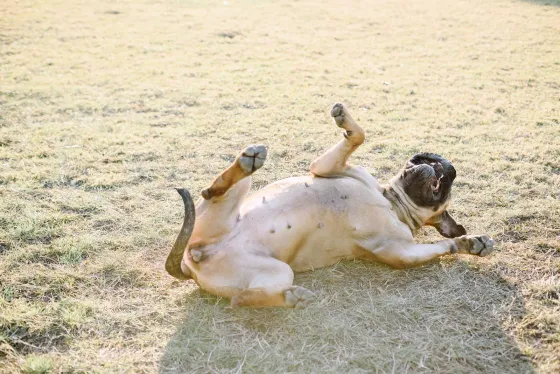 Looks relatedBullmastiff1860 to 1924 · United Kingdom
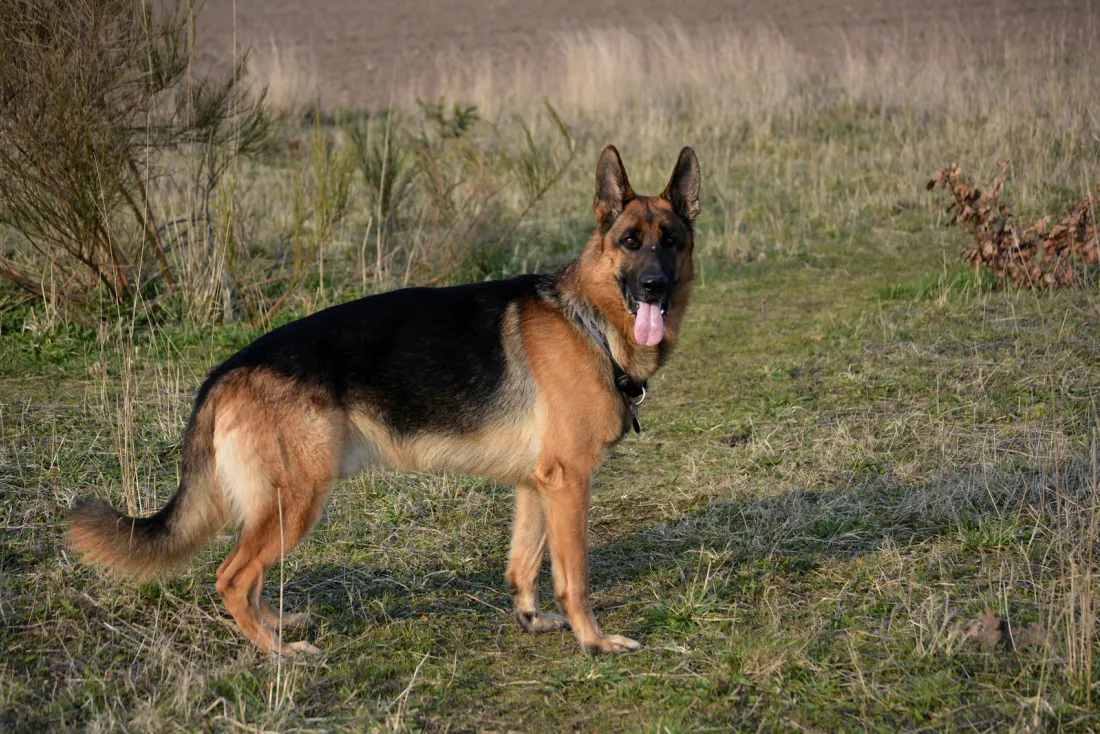
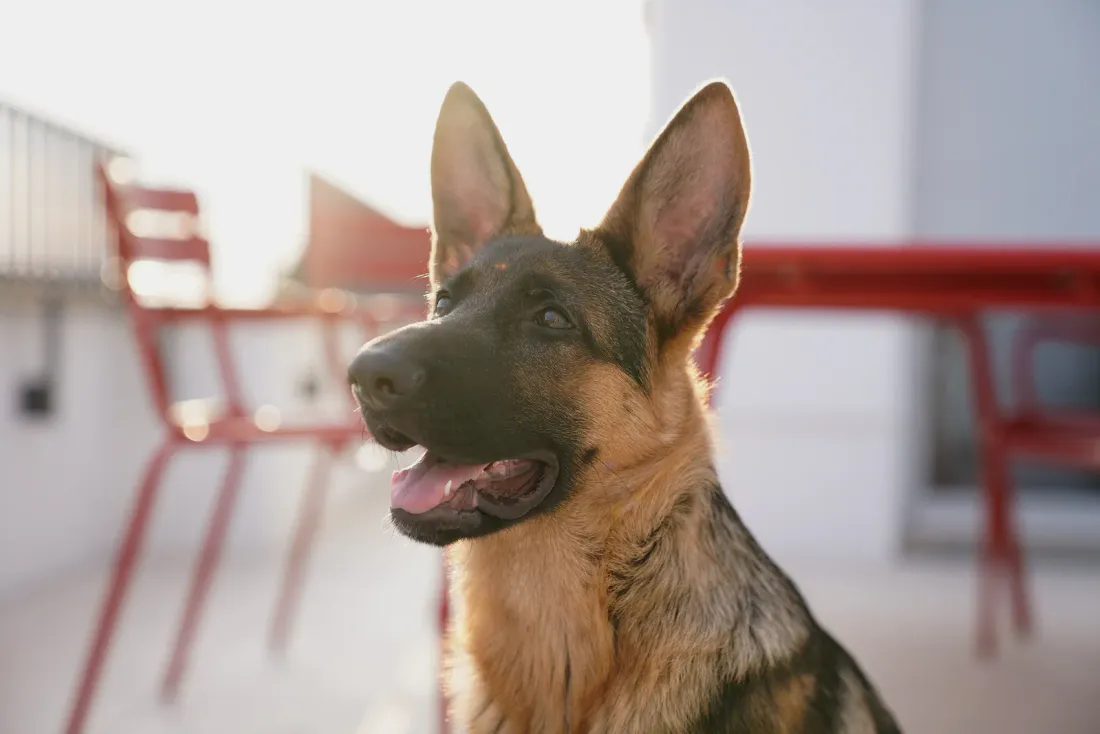
The standards describe a dog slightly longer than tall, with strong muscles, a weather-resistant coat and a far-reaching, enduring trot. Males and females differ clearly in build and head.
- Height. FCI: dogs 60 to 65 cm, bitches 55 to 60 cm at the withers. UK Kennel Club: ideal 63 cm and 58 cm, with 2.5 cm either way tolerated.
- Weight. FCI: 30 to 40 kg for dogs and 22 to 32 kg for bitches. The UK Kennel Club sets no weight. In the VetCompass study of UK pet dogs (O'Neill et al. 2017), median adult bodyweight was 40.1 kg for males and 34.8 kg for females.
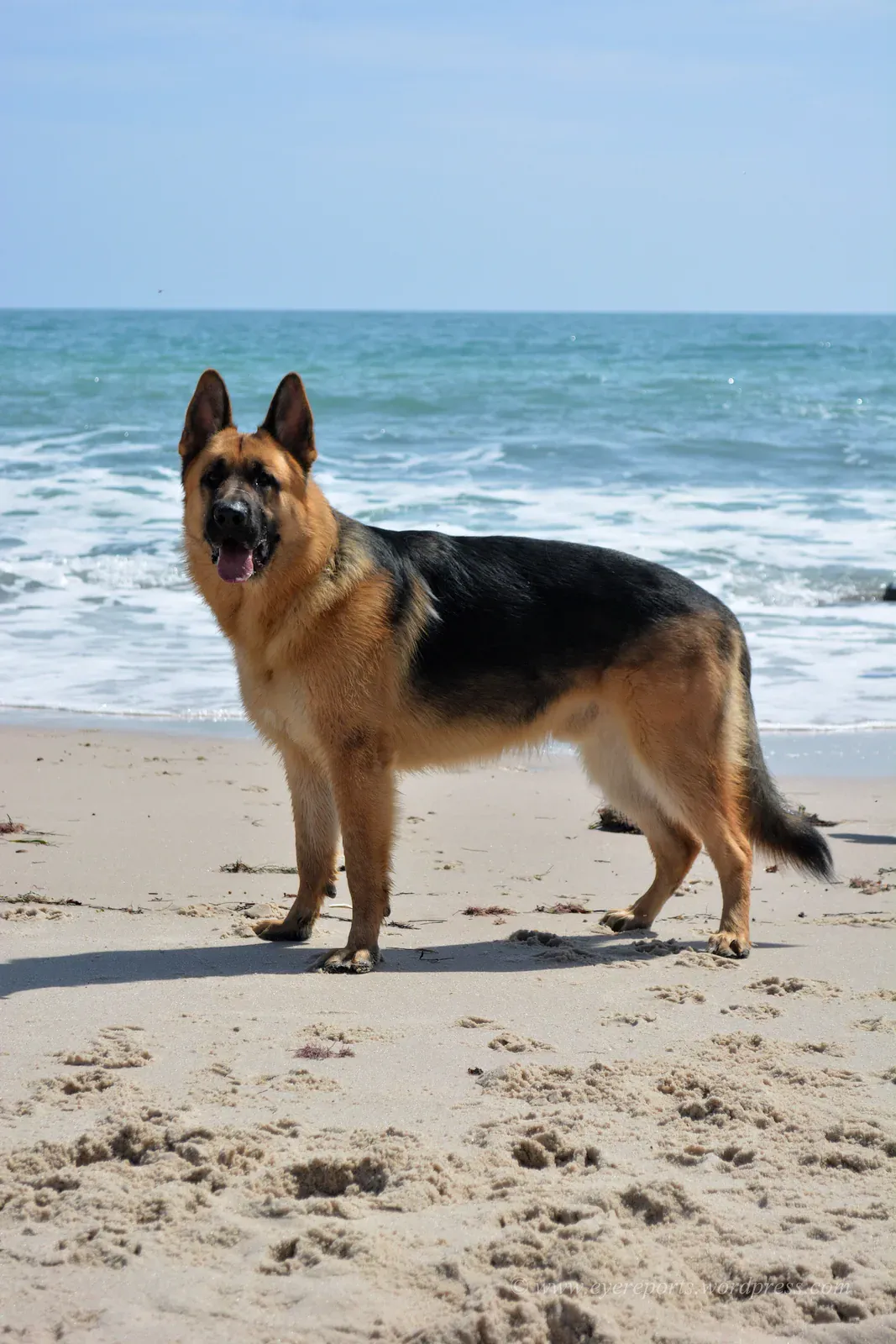
- Head and eyes. Wedge-shaped, with a muzzle about half the head length. Eyes medium, almond-shaped, dark brown preferred.
- Ears. Medium, broad at the base, carried erect and nearly parallel. Hanging ears are a fault.
- Build. Deep chest, relatively short loin, a straight back running from the withers to a gently sloping (the FCI standard describes about 23 degrees to the horizontal).
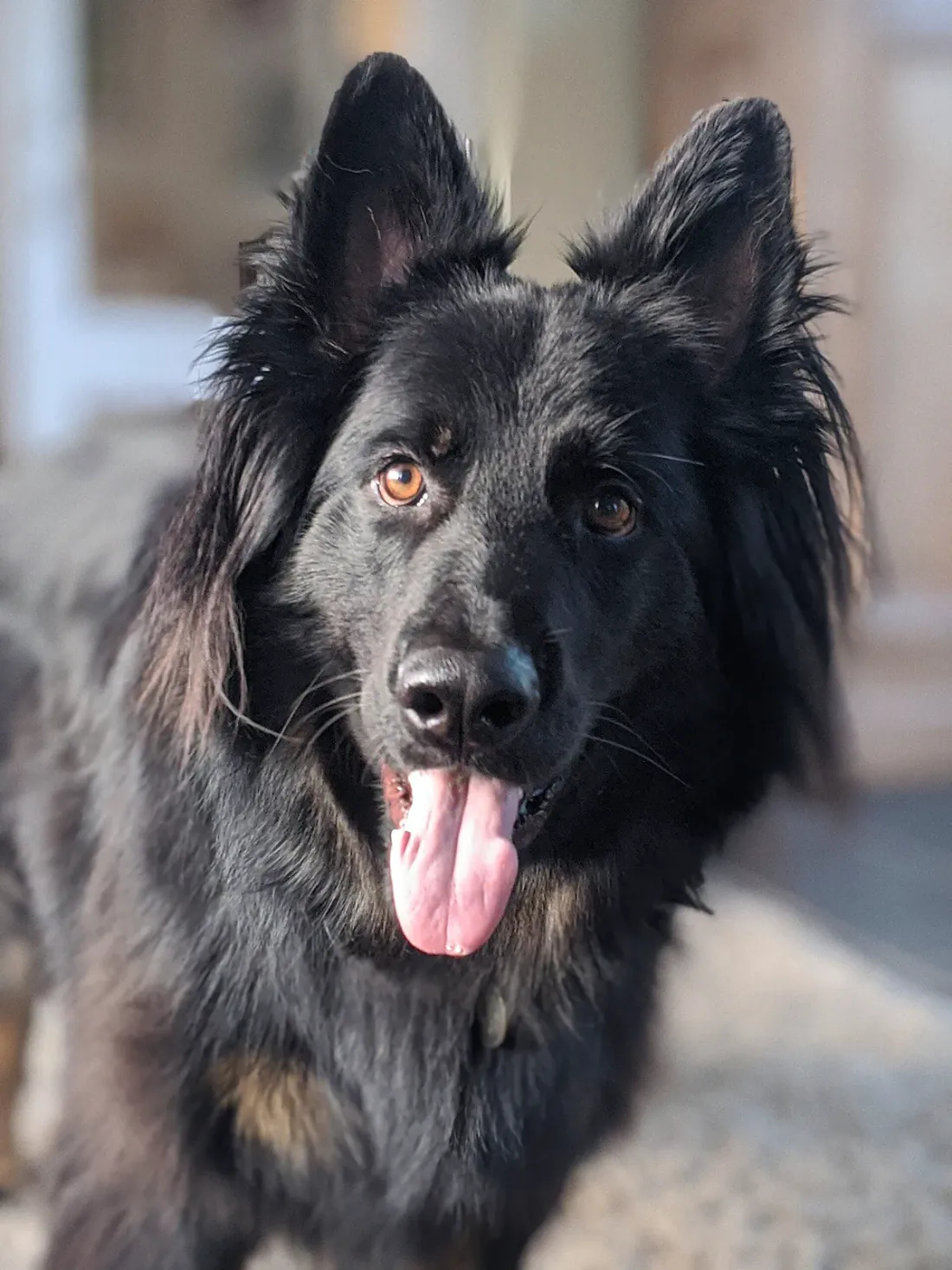
- Coat varieties. Standard double coat (short, hard, close-lying, thick undercoat) and long coat (longer outer coat, ear tufts, feathering on the legs and tail). The long coat is , so it is rarer, and kennel clubs treat it differently. The FCI accepts both varieties, and the UK Kennel Club standard describes both.
- Colours. Black with tan, gold or light grey markings (the classic saddle), all black, or grey sable, and bi-colour. Noses should be black. The UK Kennel Club calls blues, livers, whites and near-whites highly undesirable. The FCI standard lists white as not allowed.
Why do some German Shepherds have a sloping back?
 Related breedChihuahua1850 to 1904 · Mexico
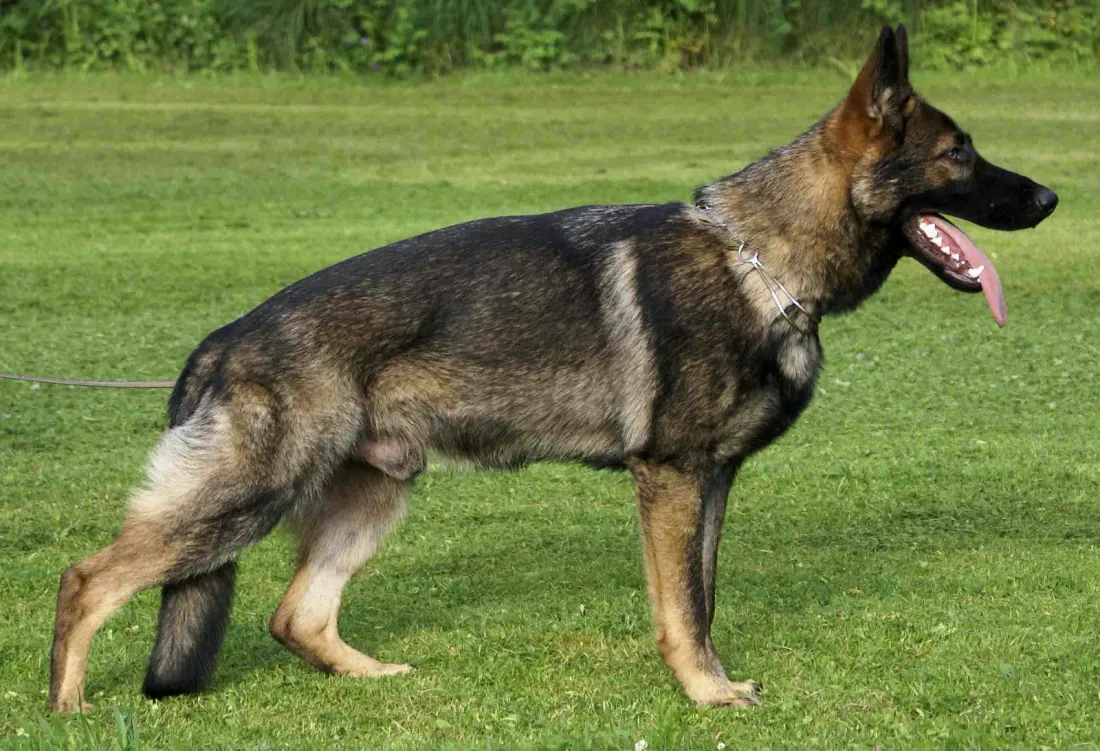
Two kinds of German Shepherd now coexist: working lines, selected through work trials, and show lines, selected in the ring. Working-line dogs tend to have a flatter back and a more upright rear. Some show-line dogs, especially in the UK and North America, carry a strongly sloping with heavily angled hind legs. Regional sub-lines (for example West German, East German and Czech working lines, and American show lines) are described by breeders and clubs, but this draft did not find a single authoritative source on them.
The standards ask for a straight back. The UK Kennel Club text says the topline runs straight from the neck over the withers and falls slightly to a gently sloping croup. Older UK wording said weak, soft and roach backs are highly undesirable and should be heavily penalised, and the current standard says the dog should be balanced and free from exaggeration.
The debate is well documented:
- The BBC documentary Pedigree Dogs Exposed (19 August 2008) criticised the show lines for their hindquarters.
- In March 2016 a German Shepherd with a sloped back and apparent walking difficulty won Best of Breed at Crufts. The Kennel Club's health chair said he was "appalled" (MRCVSonline, 16 March 2016). He said that Breed Watch safeguards had been largely disregarded.
- In 2018 the Kennel Club listed the breed in Breed Watch category 3 (visible conditions or exaggerations that cause pain or discomfort), with judges completing health monitoring forms. Its current breed page lists the breed as category 2 with "conformational concerns".
- A 2020 study (Humphries, Shaheen and Gómez Álvarez, Scientific Reports) measured 60 German Shepherds with 3D motion capture and pressure plates. Dogs with a greater back slope placed their forelimbs closer together, loaded the forelimbs more at the trot, and showed more asymmetric movement at the hock and stifle. The authors concluded that back slope has functional effects and is more than a question of looks. The study shows association, not proof of disease, and it did not follow the dogs over their lives.
What is the German Shepherd's temperament like?
 Related breedFlat-coated Retriever1860 to 1880 · United Kingdom
The UK Kennel Club describes a dog that is "steady of nerve, loyal, self-assured, courageous and tractable", never nervous, over-aggressive or shy. The SV describes it as secure, self-confident, attentive and physically and mentally resilient. The AKC puts it as loyal, confident, courageous and steady.
In daily life that means a dog that bonds closely with its people, watches its surroundings and is reserved with strangers. This steady temperament depends on early socialisation and consistent training. A fearful or under-socialised German Shepherd can become a reactive dog, which is also where most bite risk comes from.
Some numbers from a large UK study (VetCompass, O'Neill et al. 2017, 12,146 dogs): aggression was recorded in 4.76 percent of German Shepherds over the study year, and more often in males (6.75 percent) than in females (2.78 percent). This is aggression noted by vets in clinical records, not a bite rate.
Temperament varies by line and by individual. Morrill and colleagues (Science, 2022) surveyed owners of 18,385 dogs and found that breed explains about 9 percent of behavioural variation between individual dogs. Ask a breeder about both parents' behaviour as well as their titles.
What does a German Shepherd need day to day?
 Related breedFrench Bulldog1850 to 1898 · France
- Exercise. More than 2 hours a day (UK Kennel Club), including training and mental work, not only walks.
- Training. The SV says training is absolutely necessary, with consistency, patience and positive reinforcement rather than force. Its courses follow the "Augsburg Model".
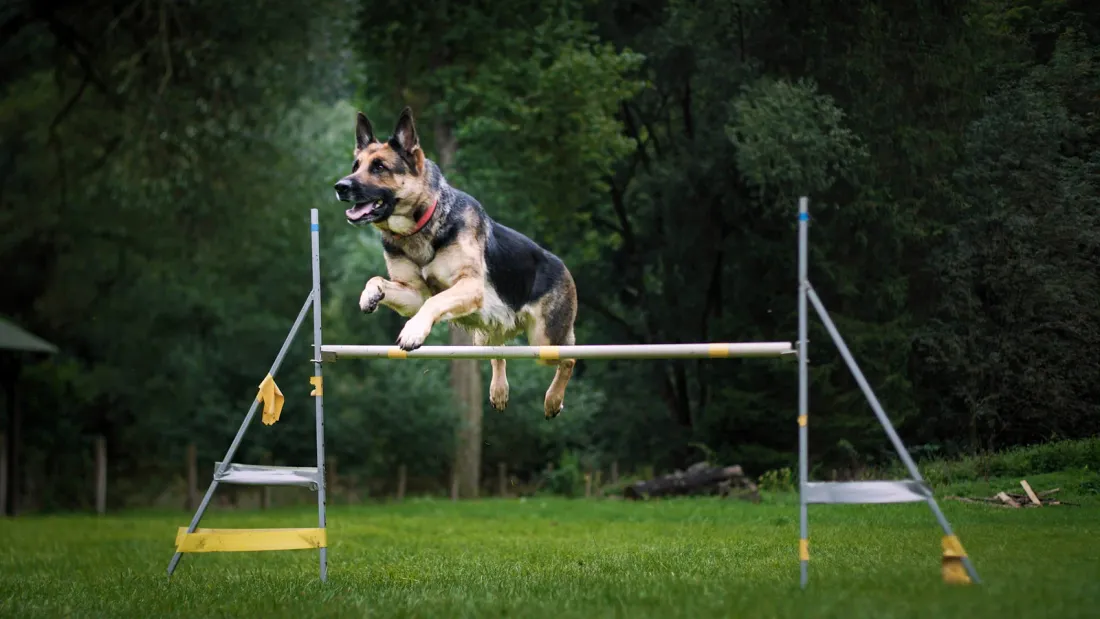
- Jobs and sports. Tracking, obedience, (formerly Schutzhund) protection sport, agility, search and rescue, scent work and herding all suit the breed. IGP began in Germany in the early 1900s as a test of breed suitability.
- Grooming. Brushing more than once a week (UK Kennel Club). Both coat varieties have a thick undercoat and shed.
- Company. A dog bred to work with people does badly left alone for long hours.
 GuidesPractical guidesBehaviour, training, health and adoptionThinking of adopting?How to adopt a dog from a shelter or rescueHow to adopt a dog from a shelter or rescue: the process, costs in general terms, choosing a dog, the first weeks and what if it does not work out.Related breedFrench Bulldog1850 to 1898 · France
What health problems affect German Shepherds?
 Related breedGiant Schnauzer1850 to 1923 · Germany
Information here is general. Talk to a vet about your own dog.
In the largest UK study, the VetCompass analysis by O'Neill, Coulson, Church and Brodbelt (Canine Genetics and Epidemiology, 2017), the median age at death was 10.3 years (range 0.2 to 17.0). Females lived longer (11.1 years) than males (9.7 years). The most common recorded disorders were otitis externa (7.89 percent), osteoarthritis (5.54 percent), diarrhoea (5.24 percent), overweight or obesity (5.18 percent) and aggression (4.76 percent). The most common causes of death were musculoskeletal disorder (16.3 percent), inability to stand (14.9 percent), neoplasia (14.5 percent) and spinal cord disorder (13.6 percent).
For breeders, the UK Kennel Club recommends hip and elbow screening, a DNA test for and eye screening.
| Condition | What it is | Evidence |
|---|---|---|
| Joint malformation of the hip. The UK BVA and Kennel Club scheme scores both hips, and lower is better | BVA/KC Hip Dysplasia Scheme, 2025 edition: 9,724 German Shepherds scored over 15 years, 2,448 over the last 5 years. 5-year median 11, mean 14 (Border Collie 5-year median 10 for comparison) | |
| Joint malformation of the elbow | Screening is recommended by the UK Kennel Club and the SV | |
| Degenerative myelopathy (DM) | Late-onset progressive spinal cord disease, usually in older dogs. Caused by the SOD1 c.118G>A mutation, the same gene involved in some human ALS | Awano et al. 2009 (PNAS). Holder et al. 2014: 8 of 50 young UK dogs homozygous and 19 heterozygous in a small referral sample. Zeng et al. 2014: 33,747 dogs, German Shepherd among the breeds with the highest frequency |
| Gastric dilatation-volvulus (bloat) | Emergency twisting of the stomach in deep-chested dogs | Glickman et al. 2000 (JAVMA): German Shepherds among large breeds with significantly raised risk |
| Exocrine pancreatic insufficiency (EPI) | The pancreas does not make enough digestive enzymes, causing weight loss and diarrhoea. Mostly from pancreatic acinar atrophy | Pedigree studies (Westermarck and colleagues; Moeller and colleagues) point to autosomal recessive inheritance in German Shepherds |
| Spinal and back disease | Musculoskeletal and spinal cord causes were among the top causes of death | O'Neill et al. 2017 (VetCompass) |
A DM-tested dog that carries two copies of the mutation is at risk even if it looks healthy, and DNA testing of breeding pairs can avoid producing affected puppies. Hip and elbow scores help, but they do not guarantee a sound dog.
 Ticks and fleasTicks and fleas on dogs: how to check, remove and prevent themTicks and fleas on dogs: how to tell them apart, check your dog, remove a tick safely, break the flea life cycle and prevent both.GuidesPractical guidesBehaviour, training, health and adoptionRelated breedGiant Schnauzer1850 to 1923 · Germany
What does science say about the German Shepherd?
 Related breedGolden Retriever1868 to 1911 · United Kingdom
- Genome history (2026). Scarsbrook, Frantz and colleagues (LMU Munich, University of Oxford and the US National Institutes of Health; PNAS, press release 29 January 2026) sequenced nine pedigree German Shepherds from the Natural History Museum in Bern, dated 1906 to 1993. Diversity was already far below that of medieval European dogs in the early 1900s, reflecting the founding bottleneck. Heterozygosity fell further after the Second World War, with more long stretches of identical DNA. The most recent European bottleneck was traced to 1967 and the popular sire Quanto von der Wienerau. Frantz said the decline has almost certainly affected the breed's health. The authors name bringing in dogs from genetically distinct lines as the most effective way to improve the breed while keeping its status.
- Health cohort (2017). The VetCompass paper above is the largest UK analysis of the breed under primary veterinary care. It also shows a popularity drop: German Shepherds fell from 3.5 percent of UK puppies born in 2005 to 2.2 percent in 2013.
- Movement and body shape (2020). Humphries and colleagues measured gait and load in 60 dogs (see the sloping back section).
- Scent work (2015). Hall, Glenn, Smith and Wynne (Journal of Comparative Psychology) trained pugs, German Shepherds and Greyhounds on an odour discrimination task. Pugs learned it better than German Shepherds and kept performing as odour concentration fell, and nine of ten Greyhounds failed a motivation criterion. The German Shepherd's place in detection work rests on trainability, stamina and drive, not on the best nose. Another team (Polgár and colleagues, PLoS ONE, 2016) left German Shepherds out of a breed comparison of olfactory ability because the breed fits neither the scent nor the non-scent group.
- Breed and behaviour (2022). Morrill et al. (Science) found that breed explains about 9 percent of behavioural variation in individual dogs.
Famous German Shepherds
 Related breedMiniature Schnauzer1888 to 1899 · Germany
- Horand von Grafrath. The first registered German Shepherd, SZ 1, born 1895.
- Strongheart. Born Etzel von Oeringen in 1917 in Breslau, trained in Berlin as a police dog and reported to have served with the German Red Cross in the First World War. Brought to the US about 1920. His first film, The Silent Call (1921), was directed by Laurence Trimble. He is regarded as the first major canine film star and died on 24 June 1929 in Los Angeles. He has a star on the Hollywood Walk of Fame.
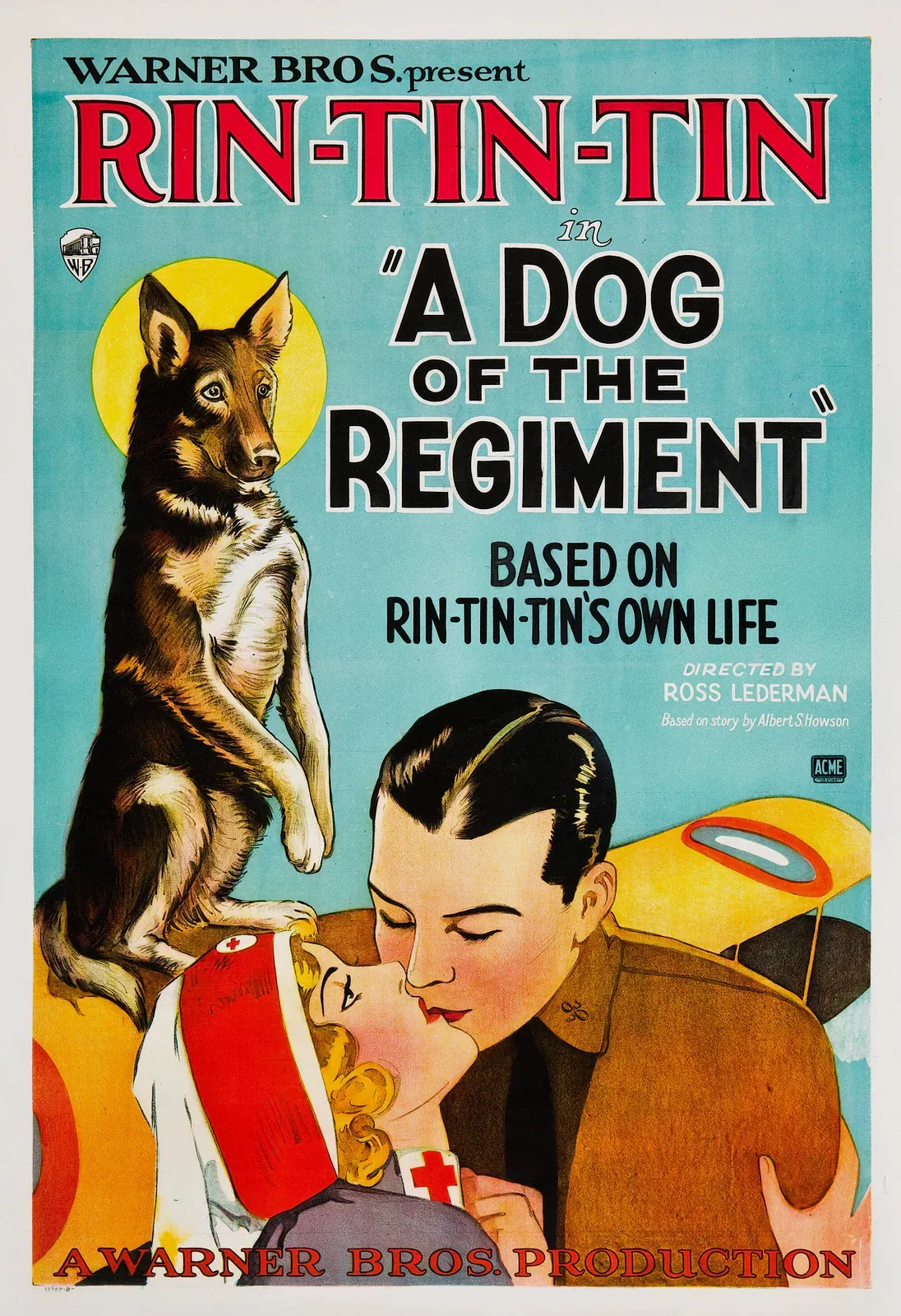
- Rin Tin Tin. Found as a puppy in September 1918 in a bombed German kennel at Flirey, France, by the American corporal Lee Duncan after the Battle of Saint-Mihiel. He appeared in 27 Hollywood films between 1922 and 1931, and his 1923 film Where the North Begins has often been credited with saving Warner Bros. from bankruptcy. He died on 10 August 1932 and received a Walk of Fame star on 8 February 1960.
- Buddy. The German Shepherd female (originally Kiss) who guided Morris Frank from 1928 and led to The Seeing Eye.
Is a German Shepherd right for you?
 Related breedRat Terrier1890 to 1999 · United States
It suits you if you are active, patient and consistent, enjoy training, can offer a job (tracking, obedience, sport), want a dog that works closely with its person, and can handle a large dog that sheds. A house with a garden helps.
It does not suit you if you are away most of the day, want a low-effort pet, cannot invest in socialisation, or are not ready for possible hip, elbow and spinal problems. Choose a breeder who shows hip and elbow scores, a DM test and both parents' temperament, and decide between a working-line dog (more drive, flatter back) and a show-line dog.
German Shepherd fun facts
 Related breedYorkshire Terrier1850 to 1874 · United Kingdom
- Horand's price was reportedly 200 marks, and he was stud book number 1.
- The breed's stud book has grown to more than 2 million dogs.
- In 1919 the UK registered 54 German Shepherds under the name Alsatian Wolf Dog. By 1926 the number was over 8,000.
- Rin Tin Tin never won the first Academy Award for best actor, despite a popular legend. A former head of the Academy, Bruce Davis, called the story an urban legend, and he said the original ballots show no votes for the dog.
- The first guide dogs trained at The Seeing Eye were German Shepherds.
- The Czechoslovakian Wolfdog began in 1955 with a German Shepherd and a Carpathian wolf, and its first puppies were born in 1958.
Frequently asked questions
Is an Alsatian the same as a German Shepherd?
Yes. Alsatian is the old British name, used from the First World War period until the Kennel Club allowed the original name again in 1977.
How big do German Shepherds get?
FCI: 60 to 65 cm and 30 to 40 kg for dogs, 55 to 60 cm and 22 to 32 kg for bitches.
How long do German Shepherds live?
The UK median is 10.3 years. The SV gives 10 to 12 years, and project data gives 9 to 13.
Are German Shepherds good family dogs?
They can be, with early socialisation, training and supervision around young children. They need a lot of activity and company.
Do German Shepherds shed?
Yes, regularly. Both coat varieties have a thick undercoat.
Are white German Shepherds allowed in shows?
Not under the FCI standard, which lists white as not allowed. The UK Kennel Club calls whites highly undesirable. White dogs are recognised as their own breeds, the White Shepherd and the White Swiss Shepherd Dog.
Is a German Shepherd the same as a Belgian Malinois?
No. They are sister breeds that share herding ancestry, and the Parker 2017 study finds 42.6 Mb of shared DNA. The Malinois is usually lighter in build and is a coat variety of the Belgian Shepherd.
Why are German Shepherds used by police and the military?
Stephanitz built the breed for trainability and steadiness, and police services chose it early, in Germany in the 1920s. Drive, stamina and a willingness to work with a handler matter more than scenting ability.
Read next
Sources (23)
- American Kennel Club, German Shepherd Dog breed page and "German Shepherd Dog History".
- Awano T. et al., "Genome-wide association analysis reveals a SOD1 mutation in canine degenerative myelopathy that resembles amyotrophic lateral sclerosis", Proceedings of the National Academy of Sciences, 2009.
- BVA and The Kennel Club, Hip Dysplasia Scheme breed-specific statistics, 2025 edition.
- Fédération Cynologique Internationale, Deutscher Schäferhund (German Shepherd Dog), standard no. 166 (German original dated 23 March 2010, English version 23 December 2010).
- German Shepherd Dog Club of America, "The History of the German Shepherd Dog" and SV programme pages.
- Glickman L.T. et al., "Non-dietary risk factors for gastric dilatation-volvulus in large and giant breed dogs", Journal of the American Veterinary Medical Association, 2000.
- Hall N.J., Glenn K., Smith D.W., Wynne C.D.L., "Performance of pugs, German shepherds, and greyhounds (Canis lupus familiaris) on an odor-discrimination task", Journal of Comparative Psychology, 2015.
- Holder A.L. et al., "Assessing the prevalence of the SOD1 mutation associated with degenerative myelopathy in German Shepherd dogs in the UK", Canine Genetics and Epidemiology, 2014.
- Humphries A., Shaheen A.F., Gómez Álvarez C.B., "Different conformations of the German shepherd dog breed affect its posture and movement", Scientific Reports, 2020.
- Ludwig-Maximilians-Universität München, press release on Scarsbrook et al., "A 120-y time series of genomes reveals the consequences of closed breeding in German shepherd dogs", Proceedings of the National Academy of Sciences, 2026 (press release 29 January 2026).
- Moeller E.M. et al., "Inheritance of pancreatic acinar atrophy in German Shepherd Dogs", American Journal of Veterinary Research, 2002.
- Morrill K. et al., "Ancestry-inclusive dog genomics challenges popular breed stereotypes", Science, 2022.
- MRCVSonline, news coverage of Crufts 2016 (16 March 2016) and of the Kennel Club breed health guide for judges (7 March 2018).
- O'Neill D.G., Coulson N.R., Church D.B., Brodbelt D.C., "Demography and disorders of German Shepherd Dogs under primary veterinary care in the UK", Canine Genetics and Epidemiology, 2017.
- Parker H.G. et al., "Genomic analyses reveal the influence of geographic origin, migration, and hybridization on modern dog breed development", Cell Reports, 2017.
- Polgár Z. et al., "A test of canine olfactory capacity: comparing various dog breeds and wolves in a natural detection task", PLoS ONE, 2016.
- Schäferhunde.de, Verein für Deutsche Schäferhunde (SV), history and breed information pages.
- The Seeing Eye, history, and Eustis D.H., "The Seeing Eye", The Saturday Evening Post, 5 November 1927.
- The Kennel Club (UK; styled Royal Kennel Club on its current website), German Shepherd Dog breed standard (updated 1 August 2025) and breed information page.
- Westermarck E. and colleagues, pedigree studies of exocrine pancreatic insufficiency in German Shepherd dogs.
- Wikipedia, "German Shepherd", "Max von Stephanitz", "Verein für Deutsche Schäferhunde", "Horand von Grafrath", "Rin Tin Tin", "Strongheart", "The Seeing Eye", "Guide dog", "Police dog", "White Shepherd", "Czechoslovakian Wolfdog" and "Pedigree Dogs Exposed" (used for dates and summaries, checked against the other sources listed).
- Zeng R. et al., "Breed distribution of SOD1 alleles previously associated with canine degenerative myelopathy", Journal of Veterinary Internal Medicine, 2014.
- Project knowledge base, breed records and Parker 2017 shared-haplotype table (this site).